20 Years Later, The Makeup from The Devil Wears Prada Still Holds Up
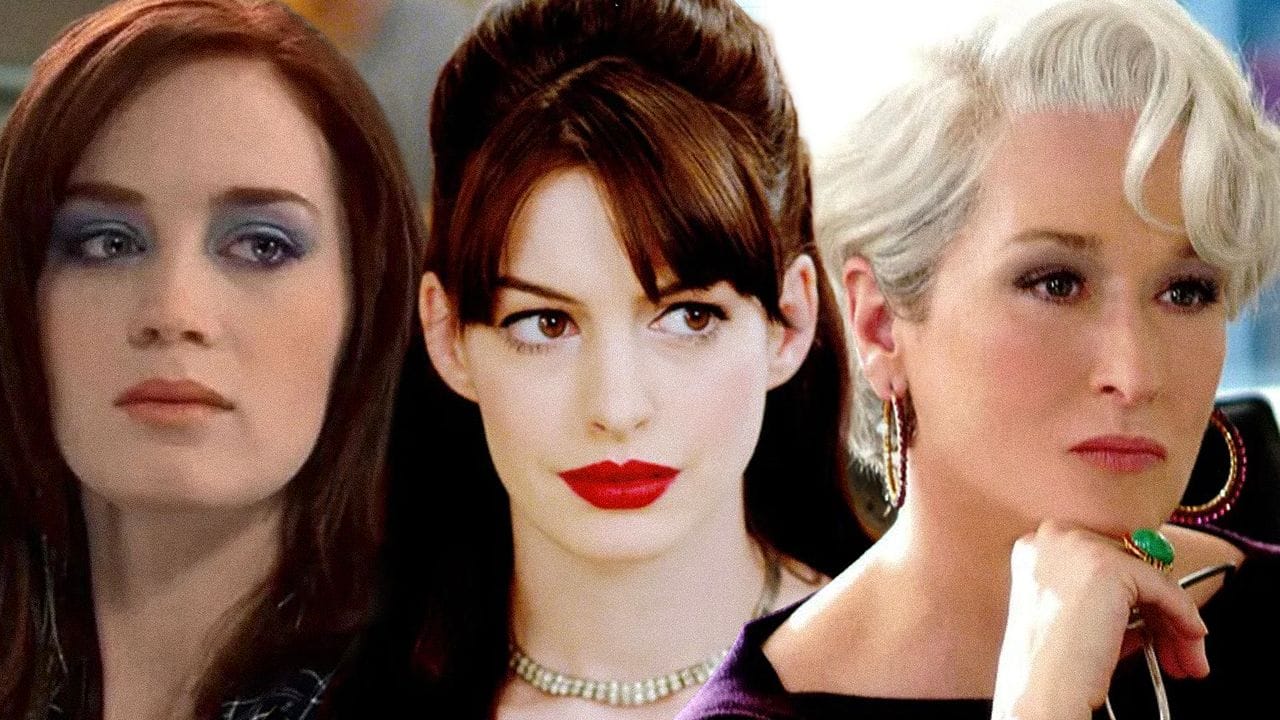
Are you an Emily, Andy, or Miranda?
Reported by Vogue.
There's a particular kind of alchemy in makeup that transcends the decade it was created in. When The Devil Wears Prada landed in 2006, it didn't just define a generation's relationship with fashion—it proved that beauty choices rooted in character rather than trend boards could outlast actual trends by years. Two decades later, Emily's electric blue shadow, Andy's warm minimalism, and Miranda's architectural grey still feel impossibly current, a feat rarely accomplished in film makeup history.
That longevity is no accident. Nicki Ledermann, the BAFTA-nominated makeup artist who helmed the film's beauty department, approached the three lead characters with a deliberate philosophy: personality first, trends never. According to Vogue, Ledermann explicitly avoided contemporary fashion campaigns and trend forecasting while developing each woman's look. Instead, she asked a deceptively simple question: who are these women, and what does their face say about them? The answer became a masterclass in using makeup as storytelling rather than decoration.
Three Beauty Languages
Emily Charlton's signature became bold, saturated color—specifically that now-iconic blue eyeshadow applied with precision rather than abandon. The boldness works, Ledermann explains, because everything around it is disciplined: clean liner, controlled application, zero smudge. It reads as conviction, not costume. Andy's beauty evolved opposite Emily's maximalism; Hathaway's looks shifted subtly depending on the scene, always suggesting awakening rather than reinvention. Warm earth tones, soft liner, a just-kissed lip in warm tones—the makeup of someone becoming more herself, not someone being remade. And then there's Miranda, the character who never changes her look across the entire film. Her smoked grey eyeshadow sits somewhere between a traditional smoky eye and architectural restraint, cool-toned and diffused, the makeup equivalent of supreme authority wearing no visible effort.
What makes these looks transcend their era is that they function as extensions of character psychology rather than fashion statements. "Trends date because they belong to a particular cultural instant, but character doesn't," Ledermann told Vogue. The faces still read as alive because the women wearing them still feel alive—their beauty choices reveal something fundamental about who they are. Emily's maximalism signals her rigid perfectionism. Andy's fluidity mirrors her internal transformation. Miranda's consistency is her quiet refusal to be influenced by anyone, including time itself.
Two decades of makeup trends have cycled through and out of relevance, yet these three looks remain a blueprint: the most timeless beauty is always the most purposeful.
Read the original at Vogue.