57 Thoughts I Had While Watching Lena Dunham’s Debut Film, ‘Creative Nonfiction’
In honor of Lena Dunham's 40th birthday, we're throwing it back to her very first film.
Reported by Vogue.
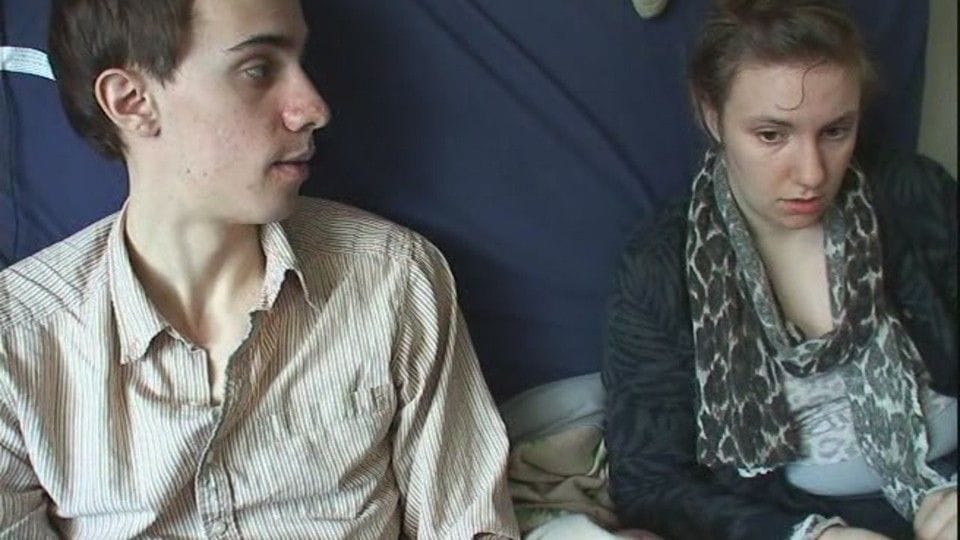
Lena Dunham turns 40 this week, and if you've been sleeping on her actual directorial debut — not Tiny Furniture, but the film she made before that — consider this your intervention. Creative Nonfiction, shot during Dunham's junior and senior years at Oberlin College, dropped in 2009 and has been quietly available on the Criterion Channel ever since. According to Vogue, it's a portrait of the artist as a young woman, complete with thick-framed glasses, poorly semi-bleached hair, and a succession of men who absolutely do not deserve the real estate they occupy in her protagonist's head.
The film follows Ella — played by Dunham — through the specific social misery of liberal arts college life: creative writing workshops that exist primarily to publicly humiliate you, crushes who can't pronounce "hegemony," and bed-crashers who announce upfront that they won't follow through and then act surprised when that's a problem. The self-referential threads are already visible here. Ella's fraught, platonic-but-not-really sleeping arrangements with an unreliable guy would resurface almost beat-for-beat in Tiny Furniture. The anxious, unraveling workshop participant prefigures Hannah Horvath bombing out of her Iowa MFA. Dunham was, apparently, already fully Dunham.
The Uniform Has Always Been the Uniform
What's striking about rewatching early Dunham work in 2025 is how precisely she documented a very specific cultural moment — one that anyone who went to a certain kind of college in the late aughts will recognize with full-body cringe. The dorm rooms with vintage globes. The miniskirt-and-blazer combo worn to a professor meeting. The long schlumpy dress under a backpack. The gold script hoops. A cast that reportedly includes a very young Audrey Gelman. Even the on-screen virginity debates and the wigs — yes, there are multiple wigs — feel less like quirk and more like forensic documentation.
There's a tenderness to it too. Dunham looks young and unguarded in a way that's genuinely affecting, her tattoos already present before she'd made anything the world had seen. She was already making the work, already building the visual and emotional vocabulary that would define the next decade of her career — just in a dorm room in Ohio, with a camcorder and a lot of feelings about boys who owned recorders for unclear reasons.
At 40, with a memoir and a body of work behind her, Dunham has earned the retrospective — but Creative Nonfiction is a reminder that she arrived fully formed, which is either inspiring or deeply annoying depending on where you are in your own creative journey.
Read the original at Vogue.