A Definitive Ranking of Every Onscreen Jane Austen Love Interest
With Sense and Sensibility in theaters later this week, let’s look back at the best (and worst) men in the Austen canon
Reported by Harper's Bazaar.
Jane Austen invented the romantic hero template — and every brooding billionaire, slow-burn rival, and emotionally unavailable situationship you have ever survived owes her a debt. According to Harper's Bazaar, not all of her leading men are created equal, and honestly, the ranking holds up under scrutiny.
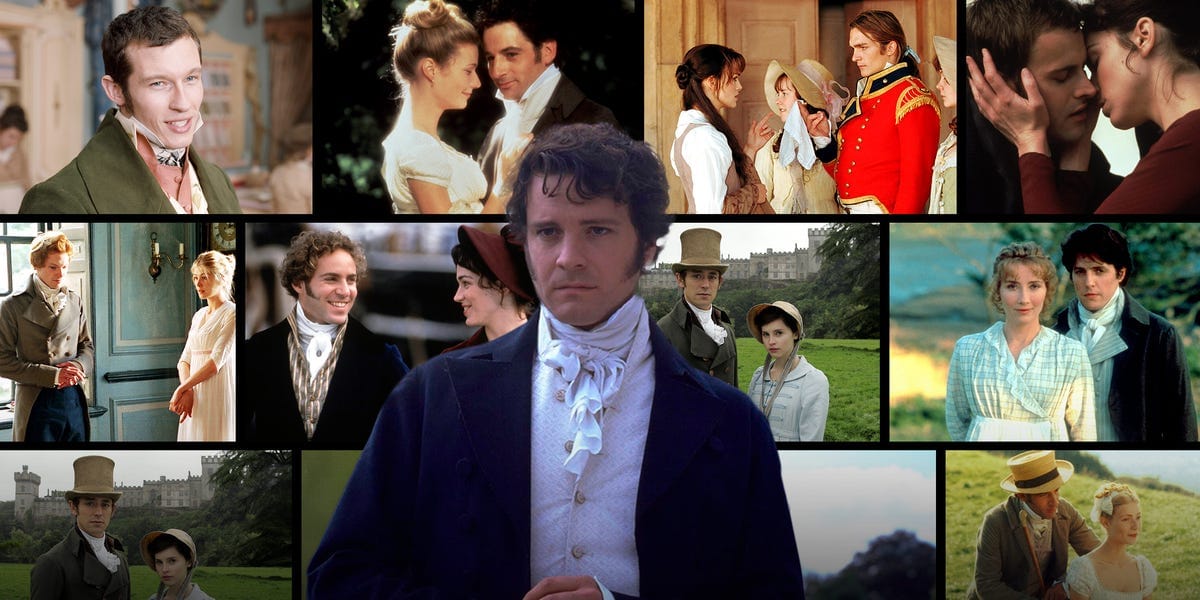
At the top, where he has always belonged, sits Fitzwilliam Darcy — the original emotionally constipated man who actually does the work. His quiet protection of the Bennet family, his ability to match Elizabeth's wit, and his talent for yearning from across a ballroom have cemented him as Austen's most enduring love interest. Colin Firth's 1995 portrayal remains the gold standard, though Matthew Macfadyen's 2005 version deserves its flowers. Close behind is Captain Wentworth of Persuasion — Austen's only true self-made man, arriving back from the Napoleonic Wars wealthy, bitter, and devastatingly in love with the woman who once rejected him. Second-chance romance has never been better executed, and Ciarán Hinds made it look effortless in 1995. Edward Ferrars rounds out the top tier: quiet, honorable, bound by a prior engagement he refuses to abandon out of sheer moral backbone — frustrating, yes, but the exact right man for Elinor Dashwood. Hugh Grant played the role definitively, though George MacKay's 2026 version is apparently coming for that throne.
The Solid Midfield and the Men to Avoid
The middle of the pack — Henry Tilney, George Knightley, Edmund Bertram, Colonel Brandon, Charles Bingley — are largely decent men with varying degrees of charisma. Tilney is witty, feminist-adjacent, and devoted; Bingley is a sweetheart who is also, let's be honest, a bit of a pushover. Knightley is a moral compass with a condescension problem and a 16-year age gap that no amount of Johnny Flynn charm fully resolves. Brandon is loyal but boring, possibly traumatized, possibly operating with a savior complex. Edmund is kind, though the childhood friendship origin story carries some uncomfortable arithmetic.
Then there are the men who were never love interests — they were warnings. Frank Churchill pursued Emma as cover while secretly engaged to someone else: manipulative, slick, played brilliantly by Callum Turner in 2020. John Willoughby, Frank Dillane's love-bombing disaster in the 2026 Sense and Sensibility, feels so contemporary in his emotional recklessness it is almost insulting. And then there is George Wickham — charming, remorseless, predatory — a full villain dressed as a romantic option, with Rupert Friend's 2005 performance making the manipulation feel dangerously convincing.
Austen was never really writing love stories — she was writing case studies, and the men who age best are the ones who proved themselves through action, not charm.
Read the original at Harper's Bazaar.