After Early Menopause, Monica Molenaar Is in Her Strongest Era Yet at 52 Thanks to These Habits
Monica Molenaar used her journey as a health reset.
Reported by Women's Health Magazine.
Monica Molenaar made a radical choice at 40: remove her ovaries to slash her breast cancer risk. Her family history—a mother diagnosed twice before 50, a grandmother who got it young—left little room for hesitation. The surgery worked as intended, but the price was immediate and brutal. Early menopause hit like a physical and psychological ambush: insomnia, 20 pounds gained, symptoms that felt insurmountable until hormone therapy finally steadied her body and mind.
A decade later, when her doctors recommended a prophylactic mastectomy, Molenaar faced a different kind of fear. She'd fought hard to reclaim her life through HRT; the thought of losing that stability again terrified her. But she also understood something crucial: staying the course on cancer prevention mattered more than comfort. In January 2024, she had her breasts removed. By June, reconstructive surgery followed. Most people would call it a year of loss. Molenaar decided to call it a reset.
Strength became strategy
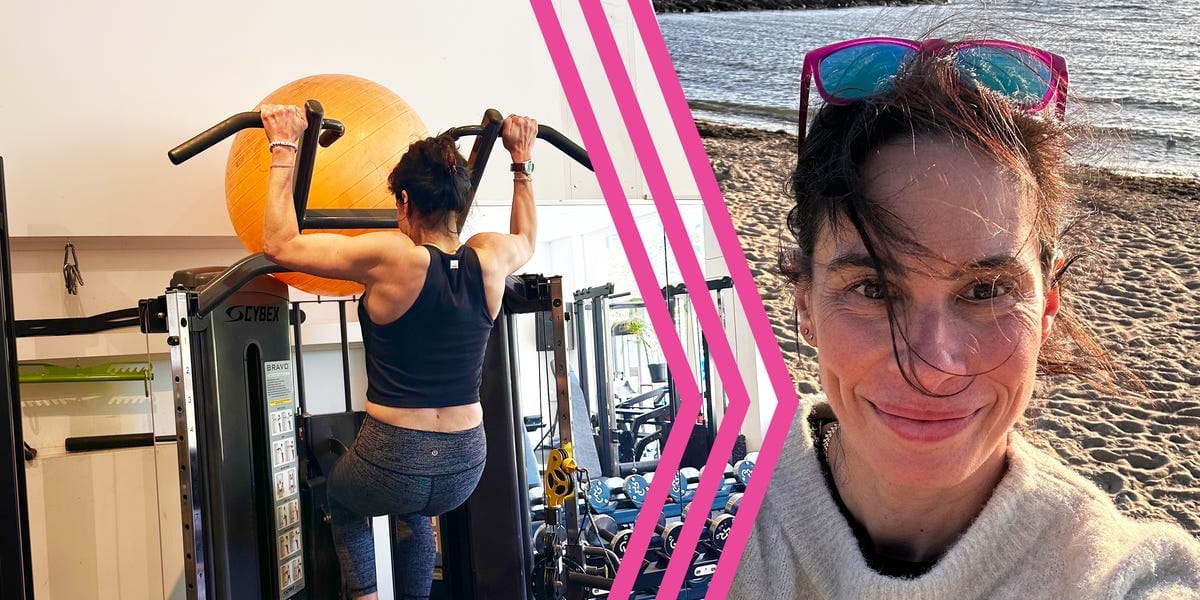
Before surgery, Molenaar had been going through the motions—twice-weekly trainer sessions that felt like maintenance, not transformation. She shifted her mindset deliberately. A woman who'd survived the same procedure told her she was in the best shape of her life one year post-op. That became Molenaar's north star. She started with the basics: daily one-hour dog walks, 20 minutes on a mini trampoline with a 70s playlist cranked up, and progressive strength training twice weekly with a trainer. According to Women's Health Magazine, her commitment to progressive overload and building muscle became non-negotiable—not for vanity, but for longevity. Women, she understood, need muscle to resist frailty in later decades.
When her blood pressure climbed in November 2024, Molenaar didn't ignore it. She added low-dose GLP-1 medication alongside her estrogen, progesterone, and testosterone therapy, discovering they worked synergistically to reduce inflammation and stabilize her metabolic health. At 52, she's stronger and more intentional about her body than she was in her 30s. Her arms, she notes with quiet pride, are genuinely buff.
Molenaar's point isn't that surgery or medication or fitness is salvation—it's that midlife refuses the narrative of decline. Women have more agency than they believe, and the power to reshape not just their bodies but their entire trajectory still lives inside them. Sharing her story matters, she says, because shame kept her isolated when menopause hit; other women deserve better.
The real shift isn't physical—it's permission: at 50-plus, you still get to demand the life you want.
Read the original at Women's Health Magazine.