Are Lymphatic Drainage Brushes Really Worth the Hype?
The viral tools are popular for a reason
Reported by Harper's Bazaar.
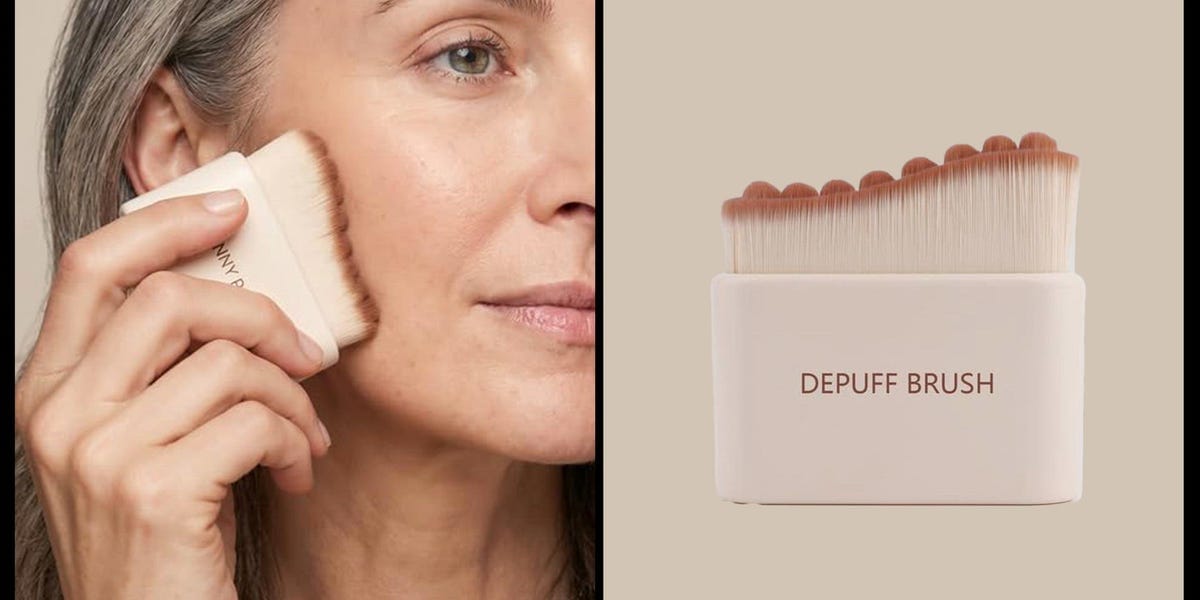
Lymphatic drainage has completed its migration from the massage table to your medicine cabinet — and now, apparently, to a contoured brush you're supposed to drag across your face every morning. Skepticism is warranted. But according to Harper's Bazaar, the science behind facial lymphatic brushing is more substantive than it sounds, and the results are measurable enough to turn even the doubtful into daily converts.
The core argument comes from licensed aesthetician and The Lymphatic Brush founder Cecily Braden, who points out that nearly one-third of the body's lymph nodes are concentrated in the face and neck — meaning what you do on the surface has downstream effects well beyond your jawline. Braden describes the skin as functioning like a fish tank: cells are the fish, lymph is the water, and your brush is the filtration system clearing out cellular waste so nutrients can actually get through. It sounds like a metaphor, but the functional logic holds — lymphatic drainage reduces tissue inflammation, which she identifies as the common denominator behind most chronic skin concerns. More practically: better lymphatic flow means your serums and moisturizers hit differently, because they're finally landing on tissue that can receive them.
Brush vs. Gua Sha — Does the Tool Actually Matter?
The short answer is less than you think, but more than nothing. Gua shas and hands can absolutely stimulate lymphatic flow, but they demand real anatomical knowledge — correct pressure, correct pathways — to work properly. A lymphatic brush, Braden argues, is engineered to remove that variable. Dense, textured bristles designed to move fluid under the skin without needing a serum or a tutorial make it the most accessible entry point for consistent practice. Technique still matters: start by pressing into the lymph nodes at the base of your neck three to five times before touching your face, then work upward — neck first, then center-to-outer on cheeks, jawline, brow, and forehead, five to ten strokes per zone.
The Bazaar writer tested Braden's brush daily for two weeks and reported visible changes in facial contour — particularly on whichever side she focused on more closely — along with less puffiness and reduced water retention in the face and neck. Worth noting: those with sensitive skin may experience some redness or irritation if the bristles run coarse, so texture matters when shopping. And none of this works without consistency; sporadic brushing is essentially decorative.
If you're going to add one more step to your skincare routine, make it one that actually improves your skin's ability to use everything else you're already doing.
Read the original at Harper's Bazaar.