Are Some Processed Foods Worse Than Others? Dietitians Explain How to Tell the Difference
Here’s exactly how to evaluate them.
Reported by Women's Health Magazine.
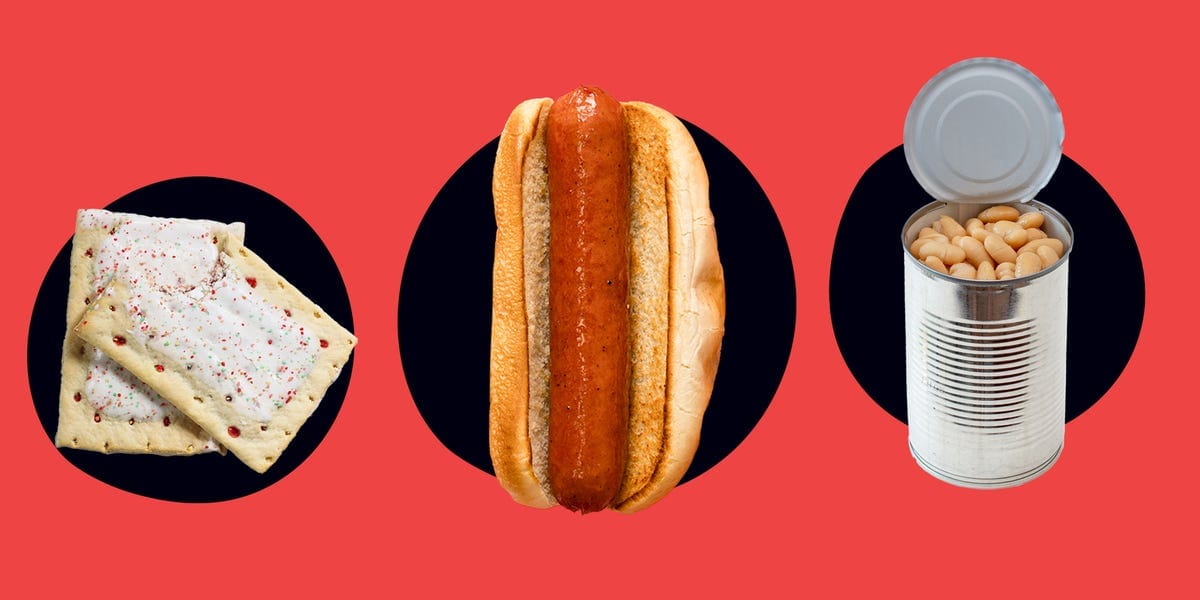
The word "processed" has become shorthand for dietary villain — but according to Women's Health Magazine, the reality is considerably more nuanced. Morgan Walker, RD, a registered dietitian and adjunct professor at Lebanon Valley College, puts it plainly: processing simply means a food has been altered from its natural state, and that isn't inherently a problem. Frozen vegetables, canned beans, hummus, plain yogurt, and peanut butter all qualify as minimally or moderately processed — and they're nowhere near the nutritional catastrophe that ultra-processed foods (UPFs) represent. It's the multi-step manufacturing process that loads products with refined starches, added sugars, protein isolates, and synthetic additives that tips something into UPF territory, says Brannon Blount, RDN. Think: cereals, sausages, candy bars, soda.
What to Actually Look for on the Label
There's no FDA or USDA classification system for processed foods — they exist on a spectrum, and the line between "fine" and "problematic" is rarely obvious. So the label becomes your best tool. Walker recommends scanning for a short ingredient list of recognizable whole foods: oats, beans, nuts, whole grains. Don't panic over additives like citric acid or ascorbic acid (vitamin C) — these preserve freshness in products like canned vegetables and jams and are generally harmless. The ingredients worth real skepticism are artificial sweeteners, emulsifiers, and stabilizers, which appear more frequently in UPFs and have been linked to gut issues in a 2025 FASEB Journal review.
Added sugar deserves its own scrutiny. A 2022 paper in Missouri Medicine found that people getting 10 to 14.9 percent of daily calories from added sugar face a 30 percent higher risk of cardiovascular mortality compared to those keeping it under 10 percent. A 2024 Journal of Nutrition study of over 196,000 participants found that consuming around 60 grams of added sugar daily was associated with a 21 percent higher risk of all-cause mortality, plus elevated risks for hypertension and heart disease. The FDA recommends capping intake at 50 grams per day; the Academy of Nutrition and Dietetics suggests snacks contribute five percent or less of the daily added sugar value. Blount flags an easy miss: pasta sauces, nut butters, granola, and flavored beverages can all quietly push you over. On sodium, the American Heart Association's ceiling is 2,300 mg daily — Blount defines lower-sodium snacks as those under 140 mg per serving, while anything over 500 mg per serving should be limited.
Beyond what to avoid, look for what a snack actually delivers. Blount recommends 10 to 15 grams of protein per snack to support satiety and muscle synthesis. For fiber, women 50 and under need 25 grams daily (21 for women over 50, per Mayo Clinic) — aim for snacks that hit at least 10 percent of the daily value. Registered dietitian Kelsey Kunik, RDN, founder of Graciously Nourished, also points out that many Americans are chronically low in iron, calcium, potassium, and vitamin D, making snack choices an easy opportunity to close those gaps. Athletes, people with hypertension, and those with specific health conditions will have different sodium and sugar thresholds entirely — which is worth discussing with a doctor rather than assuming the standard numbers apply.
Ultra-processed food isn't going away, and eating it occasionally won't derail an otherwise solid diet — but building meals around whole foods first, and treating packaged snacks as exactly that, is still the smartest framework you have.
Read the original at Women's Health Magazine.