Are We Too Cynical for <i><em>Disclosure Day</em></i>?
Steven Spielberg’s fourth alien epic, Disclosure Day, proposes a bright-eyed vision of the future. Is it enough?
Reported by Harper's Bazaar.
There is something almost radical about Steven Spielberg releasing a big, sincere, aliens-might-save-us blockbuster in 2025 — and something deeply telling about what happens when he does. According to Harper's Bazaar, opening-night audiences at Disclosure Day didn't exactly lean into the sentiment. They laughed. Not at the jokes, but at the very idea that anything — let alone extraterrestrial disclosure — could cut through the noise and unite a fractured world. That reaction might be the most honest thing in the room.
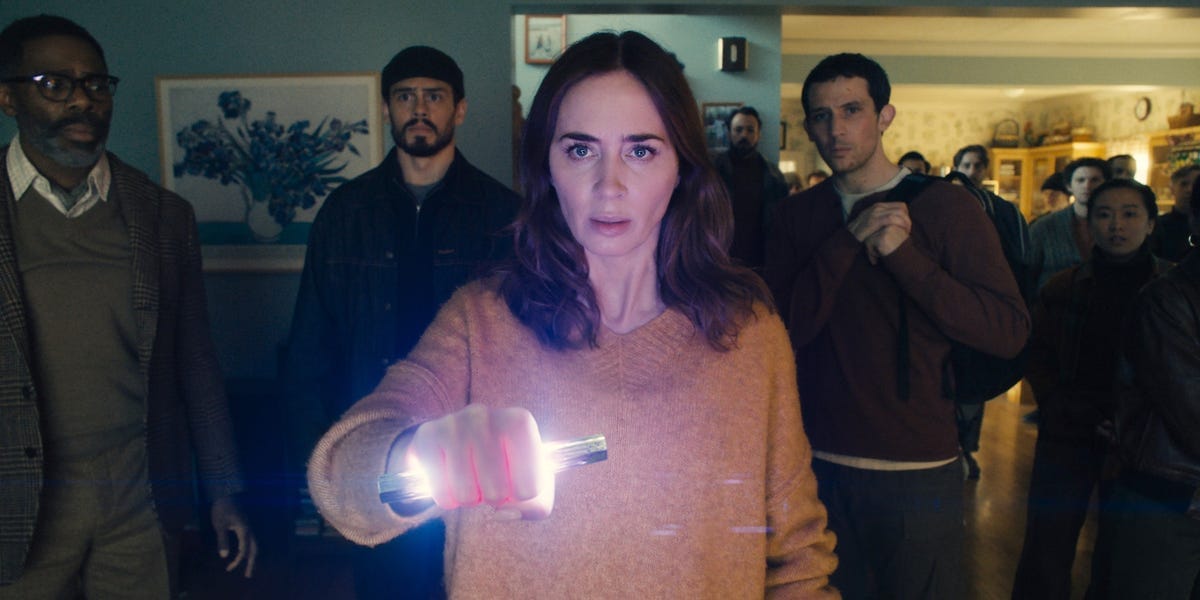
Disclosure Day is Spielberg's fourth alien film and arguably his most naked act of optimism: a whistleblower thriller wrapped in a plea for collective humanity. Josh O'Connor plays Daniel Kellner, a cybersecurity defector from a shadowy government outfit called Wardex, racing to deliver proof of alien life — and evidence of the government's torturous treatment of those aliens — to a fellow turncoat played by Colman Domingo. Meanwhile, Emily Blunt's meteorologist Margaret Fairchild suddenly begins speaking an alien language live on-air after a prolonged staring contest with a cardinal (an alien, it turns out). The two strangers, both abducted as children aboard a spaceship disguised as a Hansel-and-Gretel cottage, are chosen vehicles for first contact. Yes, it is exactly as unhinged as it sounds. The problem isn't the absurdity — it's that Spielberg refuses to wink at it, delivering every escalating plot device with iron-faced sincerity.
When Hope Becomes a Hard Sell
The optimistic alien subgenre has a lineage worth honoring: Contact, Independence Day, Villeneuve's Arrival, Abrams's Super 8. Spielberg practically invented it, from Close Encounters of the Third Kind in 1977 through E.T. and his 2005 War of the Worlds. But we are living in a different psychic climate now — post-pandemic, pre-whatever-comes-next, doomscrolling through actual declassified UFO footage that barely registers before it's buried under AI slop and the next diplomatic catastrophe. The real-world disclosures come and go. Nobody particularly cares. Spielberg is fighting that reality with cinema, and it is a genuinely brave, genuinely exhausting thing to watch.
The film isn't without self-awareness about the world it inhabits — background news broadcasts hint at World War III, convenience stores get panic-stripped in scenes that hit like a muscle memory of March 2020 — but Spielberg keeps his camera trained on the hope instead of the horror, tunneling toward a thesis that human decency will prevail if only we let it. The audience, apparently, disagrees. And honestly? They're not wrong. We already know that actual alien confirmation wouldn't fix anything. The divisions aren't waiting on new information.
What Disclosure Day ultimately argues for isn't aliens — it's cinema itself: the radical act of suspending disbelief, surrendering to a story, and briefly entertaining the possibility that people are capable of goodness at scale. That Spielberg still believes this, stubbornly, expensively, at full volume, is either the most hopeful thing happening in Hollywood right now or proof that some filmmakers exist in a separate dimension entirely — and either way, it's worth paying attention to.
In a cultural moment that rewards cynicism as a personality trait, Spielberg making a big, earnest, deeply uncool plea for collective hope is, paradoxically, the most punk thing a major director could do.
Read the original at Harper's Bazaar.