Australian Fashion Week Cheat Sheet
For its second year under the Australian Fashion Council, AFW has a new home in Sydney’s Museum of Contemporary Art. Here’s what to expect.
Reported by Vogue.
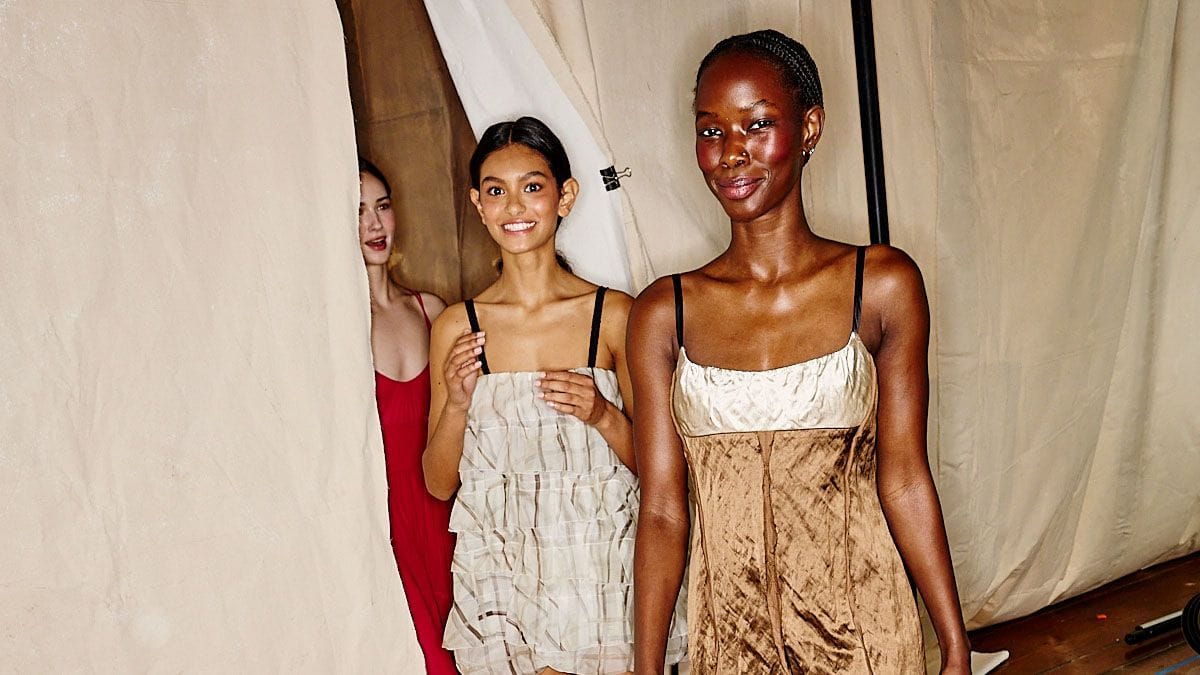
Australian Fashion Week has always had the bones of something bigger — the talent, the aesthetic, the geographic cool factor — but the infrastructure never quite matched the ambition. That changes this year. AFW runs May 11–15, and according to Vogue, the Australian Fashion Council (AFC) has relocated the entire event from industrial Carriageworks to the Museum of Contemporary Art, sitting directly in front of the Opera House and Sydney Harbour Bridge. The symbolism is intentional, the strategy even more so.
The AFC took over AFW just six months before this year's edition, stepping in after IMG — which ran the week for nearly two decades — exited in November 2024. Under IMG, participation costs locked out many local brands. The AFC's non-profit model is designed to fix that, but the bigger mission goes beyond access. "Australia is a small country — 27 million people," says AFW fashion director Kellie Hush. "For a business to really thrive, they have to look to international markets." The venue shift is part of that pitch: images of models against Sydney's most iconic skyline travel, and the AFC knows it.
The Buyers Are Coming
Ten international buyers are attending this year — more wanted in, Hush says, which means she's pushing to expand the budget for 2026. Net-a-Porter is sending a buying team member and traveling beyond Sydney to Melbourne and Byron Bay. Liberty London's womenswear buyer Bella Kelly is making the trip for discovery ("established names and emerging, niche brands not yet widely available in the UK"). Kristine Humbert, buying manager at Abu Dhabi's Tryano, is attending for the first time, drawn by what she calls Australian fashion's rare "balance between creativity and wearability." Net-a-Porter's chief buying officer Brigitte Chartrand puts it plainly: resort is a growth category, and Australia owns that space. The AFC is also connecting brands directly with wholesalers — the missing link for labels ready to scale internationally but priced out of doing it alone.
The schedule itself is a studied mix of legacy and new energy. Carla Zampatti opens, followed by Maticevski — Toni Maticevski's first AFW appearance in ten years. Aje, Bianca Spender, Beare Park, Ngali, and Nicol & Ford anchor the week alongside newer names Courtney Zheng and Esse, plus industry favorites Alix Higgins and Iordanes Spyridon Gogos. Off-schedule, First Nations Fashion and Design — led by designer and founder Grace Lillian Lee, whom Vogue Australia deputy editor Alice Birrell calls "a proven changemaker" — holds shows the Sunday before the official calendar opens. Albus Lumen closes the week Friday. Vogue Australia rounds things out with a Thursday designer dinner and the first Australian edition of the Vogue Vintage Market.
Middle East travel disruptions have complicated logistics for some European buyers, and the cost of showing remains a real barrier for brands without Paris-sized budgets — Hush is candid about both. But AFW still pulled roughly 200 applications to show this season, and Birrell believes the new waterfront setting will do what good fashion week venues always do: make the clothes feel inevitable. This is the year AFW stops apologizing for being far away and starts making the distance feel worth it.
Read the original at Vogue.