Black Hair Reimagined Has Returned to the Runway
Ahead of the 2026 Met Gala, beauty creatives turned the classic hair show experience on its head for a second year
Reported by Harper's Bazaar.
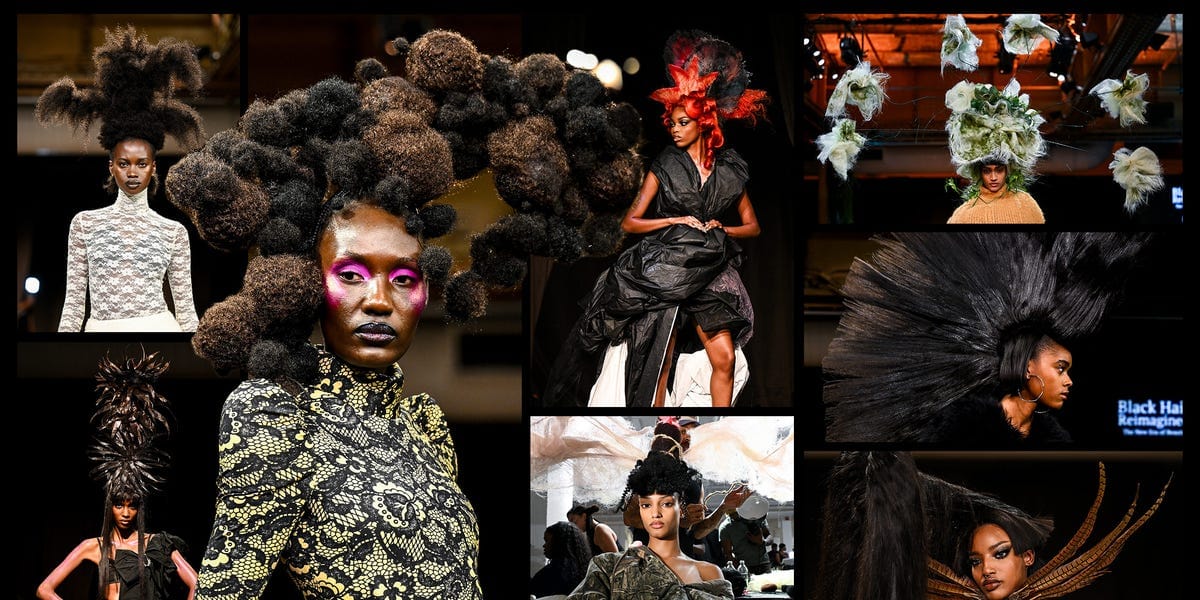
Every year, the Met Gala pulls the fashion world's gaze upward — toward the steps, the looks, the spectacle. But this season, something equally compelling happened before the cameras ever rolled on Fifth Avenue. Black Hair Reimagined: The New Era of Beauty returned for its second year, this time taking over the Altman Building in New York, and it made an undeniable case that hair is not an accessory to fashion — it is fashion.
Conceived by celebrity hairstylist Jawara Wauchope and creative director Jrod Lacks, the runway presentation brought together an ensemble of some of the most visionary hair artists working today. According to Harper's Bazaar, this year's show featured original collections by Fesa Nu, Joshua Meekins, Vernon François, Issac Poleon, Malcolm Marquez, and Wauchope himself — each work given a title, a thesis, a full artistic identity. François named his contribution "The Fifth Silhouette," describing it as existing in the threshold between winter and spring: "nothing feels rushed, and everything is becoming." That kind of language doesn't belong to a beauty tutorial. It belongs to a manifesto.
More Than a Show
What separates Black Hair Reimagined from a glossy brand activation is the intentionality baked into its infrastructure. Makeup artists Jamal Scott and Raisa Flowers, nail artist Dawn Sterling, and a roster of professional stylists — including Jan-Michael Quammie and Matthew Henson — collaborated with hair teams to build full visual narratives, not just looks. Sponsors like Dove, L'Oréal Professional, Amika, Eadem, and Fara Homidi Beauty aligned with the event's cultural mission, tying their support to concrete inclusion initiatives: Dove's Crown Coalition and L'Oréal Professional's Texture of Change program. True Hair Company donated all extensions and clip-ins used in the show. These aren't logo placements — they're commitments.
Lacks has been clear about the vision from the start. "We wanted others in our community and in fashion and beauty to experience what we've seen, but through the lens of Black creatives at the helm," he told Harper's Bazaar — curating something elevated and, crucially, real to the culture. That dual demand — prestige and authenticity — is exactly where so many industry platforms fail. Black Hair Reimagined doesn't.
When hair artists are given the same runway architecture as clothing designers — the lighting, the staging, the editorial framing — what emerges isn't just beautiful. It's a reordering of what the industry considers worth centering, and that shift has consequences that extend well past one night in New York.
Read the original at Harper's Bazaar.


