Confessions of a Former BTS Skeptic
How one writer found hope through induction into K-pop fandom.
Reported by Vogue.
Sixty thousand people inside Allegiant Stadium in Las Vegas, and somewhere in the middle of all of them, a skeptic is losing the argument with herself. This is the scene at the Las Vegas stop of BTS's Arirang tour in May 2026 — color-shifting lightsticks turning the arena into a living constellation, pyrotechnics licking the upper decks, dancers releasing cascades of fabric that make the whole room feel like a shared hallucination. According to Vogue, the writer arrived indifferent, vaguely suspicious of what BTS represented: art precision-engineered for profit, celebrity worship dressed up as connection.
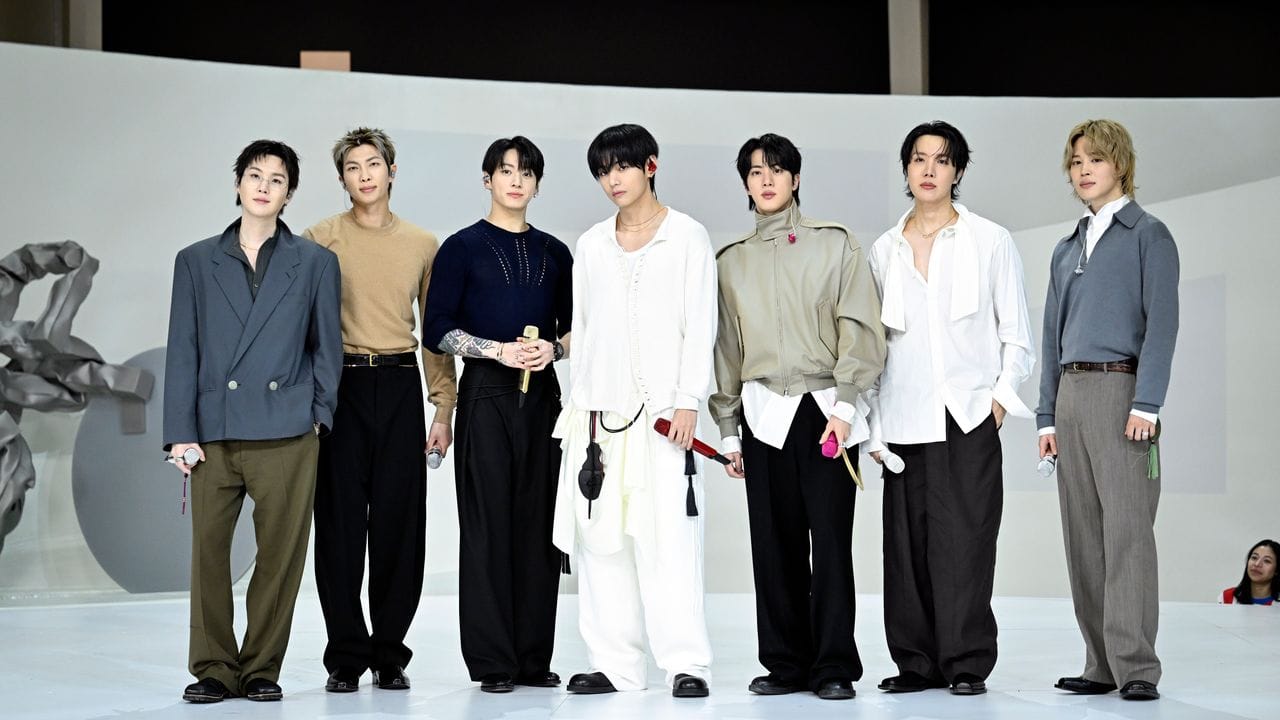
She left a convert. Two weeks post-show, she was waking up and falling asleep to member content, welcomed into the ARMY with a flood of DMs and hot tips about livestreams, variety episodes, and a Disney+ series starring Jimin and Jungkook. The pull wasn't just the performance — though the synchronization and stage presence, sharpened after a four-year hiatus during which all seven members completed mandatory military service in South Korea, are undeniable. It was something harder to commodify: the way RM, Suga, J-Hope, Jin, V, Jungkook, and Jimin actually seem to like each other. Under HYBE Corporation, BTS isn't just selling music. They're selling repair after conflict, mutual belonging, the radical idea that consistent effort toward a shared dream is worth something.
The Harder Questions Don't Go Away
The piece doesn't let the fantasy run unchecked. As a Korean American whose taste was built on Atlanta and Houston rap, the writer is clear-eyed about the friction: K-pop's debt to Black culture, the labor conditions that manufacture stars through years of extreme psychological and physical training, the strange vertigo of watching a white woman appear in a hanbok on her feed. Where is the line between homage and appropriation? What does it mean when a culture gets packaged, marketed, and detached from its origin story? As critic Euny Hong observed in The Paris Review, "K-pop star training is an education of the whole person" — which sounds admirable until you sit with what that process actually demands of teenagers.
Still, there's something worth naming in BTS's specific kind of global reach. The album title Arirang references a 600-year-old Korean folk song rooted in colonial resistance. Most members still give interviews in Korean. Coming from a country with a history of occupation and suppression, their worldwide dominance carries real symbolic weight — something the writer connects to her own childhood discomfort around her Korean name, her grandmother's labor, her mother's accent. The world catching up to what was always beautiful is not a simple story, but it's not nothing either.
What BTS exposes, finally, isn't just a gap in the pop market — it's a gap in how we live. In a cultural moment defined by isolation and cynicism, 60,000 people screaming in unison for seven men who visibly love each other is less an anomaly than a diagnosis. We still want intimacy. We're just surprised when we find it.
The real product BTS is selling isn't parasocial fantasy — it's a reminder that belonging is still possible, and apparently, that's worth stadium prices.
Read the original at Vogue.