Dallas Cowboys Cheerleader Charly Barby Shares How She Trains Year-Round to Nail ‘Thunderstruck’ Kicks
Two moves are critical to her repertoire.
Reported by Women's Health Magazine.
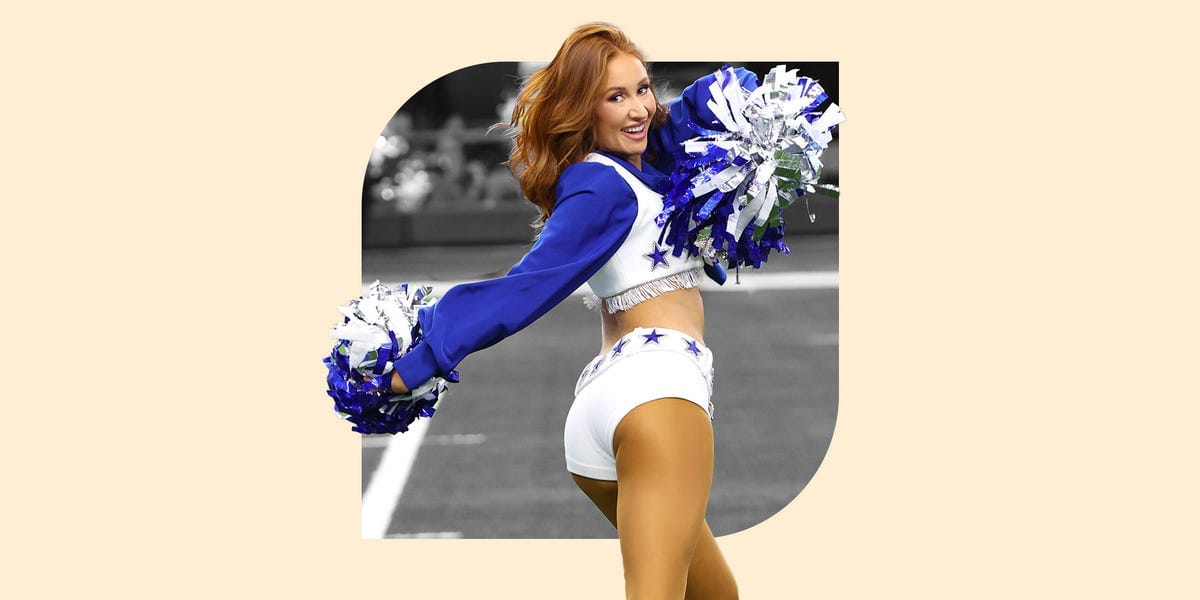
The America's Sweethearts docuseries made one thing impossible to ignore: Dallas Cowboys Cheerleading is a serious athletic pursuit. Thirty-six women launching into simultaneous aerial splits in heeled cowboy boots, legs swinging nose-high in perfect sync to AC/DC — that's not stage magic. That's a training program. According to Women's Health Magazine, three-year DCC veteran Charly Barby, 25, broke down exactly how she stays Thunderstruck-ready year-round — and it's a masterclass in periodized training most gym-goers haven't considered.
Off-season, Charly's focus is pure endurance. Cheerleading isn't a performance — it's a full-game athletic event, sideline to halftime, for hours. Her base-building toolkit: megaformer Pilates, dance classes, and running (a pandemic-era discovery she's kept). Her smartest trick? Lifting before she runs. "That emulates the feeling of how tired you are when you're at that last quarter of the game and you have to really push," she says. Fatigued cardio isn't punishment — it's simulation. She queues up Rihanna, Tate McRae, and Charli XCX and jogs through Dallas like it's a game day warm-up.
The Science Behind Those Sky-High Kicks
What looks effortless on the field is a technically brutal movement. Unlike the hip-external-rotation of classical ballet — which Charly trained in for years — DCC kicks are done in parallel, loading the hamstrings and hip flexors in an entirely different way. New team members essentially have to rewire muscle memory they've spent a lifetime building. The fix is in the glutes: kicking from the posterior chain rather than the hip flexors. Charly uses glute bridges to reinforce that pattern and protect her hips, pairs deep lunge stretching with a massage gun for recovery, and warms up with a flutter-kick variation — leg up to the nose, hips square — to groove the right range of motion before any full-out rehearsal. For ankle stability in those heeled boots, she relies on a ballet staple: 32 relevés (calf raises) per session.
In-season, the calculus flips entirely. With rehearsals and game days stacking up, additional cardio becomes counterproductive. Rest is the work. "I'm the type of person who needs to force myself to rest," Charly admits — a tension any high-achiever will recognize. Her active recovery looks like hydration, walks, and nothing that risks arriving to training camp already depleted. "You don't want to overuse your body to the point where you're sore and tight and then your kicks look low," she says. That trade-off — ego versus performance — is the discipline most people underestimate.
The real takeaway from Charly's routine isn't any single exercise — it's that elite performance is built in the off-season, protected in-season, and sustained by knowing exactly when to push and when to stop.
Read the original at Women's Health Magazine.