Danielle McKinney On Uncertainty and Painting Women at Rest
The painter is currently presenting her largest museum exhibition, “Shelter,” at the Norton Museum of Art
Reported by Harper's Bazaar.
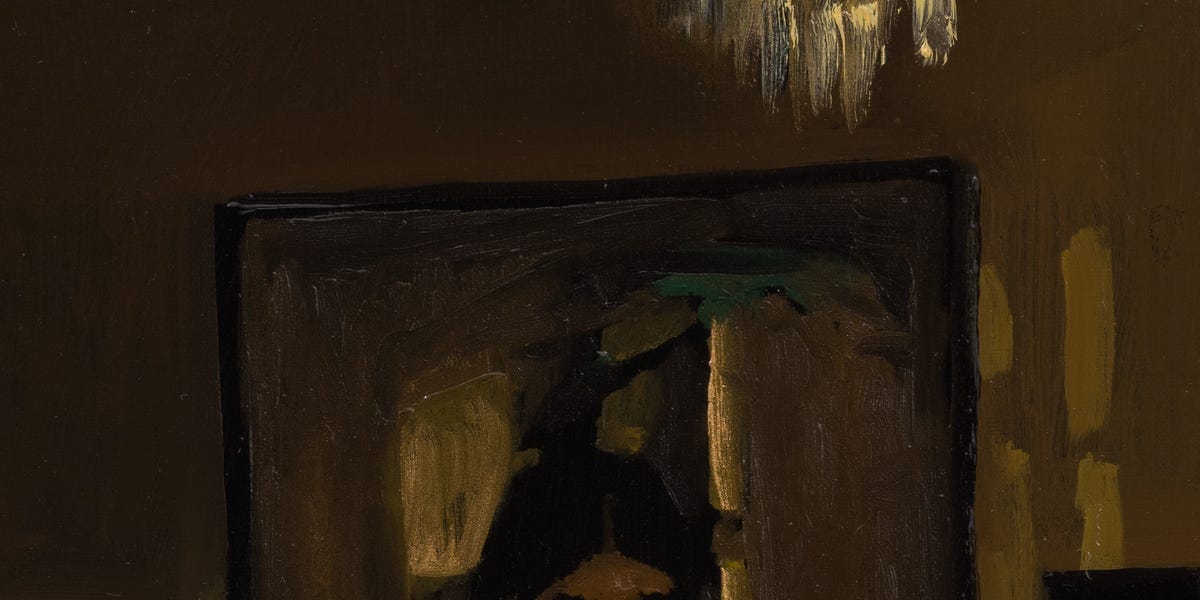
There is a woman in Danielle McKinney's painting Shelter (2026) — oversized cream sweater, chin resting in her hand, so deeply interior that a butterfly has landed on her fingers without disturbing her. She is not performing. She is not waiting to be seen. She simply is. This is the territory McKinney has claimed entirely as her own: Black women caught in the unguarded, unphotographable middle of being alone with themselves.
"When we're really alone by ourselves, and nobody's watching… where do we go? What are we thinking?" McKinney said from her Jersey City studio, according to Harper's Bazaar. The answer, across canvas after canvas, involves cigarettes and flowers and the particular sprawl of a body that has stopped managing its appearance. Women lounging. Women mid-thought. Women asleep. The paintings insist that stillness is its own radical act — and that witnessing it, really witnessing it, is intimacy.
Chasing Something Unknown
What makes McKinney's origin story almost absurdly good: she only started painting during the pandemic. At 45, she was a photography professor at Parsons when quarantine forced the pivot. Within a year she was showing at Fortnight Institute in New York, Night Gallery in Los Angeles, and Marianne Boesky Gallery in Aspen. Now she has a solo exhibition at Boesky's New York space and the largest show of her career running at the Norton Museum of Art in Florida through October 9. That is not a slow build. That is a detonation. But McKinney credits the medium's fundamental resistance — its refusal to simply hand you what you want — as the engine behind all of it. "I know what I want, but the paint will never give me what I want," she said. "I'm constantly gripped by uncertainty." Unlike photography, where a staged image by someone like Jeff Wall can be composed, shot, and edited into exactly what was envisioned, oil painting dismantles the plan every time. McKinney finds that maddening. She also finds it completely addictive.
The switch from acrylics to oils marked the real turning point — in both craft and self-trust. "The brushwork, the way it dries, the way it smells, it feels like the alchemy of what paint is," she explained. "That's when I became confident to say, I trust myself enough to not be perfect, but to experiment." She still takes paintings down mid-installation. She still struggles to call them finished. But her metric has sharpened into something almost ruthlessly simple: Do you love it? If I feel it, then I can let it go.
The guilt, too, is real — McKinney has grappled openly with the dissonance of painting women relaxing on sofas with cigarettes while the world outside fractures. Her response was not to pivot toward urgency but to lean further into vulnerability, including her own creative doubt. Her Norton artist's statement reads: "We live in a world where we're running. There's beauty in rest." After six years and a body of work that arrived fully formed and refused to slow down, she has finally, she says, gotten out of her own way.
The most subversive thing McKinney paints isn't rest — it's the radical permission to be unfinished, uncertain, and still completely worth watching.
Read the original at Harper's Bazaar.