<em>Yesteryear</em> Has Everyone Talking—But Does It Deliver?
Yesteryear has an immediately appealing premise. But does it deliver?
Reported by Harper's Bazaar.
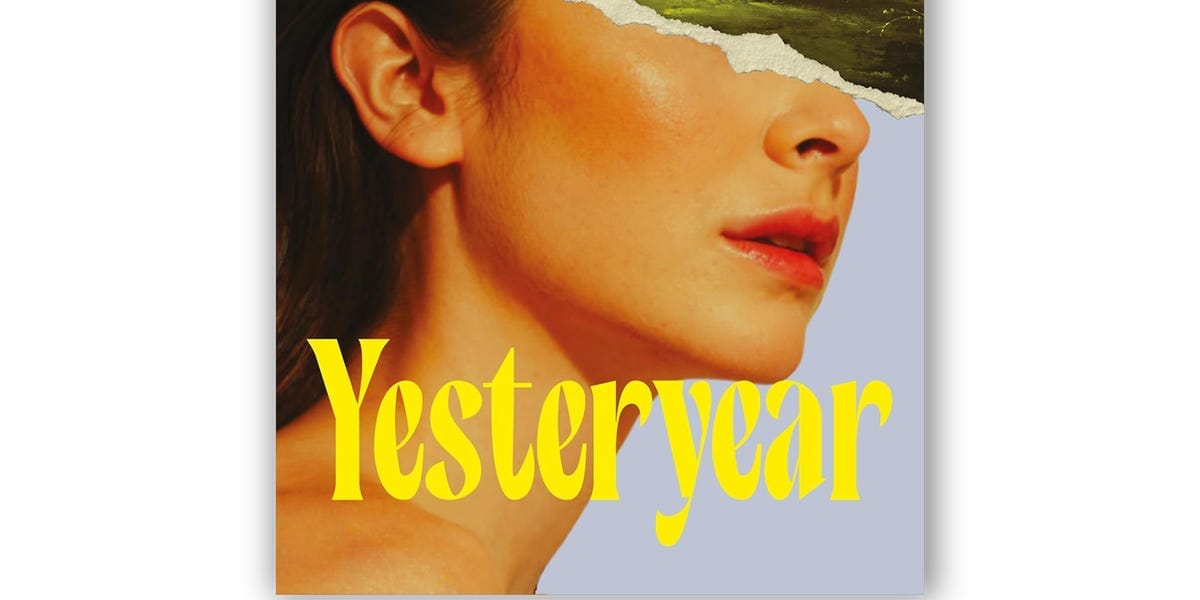
The tradwife-turned-time-traveler premise of Caro Clarie Burke's debut novel Yesteryear is undeniably viral-ready. The book's centerpiece—a successful Instagram influencer named Natalie Mills who wakes up transported to 1855 and forced to actually live the "traditional" life she's been performing for followers—arrived already culturally weaponized, courtesy of Anne Hathaway's option deal and the inevitable Twitter discourse. Burke's prose is slick and propulsive, the kind of MFA-sanctioned work that moves you forward even when the metaphors feel inevitable (Mills compares her juggling of career, marriage, and family to "breastfeeding three babies, seducing three lovers at once"). The opening chapters channel the biting misanthropy of Gillian Flynn's "cool girl" monologue, introducing us to a contemptuous, über-successful character performing domestic authenticity from a meticulously designed Idaho farm while actually running a lucrative merchandise empire. It's a sharp setup.
The problem is that Burke seems more interested in winking at her audience than in actually exploring what makes Natalie tick. Early on, when her daughter asks what a "tradwife" even is, the narration literally stops for a record-scratch moment—a formal acknowledgment that yes, we're reading camp for people allergic to subtext. Natalie's psyche is all contempt: for the "angry women" who hate-watch her content, for her ambitious-free husband Caleb, for the younger women in her orbit. She's a reliably unreliable protagonist, which should be refreshing in thriller territory. Instead, it makes the book feel less like an investigation and more like a highlight reel of villain moments.
The Faith Problem
Here's where Yesteryear begins to fracture. Natalie's rage against "feminist bogeywomen" is rooted in her religious identity—she believes they lack faith, that their contrarianism is hollow. But Burke never actually defines which faith shaped Natalie. Is she Baptist? Mormon? Pentecostal? These traditions are politically aligned but culturally distinct, and for a character this performative and this religious, the difference should matter enormously. Instead, the novel sprinkles in Bible quotes and moves on, leaving Natalie's spiritual foundation as vague as her actual interiority.
The result is a narrative that feels driven by its twist rather than by genuine character revelation. Natalie's daughters—the supposedly wise, defiant Clementine and Mary—function more as paper dolls in a vaguely feminist morality play than as complex survivors. The big ideas Yesteryear reaches for—that educated middle-class white women harbor self-hatred and are trapped in performative domesticity—aren't exactly news; novels have been circling these questions since novels existed. What's missing is any serious grappling with what authenticity even means under capitalism, or whether yearning for it is folly or necessity. Instead, the psychological thriller framework flattens every structural critique into a story about what's happening in one woman's head.
Yesteryear works best if you don't interrogate it—a book that delivers maximum entertainment precisely because it asks you to stop thinking.
Read the original at Harper's Bazaar.