Emily Blunt’s Top Performances, Ranked
From her debut in Paweł Pawlikowski
Reported by Harper's Bazaar.
There is a specific kind of actress who can walk into a scene, say almost nothing, and still make you forget everyone else on screen. Emily Blunt has been doing exactly that for over two decades — and according to Harper's Bazaar, her new Steven Spielberg sci-fi thriller Disclosure Day ranks among her finest work yet.
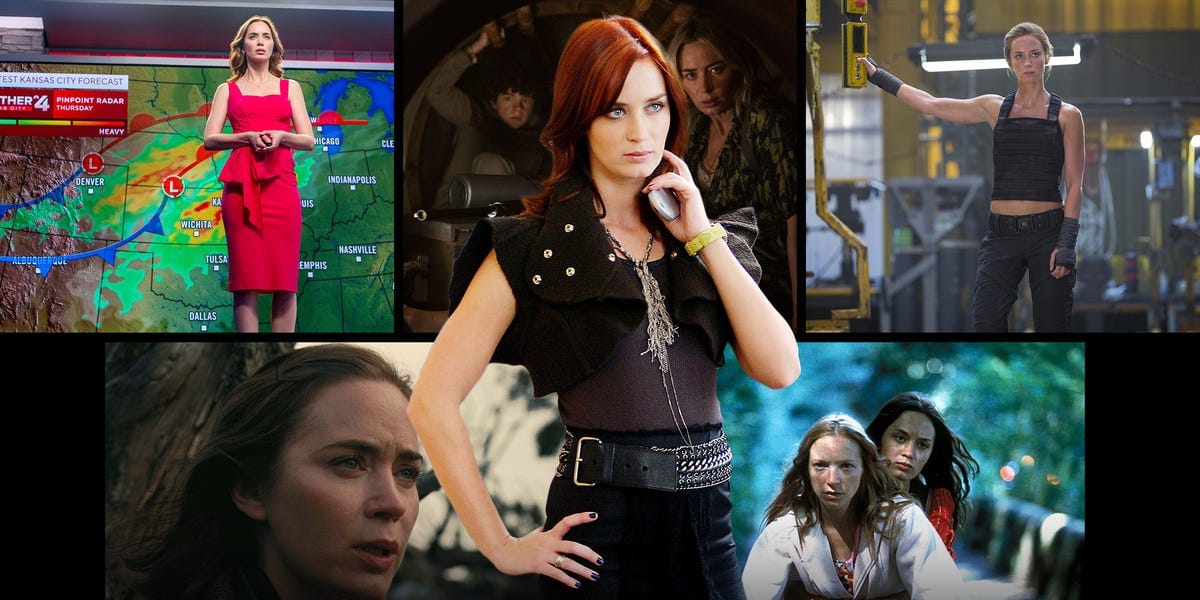
In it, Blunt plays Margaret Fairchild, a Kansas City meteorologist who begins speaking an alien language live on air and gets pulled into a whistleblower movement about extraterrestrial existence. Spielberg's film isn't perfect — the plot has holes, the sentiment runs thick — but Blunt functions as its structural spine. Take her out and the whole thing collapses. That's a pattern across her career: she routinely saves films that don't fully deserve her.
The Range Is the Point
What separates Blunt from her contemporaries isn't versatility as a buzzword — it's what she actually does with limitation. In A Quiet Place, she delivered a tour de force in near-silence, navigating post-apocalyptic terror and a literal on-screen childbirth without the luxury of dialogue. In Oppenheimer, she spent most of three hours in the margins as Kitty Oppenheimer, only to commandeer the film's final act with surgical precision. In Looper, she was handed a character with almost no arc and still became the film's emotional center. In Edge of Tomorrow, she outshone Tom Cruise in a Tom Cruise action movie — which, frankly, should be scientifically impossible.
Her earliest work tells the same story. At 19, in her debut My Summer of Love, she played a volatile, class-privileged teenager with an assurance that most actors take a decade to develop. Her breakthrough as sharp-tongued Emily in The Devil Wears Prada could have been a one-note mean-girl moment; instead, Blunt threaded in flashes of desperation and real warmth that made the character genuinely unforgettable — and that's standing next to Meryl Streep. In The Young Victoria, she navigated the political gauntlet of a male-dominated aristocracy without letting the performance tip into pageantry. Most recently, in Benny Safdie's The Smashing Machine, she held her own opposite what's being called the best performance of Dwayne Johnson's career.
The throughline isn't a "type." It's an instinct for emotional truth that functions regardless of genre — horror, sci-fi, period drama, action, musical. Blunt doesn't disappear into roles so much as she insists on them, finding the specific human thing that makes a character worth watching even when the script doesn't make it easy.
Twenty-plus years in, the case is closed: Emily Blunt doesn't elevate films — she rescues them.
Read the original at Harper's Bazaar.