“Existence Is Resistance”: 5 Key Takeaways From Mercedes-Benz Fashion Week Tbilisi
Mercedes-Benz Fashion Week Tbilisi returned after a three-year hiatus. But the fashion landscape looks very different.
Reported by Vogue.
Georgia's fashion scene has never been easy to contain. At its peak, Mercedes-Benz Fashion Week Tbilisi felt like one of the most electric events on the global calendar — queer performers and designers staging politically charged shows that fused Soviet-era tension with radical self-expression. Then came the interruptions: Russia's invasion of Ukraine, a right-wing government pivoting hard toward conservatism, violent street protests, and, in 2024, an anti-LGBTQ+ bill that hit Georgia's creative community both commercially and personally. The FW26 edition, which ran May 7–11, was the platform's first full return since May 2023, according to Vogue.
MBFW Tbilisi founder Sofia Tchkonia — who launched the event in 2015 — kept the community tethered during the dormant years through scaled-back Culture Days, but the relaunch represents something larger. "Relaunching MBFW Tbilisi is about supporting that momentum and creating opportunities for the next chapter of Georgian fashion," Tchkonia said, noting that regional instability has complicated everything from production logistics to international travel for designers. She secured returning sponsors Mercedes-Benz and Coca-Cola, plus newer partners, to make the 11-show, three-exhibition program happen.
Building Something From Almost Nothing
The business realities are stark. Designer Aleksandre Akhalkatsishvili has watched his stockist list shrink to four stores after several retail partners went bankrupt. Lado Bokuchava — back at MBFW Tbilisi for the first time since 2020 — counts Revolve among his four wholesale accounts and has leaned heavily into direct online sales to compensate for a tough wholesale environment. The math is brutal, but both designers came back anyway, treating the platform as essential infrastructure for reaching international buyers and press. Andam Prize founder Nathalie Dufour, attending for the third time, called the Georgian creative output "unique and dramatic," citing the tension between commercial fluency and something rawer that the country's circumstances seem to produce.
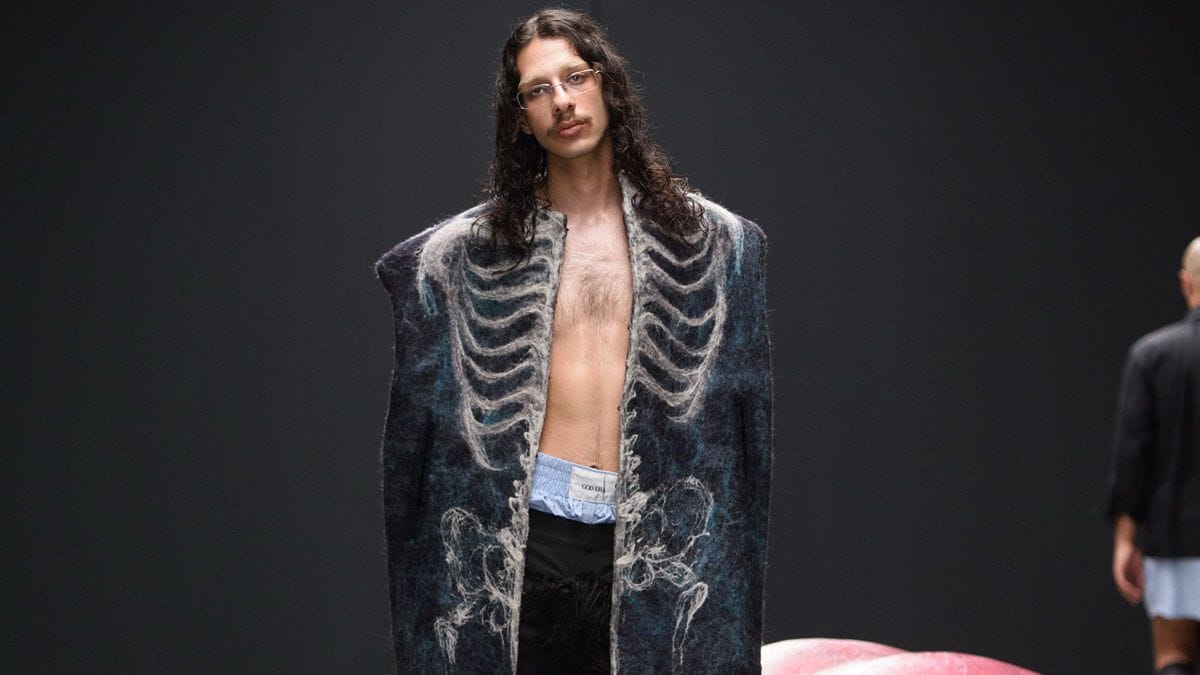
That rawness showed up most viscerally in God Era's FW26 collection, where designer Nino Goderidze centered a giant tongue sculpture — a direct reference to censorship — and sent out fitted gray hoodies printed with graffiti-style markings that mimicked the protest slogans routinely painted over by authorities across Tbilisi overnight. "When you walk through Tbilisi, you constantly see these erased surfaces," Goderidze said. "For me, they became symbols of silenced voices." At the drag ball — now a Tbilisi institution, with performers unnamed for their safety — drag queen Otaraant Queer opened with a declaration that cut through every geopolitical caveat: "Our existence is resistance. We are not going anywhere."
Georgian fashion is not thriving despite its circumstances — it is being shaped by them, and the difference matters: the collections coming out of Tbilisi right now carry an emotional specificity that no trend cycle can manufacture.
Read the original at Vogue.


