Field Studies Flora’s Alex Crowder Launches a Line of Gardening Tools Designed for Everyone
The floral artist, whose playful work has seen her collaborate with MoMA and Roman and Williams, wants to share her philosophy of sourcing flowers seasonally and locally with the world.
Reported by Vogue.
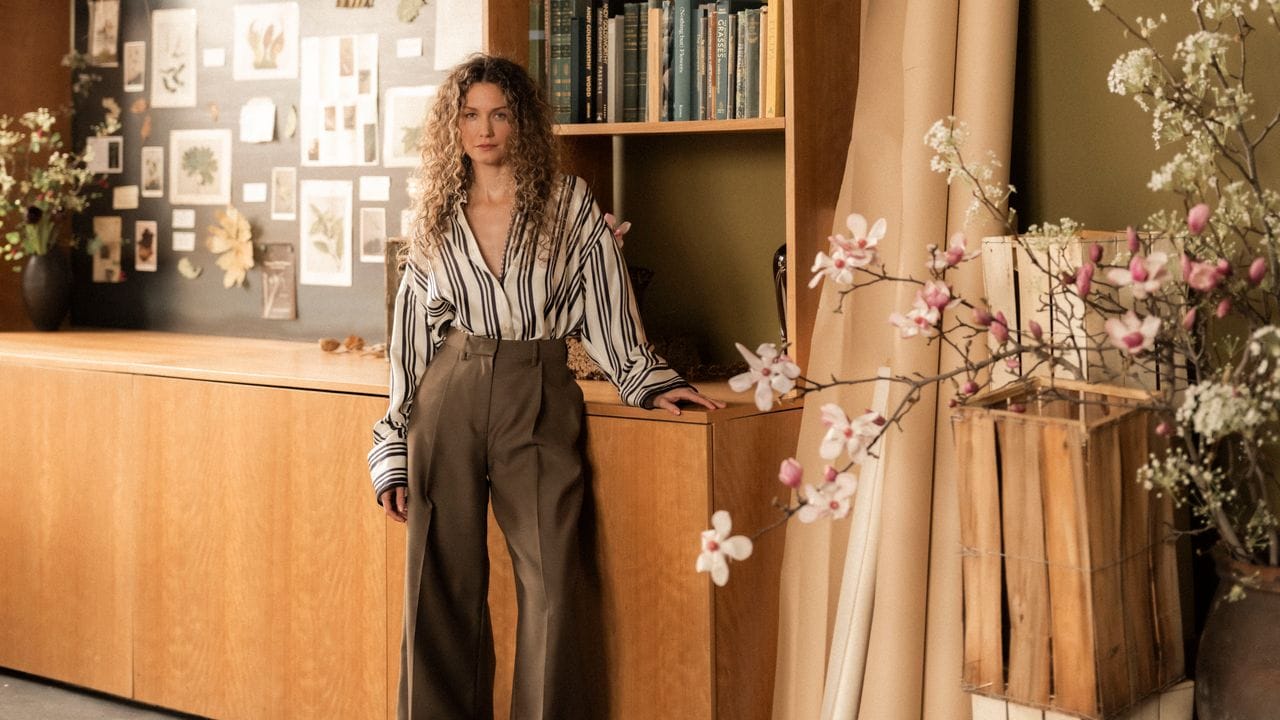
Alex Crowder didn't arrive at floristry through the expected door. The Missouri-raised, graphic design-trained founder of Field Studies Flora spent years making window displays for Anthropologie before she realized that New York's flower market — and the possibility of building large-scale, material-driven installations — was the actual destination. She launched Field Studies Flora in late 2020, and the studio became a quick success. "I could see the arc of my life bending towards the natural world," Crowder has said. "It was just a matter of trying to figure out how I was going to bring that to fruition."
This week, she's extending that vision into tools — a curated, largely custom-made line designed to lower the barrier to entry for anyone who wants to work with flowers and plants. According to Vogue, the collection includes woven foraging baskets made in collaboration with Erin Pollard of Underwater Weaving Studio, leather holsters already used by the Field Studies team, and waxed cotton aprons crafted by Samuel Snider. The one ready-made exception: Crowder's preferred Japanese shears. The driving impulse behind the line is democratization. "We've been gathering since we started on this planet," she says, pushing back against the idea that floristry requires formal training to access.
The Ethics Are the Aesthetic
What genuinely distinguishes Crowder isn't just the visual intelligence of her work — her obsessive attention to how a stem bends, how a petal loosens, how a leaf catches imperfection — it's the rigor behind the sourcing. Her team holds multiple weekly sourcing meetings and makes regular farm visits. She knows the growers personally, knows their chemical practices, and has turned down clients whose values don't hold up to scrutiny. "It's quite obvious when a company is trying to use us to position themselves as more mindful," she says, without apology. Her position on pesticides is equally unambiguous: widespread use in the floral industry is largely unregulated, and she refuses to work with chemically treated material.
To explain why this matters, Crowder draws a direct line to conversations consumers already understand — farm-to-table food, circular fashion. Supply chain transparency, unsustainable shipping, chemical exposure: these aren't niche concerns, they're industry-wide failures the floral world has largely avoided confronting. "Consumers drive change," she says. "They are the ones ultimately that will help us rebuild this industry, or at least reroute it."
The tools, now available online, are partly a business expansion and partly a continuation of a much longer argument — that engaging with the natural world doesn't require gatekeepers, expensive workshops, or a supply chain you can't trace. For Crowder, it starts with picking something up and paying attention to it. The rest follows.
If the floral industry is going to clean itself up, it'll be because enough people started asking where their flowers actually came from.
Read the original at Vogue.