Here’s What the Runways Looked Like the Last Time the Knicks Were in the NBA Finals
See 13 collections that defined the 1999 seasons
Reported by Harper's Bazaar.
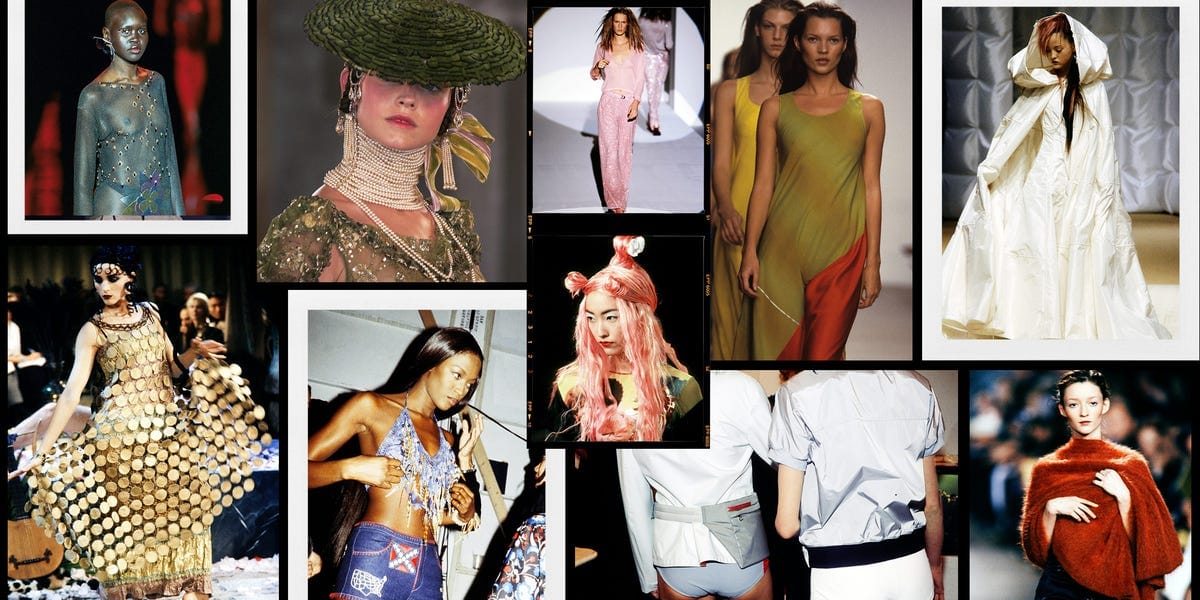
The New York Knicks haven't made the NBA Finals since 1999 — and if you need a reason to care about that particular cultural timestamp, allow fashion to make the case. While the city was fixated on Madison Square Garden, the runways were producing some of the most consequential collections in modern fashion history. According to Harper's Bazaar, the Spring and Fall 1999 seasons delivered a staggering concentration of visionary work — the kind that still gets referenced in graduate theses and museum retrospectives.
The Shows That Defined an Era
Alexander McQueen's No. 13 show remains the emotional apex of the season — a collection merging Arts and Crafts influences with WWI prosthetics that culminated in Shalom Harlow spinning on a platform while robots slowly awakened and spray-painted her white dress in black and yellow. McQueen later said it was the only collection that ever made him cry. Meanwhile, John Galliano sent models dancing through a tableau of loincloth-clad male figures at Dior, draping them in bias-cut silks and ancient Roman references. His Dior Couture Fall collection went darker: Matrix-coded warrior looks, animal heads, and pearls walking the halls of Versailles. Both shows read as pure spectacle — and both hold up.
The commercial houses weren't coasting either. Tom Ford's Gucci channeled maximalist Summer of Love energy — floral prints, leather, embellished denim, barely-there bikinis — while Miuccia Prada did the opposite, dissecting hippie clichés with broken mirror appliqués, fanny packs, and athletic undertones. "It was the least hippie collection imaginable," Prada said years later, discussing the work for the Met's "Schiaparelli and Prada: Impossible Conversations" exhibit. That tension — trend as subject versus trend as content — is exactly the kind of intellectual game that made her an icon. Karl Lagerfeld dressed Karen Elson in a red quilted puff dress and put Naomi Campbell in crochet for Chanel Couture. Rei Kawakubo sent models down the Comme des Garçons runway in complete silence: tartan, oversized bows, punk geometry — femininity as provocation.
And then there were the careers being built in real time. Stella McCartney was transforming airbrushed tourist tees and playful motifs into silk-and-lace luxury at Chloé. Marc Jacobs was stacking supermodels — Campbell, Gisele Bündchen, Karen Elson, Stella Tennant — into classic knits at Louis Vuitton, bags enormous and deliberately so. Anna Sui put Naomi, Maggie Rizer, and Karen Elson in embroidered denim and patchwork on a runway so definitively nineties that Rizzoli published a book about it 25 years later. Paco Rabanne closed out a 33-year couture run with Adriana Lima and Alek Wek in chainmail and armor — an ending that felt, fittingly, like a statement.
The Knicks lost the Finals that year. The clothes won everything.
Read the original at Harper's Bazaar.