Hooray for Hollywood!—And Jonathan Anderson’s First Dior Cruise Collection
His Los Angeles show was a tribute to the long love affair between fashion and film
Reported by Harper's Bazaar.
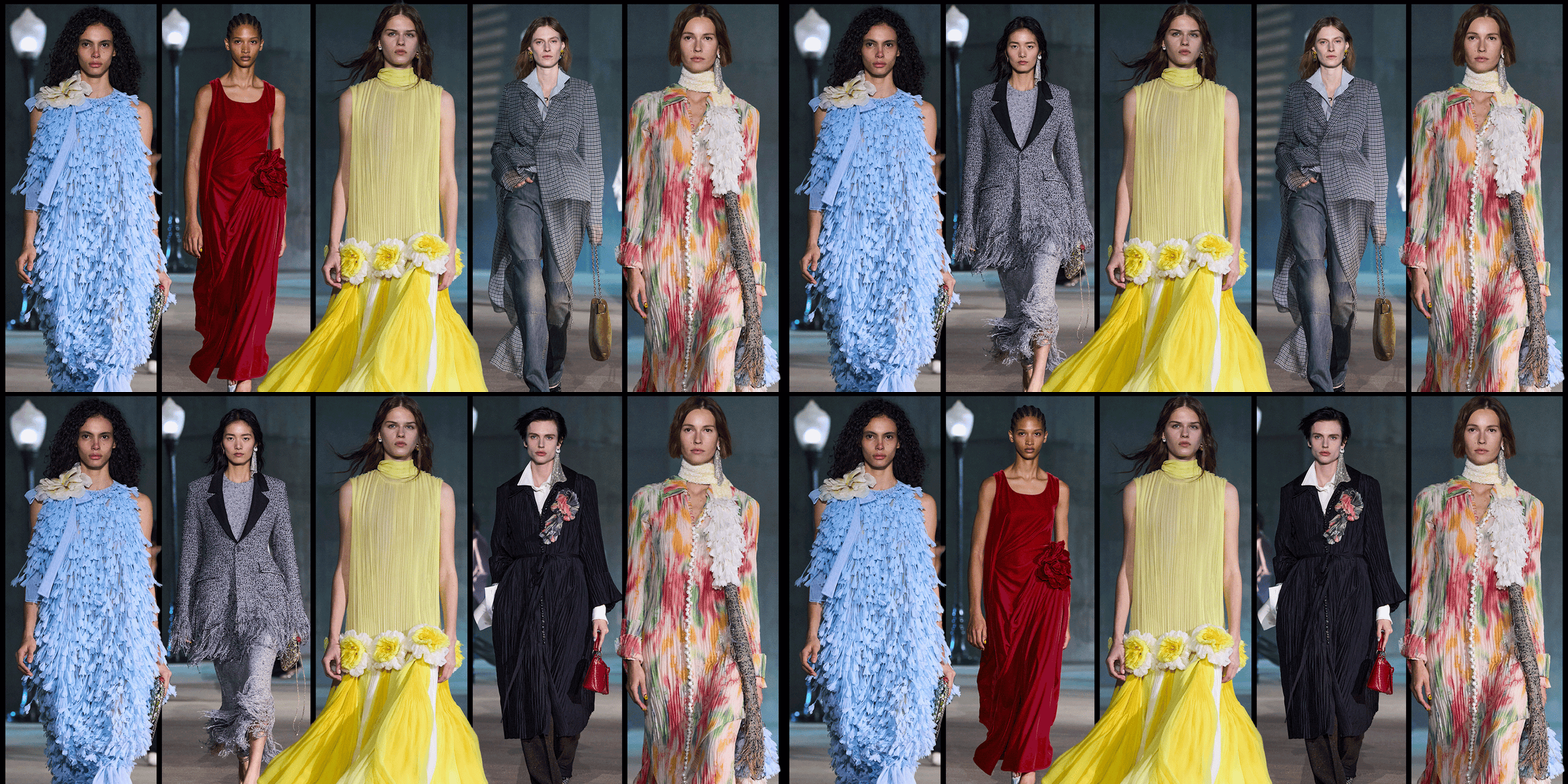
Jonathan Anderson's first Dior Cruise collection didn't just reference Hollywood — it understood it. The show took place at LACMA's brand-new David Geffen Galleries, staged inside a Brutalist concrete atrium dressed up like a fever dream between Ed Ruscha, Edward Hopper, and Mulholland Drive. Dimly lit streetlamps. Classic cars. A zig-zagging runway that began just after sunset. Melancholic, cinematic, and just Pop enough to keep it from tipping into nostalgia.
The intellectual anchor, according to Harper's Bazaar, was a book about Scotty Bowers — an L.A. gas station attendant who spent four decades secretly connecting Hollywood stars with sexual partners. Anderson said it got him thinking about the tension between "the on-screen and off-screen, the worker and the non-worker." From there, he traced a line back to Christian Dior himself, who in the 1950s became one of fashion's first true industry strategists — touring Warner Brothers and Paramount, cultivating studio relationships, and getting his designs into films with the kind of deliberate hustle that had nothing to do with vanity and everything to do with vision. The most famous product of that era: Marlene Dietrich refusing to make Hitchcock's Stage Fright without Dior on costume duty. "No Dior, no Dietrich." Anderson built an entire collection around that line.
The Clothes, Grounded in History and Cut for Now
Dietrich's influence landed hardest in the tuxedo jacket Dior originally made for her — recreated here for the first time in house history after the original spent decades privately held by the Alaïa foundation. Drop-waist silhouettes opened the show, embellished with yellow and blue poppy appliqués. Shirting was a through-line: straight-cut shirt dresses in Fortuny-style micro-pleats with asymmetrically placed covered buttons felt like the smartest things on the runway. The Bar Jacket got shredded at the hem and paired with ripped jeans. Suiting arrived with fringe at the waist or neckline. Accessories leaned into a single chandelier earring or iterations of the Galliano-era Saddle bag — one, cheekily, Cadillac-inspired. The menswear included Phillip Treacy hats spelling out words like "Star," "Flow," and "Buzz" — which Anderson confirmed are riffs on a hat once owned by Isabella Blow, one he's been trying to acquire for years.
None of this was accidental eclecticism. Anderson is openly navigating a customer base that spans Dior purists, Galliano devotees, and Chiuri loyalists — and he's doing it without pretending those camps don't exist. The cinematic strategy is part of the same balancing act. He's announced plans for at least three film costuming partnerships over the next year, one with director Luca Guadagnino, with two others still unnamed. "How do you do it so it's not just product placement?" he asked backstage. The question alone signals how seriously he's thinking about this.
Anderson knows exactly where he's taking Dior — and if this collection is the opening scene, the rest of the film is going to be worth watching.
Read the original at Harper's Bazaar.