How a Reality Show Gave Us the Most Brutal Depiction of the Postpartum Experience
‘The Valley’ cast members Kristen Doute and Nia Sanchez reflect on their rawest season yet.
Reported by Women's Health Magazine.
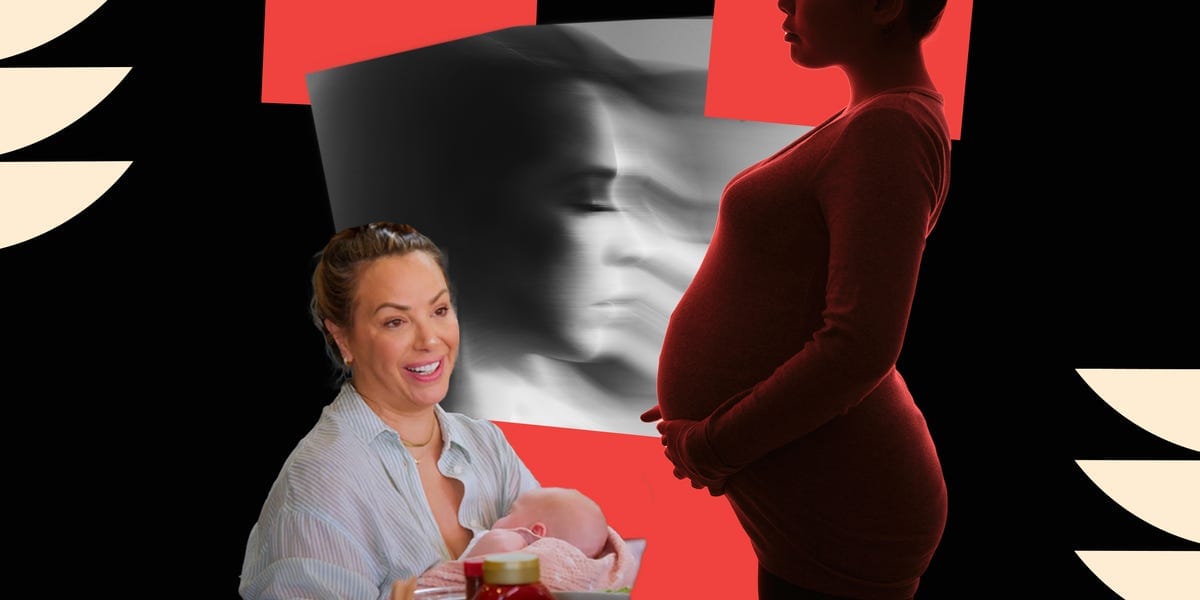
Kristen Doute has given reality television a lot over the years — feuds, tears, table-adjacent chaos — but her current season of The Valley delivers something genuinely unprecedented: a raw, unfiltered look at early motherhood in real time. In one scene, she's bleeding into an adult diaper during her first postpartum period. In another, she's spiraling in a cafe parking lot because getting three blocks from home with a newborn feels like navigating a war zone. It's uncomfortable to watch. It's also, according to Women's Health Magazine, exactly what postpartum truth looks like.
Doute, 43, and castmate Nia Sanchez, 36 — both navigating their fourth trimesters on camera — give the season its emotional gut-punch. Doute describes going from self-described social butterfly to someone who couldn't bear to leave the house. Sanchez, a Type-A mother of four children under four, white-knuckled her way through PPD and PPA after her twins in 2023, a experience she hadn't anticipated and wasn't prepared for. What makes their portrayals sting is not the drama — it's the recognizable, inarticulate suffering. "You feel like a stranger in your own body," says Tara Harding, DNP, FNP-C, nurse practitioner and founder of the Simply You clinic. "You can't point to what's singularly wrong."
The Science Behind Why the Fourth Trimester Hits So Hard
The hormonal collapse that follows childbirth is, clinically speaking, the most severe your body will ever endure — sharper and faster than menopause, hitting within hours of delivery rather than across years. Layer in sleep deprivation, physical recovery, and the round-the-clock demands of a newborn, and you have a neurological system pushed to its limit. Emily Guarnotta, Psy.D, clinical psychologist and founder of telehealth clinic Phoenix Health, explains it this way: postpartum anxiety, which affects an estimated one in four new mothers compared to PPD's one in seven, isn't a malfunction — it's the brain's hypervigilance dialed past useful into overwhelming. "The system goes a little bit out of whack," she says. "We can go from appropriately hypervigilant to excessively hypervigilant." Doute put the fear more plainly: What if I feel like this forever?
What's quietly revolutionary about this season isn't the candor alone — it's the timing. Most public conversations about PPD and PPA happen retrospectively, with composed mothers reflecting on a crisis that's already passed. Watching Doute and Sanchez struggle to explain their inner chaos to their partners in real time, failing to find the words, is a different kind of representation entirely. It closes the gap between the polished postpartum narrative and the actual experience of lying on the bathroom floor wondering who you are now.
Both women report finding steadier ground — Doute says she's finally "in the groove," and Sanchez credits increased support at home — and the experts who treat these conditions are relieved to see the conversation moving into the present tense, where shame has less room to grow. The postpartum experience has always deserved this level of honesty; it just took reality TV to finally show it.
Read the original at Women's Health Magazine.