How Danielle Frankel Built a New World of Bridal
As she approaches 10 years, Frankel, alongside her CEO and partner Joshua Hirsch, is reimagining what a bridal business can be.
Reported by Vogue.
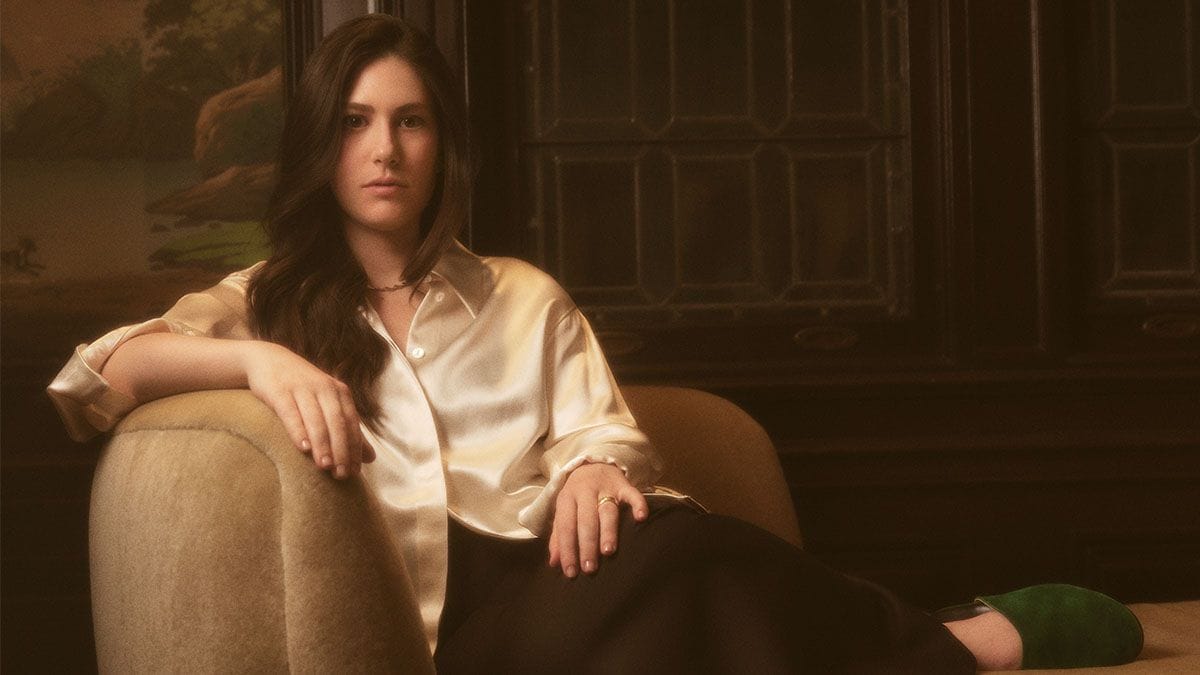
Danielle Frankel started her bridal label in 2017 from what she calls "a literal closet" in Manhattan's Garment District. Nearly a decade later, her studio is a curated sanctuary of chartreuse carpeting, tapestries, and plush seating—basically her living room on steroids. The throughline between then and now isn't just square footage; it's a fundamental shift in how she thinks about what brides actually want, and what the bridal industry itself can become.
Her designs have matured accordingly. Those early sleek blazers and gowns have evolved into the draped, architectural shapes she's known for now—feathered gowns, ruched peplums, unexpected fabrications like horsehair and hand-painted organza. According to Vogue, her most recent collection signals a "rebirth," a visual leap even from two years prior. Frankel doesn't shop her mills' bridal offerings; instead, she gravitates toward unconventional materials and reimagines them entirely. This approach has resonated with fashion-forward clients like Alexandra Daddario and Charli XCX, the kind of women who'd rather die than step foot in a traditional bridal salon.
Breaking the bridal playbook
The bridal industry runs on inherited inefficiency: high overhead, wholesale dependency, the whole pedestalized-bride apparatus. Frankel and her CEO (and now-husband) Joshua Hirsch deliberately rejected that model. They built a fashion business that happens to sell wedding dresses, not a bridal business that occasionally courts fashion. The strategy: prioritize direct-to-consumer sales (80% of revenue), keep wholesale strategic at 20% (stocked on Net-a-Porter and Mytheresa), and cultivate fashion-world credibility early. A Vogue debut coverage at New York Bridal Week, a runway review the following year, participation in the Vogue/CFDA Fashion Fund in 2019—just two years after launch. These endorsements don't typically go to bridal designers. They went to Frankel because she positioned herself as a fashion force first.
The numbers back it up. The brand saw 85% year-on-year revenue growth in 2025, with headcount expanding 50% to roughly 60 people. Margins have climbed steadily since founding. Her atelier in New York also allows for customization—hand-sewn labels, custom lace, altered trains—something traditional bridal rarely accommodates. But Hirsch frames this as more than customer service; it's consumer research. Every alteration teaches them what brides actually want versus what they've been told to want.
Frankel's next move is geographic. International expansion across the Atlantic is coming, with bricks-and-mortar locations planned in key markets—strategic growth informed by Hirsch's pre-bridal consulting background. The brand's entire universe—from studio interiors to Instagram aesthetic to product design—operates as a single, recognizable point of view. It's this coherence that separates her from competitors who still live in the bridal world. As she puts it: "If we don't continuously evolve what it means to be a bride, then we're nothing." The subtext is clear—evolution beats tradition every time.
Read the original at Vogue.