“How Low Can We Go?”: <em>Josie and the Pussycats’</em>s Costume Designer On How She Built An Iconic Y2K Fashion Wardrobe
For its 25th anniversary, Leesa Evans looks back at how the look of the cult classic film came together
Reported by Harper's Bazaar.
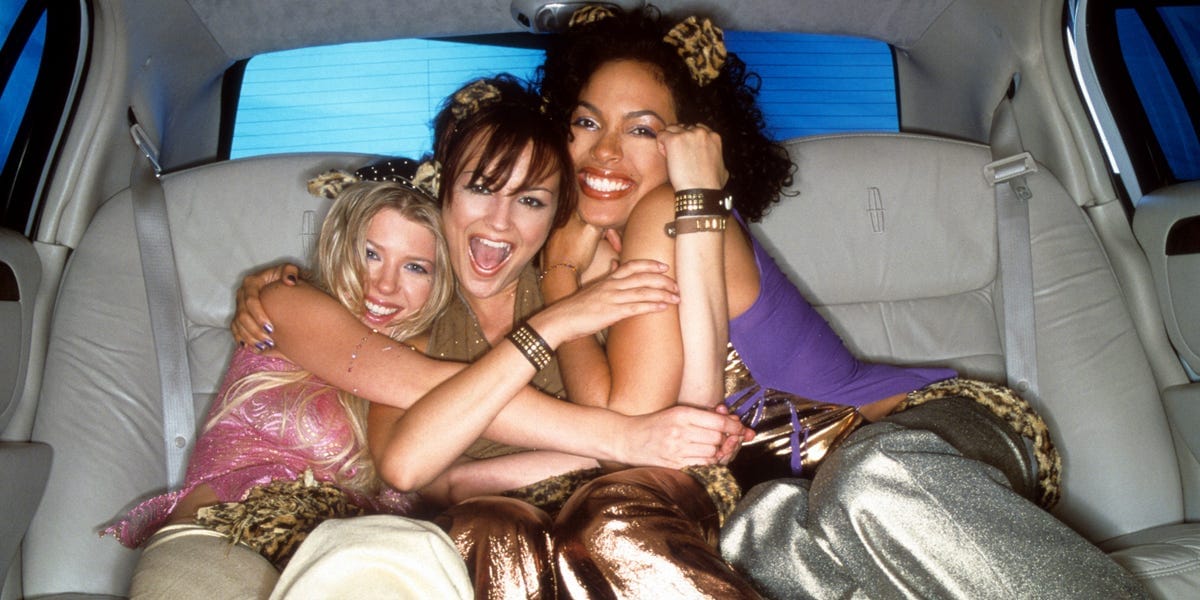
Costume designer Leesa Evans walked into her Josie and the Pussycats interview wearing handmade cat ears. Not as a bit — as a statement of intent. She'd been obsessed with the original Archie Comics since childhood, and when she heard that co-writers Deborah Kaplan and Harry Elfont were adapting it for the screen, she showed up dressed for the part. Those exact ears ended up on Tara Reid in the film. That's how you land a job.
According to Harper's Bazaar, Evans built roughly 90% of the 2001 film's wardrobe from scratch — custom pieces designed to reflect each character's inner world, not just the era's aesthetic. The production already had a maximalist visual language courtesy of production designer Jasna Stefanovic: bubblegum pink, Pop art surrealism, corporate satire cranked to eleven. Evans had to dress women who could hold their own inside it. For Rachel Leigh Cook's Josie, that meant channeling Debbie Harry — thrifted-looking layers, a "Sid" tank with chains nodding to the Sex Pistols, sequined tops, a blue fur jacket, a leopard print suit, and a lot of low-rise jeans. The aesthetic said struggling artist with impeccable taste, because that's exactly who Josie was.
The Politics of the Waistband
Low-rise denim was just beginning its cultural takeover when Evans started the project — but not low enough for her vision. Designing for Reid's Melody became a creative challenge she literally phrased as, "How low can we go?" Melody's entire wardrobe lived in the territory of "oops": tops that looked like they were slipping off, waistbands that defied gravity. It wasn't carelessness — it was character. Rosario Dawson's Valerie got the inverse treatment: a little more buttoned-up, a royal purple bedazzled denim moment, vintage jackets that telegraphed structure with soul. And then there's Parker Posey's corporate villain Fiona — arguably the film's best-dressed character — whose patchwork dresses and feathered choker were designed to keep people physically at a distance. The feathers were armor, Evans says, and a tell: Fiona needed fashion to be someone, rather than express who she already was.
The film flopped at the box office in 2001 — genuinely hard to fathom, given how completely it predicted the next two decades of hypercapitalism and influencer culture. Twenty-four years later, it has cult status and a wardrobe that reads less like Y2K nostalgia and more like prophecy. Evans's custom pieces weren't trend-chasing; they were character studies in fabric. The low-rise jeans, the DIY accessories, the conspicuous branding stitched into a villain's dress — it was all in service of a story about what happens when money starts dictating your creative identity.
The real legacy of Josie and the Pussycats isn't the leopard print — it's the reminder that the clothes you choose are either an extension of who you are, or a costume for who someone else wants you to be.
Read the original at Harper's Bazaar.