How Swimwear Brand Hunza G Is Selling Summer in the City
Ahead of the London brand’s pop-up, founder Georgiana Huddart lays out plans to sell her cult swimwear in the city.
Reported by Vogue.
A swimwear brand opening a pop-up in the middle of London — no sand, no palm fronds, no performative beach vibes — sounds like a flex. For Hunza G, it's a statement of intent. The brand, originally founded in 1984 and revived by creative director Georgiana Huddart in 2015, is planting its flag in Marylebone this June for a two-month pop-up, and the message is clear: this is no longer just a summer brand. It's a year-round world.
The timing is deliberate. According to Vogue, the shop opens fresh off the brand's sold-out Burberry collaboration — the Tyler bikini, featuring that unmistakable heritage check, will be available in-person exclusively at the Marylebone location. It's the kind of collab that, as Huddart puts it, "felt unexpected but also made total sense." CEO Krishna Nikhil is blunter about the bigger picture: "We are in a period of real momentum and building toward doubling the business by 2029." The pop-up, the Burberry partnership, the accelerating press — none of it is accidental. "These are not one-offs," he says. "This year feels like the beginning of a different chapter."
Beyond the Crinkle
Hunza G built its cult status on one thing: the Original Crinkle fabric, knitted on a circular machine to stretch, sculpt, and recover in ways that have kept customers loyal for decades. Current bestsellers — the square-neck one-piece ($255), the Jean bikini ($255), and the Patricia ($270) — have barely needed selling. But Huddart is now carefully widening the aperture. The brand launched UPF swimwear in 2024 after two years of development, and it's already broken into monthly bestseller territory — unprecedented for a non-crinkle product. Ready-to-wear is next, built on the same philosophy: simple, functional, no embellishments that dissolve on contact with saltwater. Accessories — eyewear, sandals, potential collaborations — are also in conversation. None of it will stray far from the aesthetic that made the brand matter in the first place.
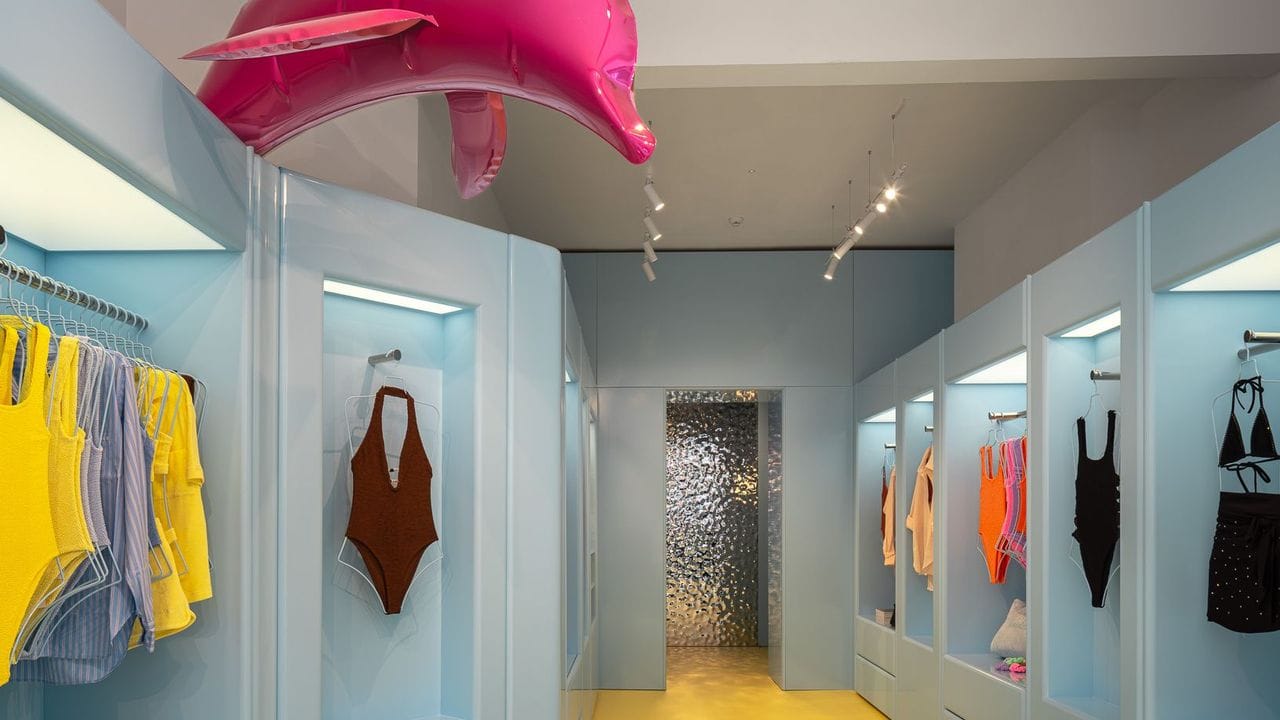
What's also evolving is how Hunza G shows up culturally. The early days were shaped by London's constraints — no beach meant shooting at the Barbican, leaning into editorial over aspirational sun-worship. That scrappiness became identity. Now, rather than chasing celebrity placements, the brand is building storytelling trips: influencers in Ibiza for a collaboration with El Silencio, a Burberry summer escape to Hotel Belles Rives in Cap d'Antibes. "People want to see a real-life, engaging connection — not one image of a celebrity on a yacht wearing a product once," Huddart says. The Marylebone space, designed with Studio Boum and featuring chartreuse floors, teal walls, and a pink Jeff Koons-esque metal dolphin on the roof, is that philosophy made physical.
Huddart completed a management buyout in 2024, bringing in investors including DMG Ventures and Venrex Investment Management and taking controlling stake — which means every move from here is hers to own. The crinkle isn't going anywhere, but the brand clearly is.
Hunza G has always known how to sell summer; now it's learning how to sell itself — city and all.
Read the original at Vogue.