How to Prevent and Treat Ingrown Hairs, According to Experts
The pesky summer problem is solvable. Here’s how.
Reported by Women's Health Magazine.
Ingrown hairs are one of those skin annoyances that feel deeply personal and vaguely unfair. You do the work of removing hair, and your skin punishes you for it. According to Women's Health Magazine, up to 95% of women who remove pubic hair end up with ingrowns at some point — a statistic that almost makes a full bush feel like an act of radical self-care. But before you retire your razor entirely, know that ingrowns are largely preventable with the right approach.
The biology is pretty straightforward: an ingrown happens when a hair strand curves back into the skin instead of growing outward, producing a bump that ranges from mildly irritating to legitimately painful. Gina Petak, senior manager of learning and development at European Wax Center, explains that any form of hair removal can trigger them — but shaving is especially problematic because it creates a sharp-edged tip that can easily re-pierce the skin. Curly or coarse hair is structurally more prone to the problem, notes Dr. Divya Shokeen, a board-certified dermatologist and founder of OSVI Dermatology Surgical Institute, because its curved follicle naturally wants to loop back rather than grow straight. That's why the bikini line and underarms are repeat offenders.
Prevention Is Mostly About Technique
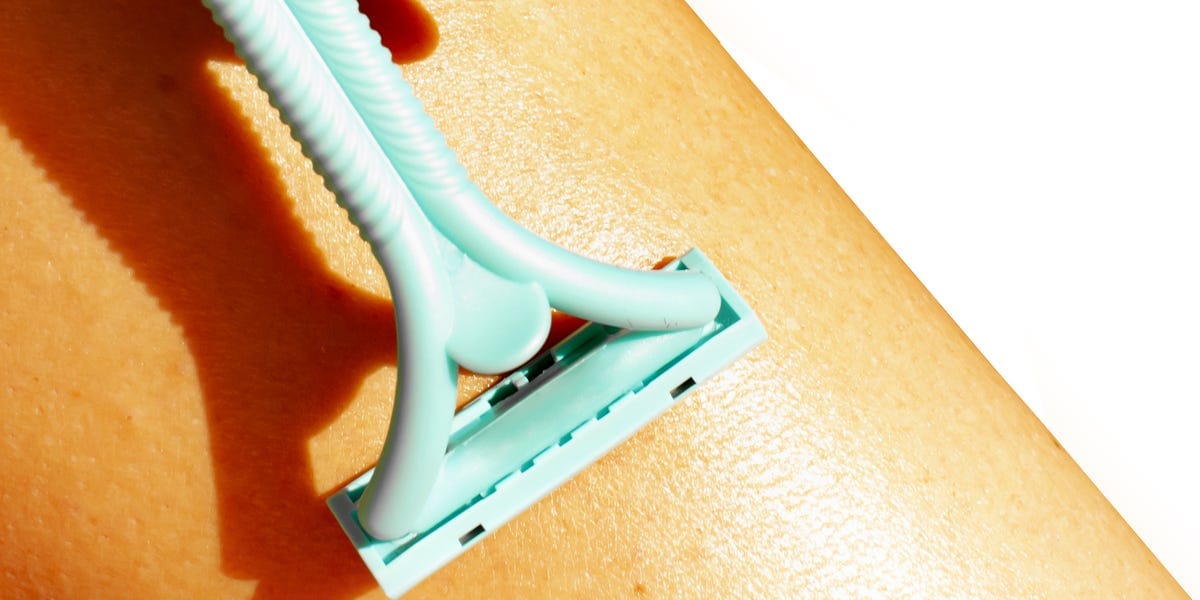
Shaving in or right after a warm shower softens the hair and reduces that razor-sharp cut edge. Skip the multi-blade razors — they shave too close to the skin's surface — and try a single-blade or safety razor instead, per Dr. Shokeen. Don't stretch the skin taut for a closer shave; counterintuitively, it raises your ingrown risk. Post-removal, skip the tight leggings: friction from clothing can push newly cut hairs sideways and force them back under the skin. And exfoliation is non-negotiable — chemical exfoliants with salicylic, glycolic, or lactic acid used a few times a week keep dead skin from forming a barrier over the follicle. Dr. Shokeen flags salicylic acid as the standout option because it penetrates directly into the follicle. Physical scrubs, however, are a no — they disrupt the skin barrier and can make inflammation worse. For chronic sufferers, laser hair removal remains the only permanent fix, reducing hair density and coarseness at the source.
When an ingrown does appear, resist the urge to immediately dig in. Start with a warm compress for 10 to 15 minutes over several days to coax the hair upward, plus an over-the-counter 1% hydrocortisone cream to calm inflammation. Once the hair is visible, a clean, sterilized pair of tweezers should do the job — but if it doesn't come free within one or two tries, stop. Petak is clear: forcing it risks scarring, hyperpigmentation, and infection. After removal, clean the area and apply a hypochlorous acid spray or hydrocortisone to reduce inflammation and minimize the chance of a dark mark forming. If the spot becomes hot, significantly swollen, or increasingly painful, that's your cue to see a dermatologist.
The bottom line: a smarter shaving technique, consistent chemical exfoliation, and a little post-removal patience will handle most ingrowns before they ever become a problem.
Read the original at Women's Health Magazine.