I Finally Found A Shoe That Can Actually Go From Squats To Sprints
The NOBULL Outwork Flex adds +1mm stack height, +0.8mm EVA strobel, and a more flexible upper to the beloved Outwork. Here's how it performed after one week of real testing.
Reported by MindBodyGreen.
If you've ever stood in front of your gym bag debating between running shoes and lifting shoes, you already understand the cross-training tax. Cushioned runners feel like clouds on the treadmill but turn into liabilities under a loaded barbell — too soft, too unstable, too forgiving in all the wrong ways. Traditional weightlifting shoes solve the squat problem while completely failing the sprint. For most people who train in mixed-format classes — the kind that cycle through dynamic warm-ups, sprint intervals, and strength circuits in a single hour — this has quietly been accepted as an unsolvable compromise. The NOBULL Outwork Flex is making a strong case that it doesn't have to be.
What Actually Changed — And Why It Matters
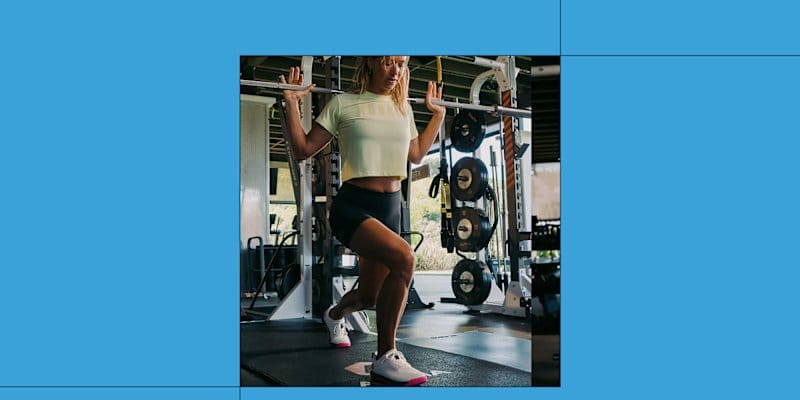
The Outwork Flex is an evolution of NOBULL's existing Outwork trainer, not a reinvention. It keeps the architecture that made the original work — a 4mm heel-to-toe drop, wide base, stability-forward construction — while introducing two targeted upgrades: an additional 1mm of stack height in both the heel and forefoot, plus an extra 0.8mm of EVA strobel (essentially memory foam). Those numbers sound almost irrelevant until you're doing jump squats and your feet aren't destroyed by the end of the conditioning block. The other notable shift is a more flexible upper, replacing the original's locked-in, structured fit with something that lets the foot respond naturally during lateral shuffles, burpees, and running sprints. According to MindBodyGreen's deputy commerce editor Braelyn Wood, who tested the shoe across a full week of group fitness classes, the flexible upper made an immediate difference during cardio while the shoe still held its shape under weighted squats — no sponge effect, no instability anxiety.
The science behind caring this much about your footwear is real. Research shows weightlifting shoes decrease trunk lean and produce more efficient ankle movement through the squat range of motion compared to running shoes or barefoot lifting. A separate study found they reduce forward lean and increase knee extensor activation — which matters for anyone trying to actually build strength rather than just survive a workout. For mixed-training athletes, the challenge is threading a needle between those biomechanical demands and the flexibility required for conditioning work.
There are honest trade-offs. The extra cushioning does marginally reduce the raw ground-feel stability that serious powerlifters depend on under heavy loads, and grip is slightly less aggressive than the original — relevant if you train on slick surfaces or do a lot of lateral cutting. These are real caveats, not dealbreakers for most recreational and intermediate gym-goers. Wood, who has a history of plantar fasciitis flare-ups, reported zero symptoms after two full sessions, crediting the EVA cushioning and elevated stack height with hitting a support sweet spot that doesn't tip into destabilizing softness.
The Outwork Flex retails for $150, requires zero break-in time, and sizes consistently with other NOBULL styles. If your training is purely barbell-focused, the original Outwork remains the stronger call. But for anyone whose workout looks like a group fitness class — or really anything that asks the same shoe to handle a sprint and a back squat in the same hour — the Flex is the one shoe that doesn't make you choose.
The bottom line: the right shoe isn't a minor detail — it's infrastructure, and the Outwork Flex finally makes a legitimate argument for owning just one pair.
Read the original at MindBodyGreen.