I Rebelled Against Beauty Standards As a Teen. Do Today's Kids Have That Freedom?
After reckoning with an Asian immigrant community’s conflicting ideals, an exploration of beauty
Reported by Harper's Bazaar.
There's a version of teenage rebellion that looks like dog collars and Manic Panic fuchsia-shock dye and 20-hole Doc Martens — a visual vocabulary of disobedience cobbled together from Björk albums and the kids in Kids. That was author Jean Chen Ho's adolescence in the San Gabriel Valley, and by her own account, she wasn't trying to be beautiful. She was trying to be cool, which felt like an entirely different project. The question she's now asking — and that the rest of us should probably be sitting with — is whether that distinction still exists for young women today.
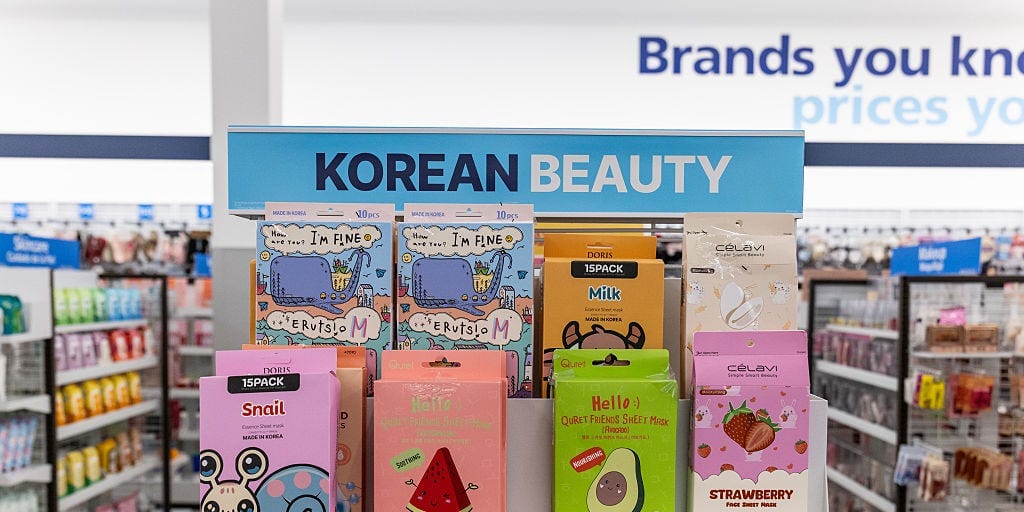
According to Harper's Bazaar, the global ascent of K-beauty and "Chinamaxxing" content has turbocharged a very specific East Asian aesthetic ideal: glass skin, a V-line jaw, wide eyes, deep clavicular hollows, the eternal baby-face captured in the Korean term "bay-gu" (baby-glamorous). These aren't soft suggestions. South Korea built this apparatus deliberately — investing in cultural soft power in the late '90s, riding K-pop into global markets, and backing beauty industry start-ups with government subsidies until sheet masks evolved into skull-shaving and double jaw-reshaping surgeries. South Korea now runs the world's premier medical tourism industry. The look that started as a regional ideal has become, effectively, a global one.
When "Corrective" Becomes "Aspirational"
Ho draws a careful line between the immigrant cosmetic procedures she grew up watching — double eyelid surgery to remove excess skin, tattooed eyebrows to replace what age had thinned, nose jobs handed out as graduation gifts — and the enhancement culture that dominates now. The former operated on logic that was corrective, even culturally specific. The latter is something more destabilizing: a market-engineered promise that the right procedure will unlock happiness, achievement, a better life. Cadaver-fat injections. Deep-plane facelifts. The fiction, as Ho frames it, is that transformation is always one appointment away. Late-stage capitalism needs that fiction to function.
Her novel New Skin presses into this territory — basement plastic-surgery clinics, immigrant women chasing luck through filler injected into their earlobes, a mother-daughter duo willing to risk being botched for futures they crossed borders to reach. Facial feng shui, palmistry, the cultural arithmetic of fortune written into your features: Ho is mapping a world where beauty and fate are not easily separated, where wanting a better face and wanting a better life are the same desperate impulse. The class divide doesn't eliminate the wanting; it just changes the risk level.
What she's really mourning — and what's worth mourning — is the specific freedom of teenage ugliness done on purpose: the right to be weird, subcultural, visually incoherent, and not yet optimized. That freedom required friction. It required ugliness to be an option. In an era of influencer grids, corporate-sponsored beauty content, and cosmetic procedures marketed to teenagers before they've finished growing into their own faces, the question isn't just what we're asking young women to look like — it's whether we've quietly eliminated the off-ramp entirely.
Beauty standards have always been someone else's agenda; the difference now is how efficiently they've been made to feel like your own.
Read the original at Harper's Bazaar.