‘I Started Lifting at 57. Now at 64, I Lift 6 Days per Week—Here’s Why It’s Never Too Late to Get Stronger.’
“I’ve gained so much more than muscle.”
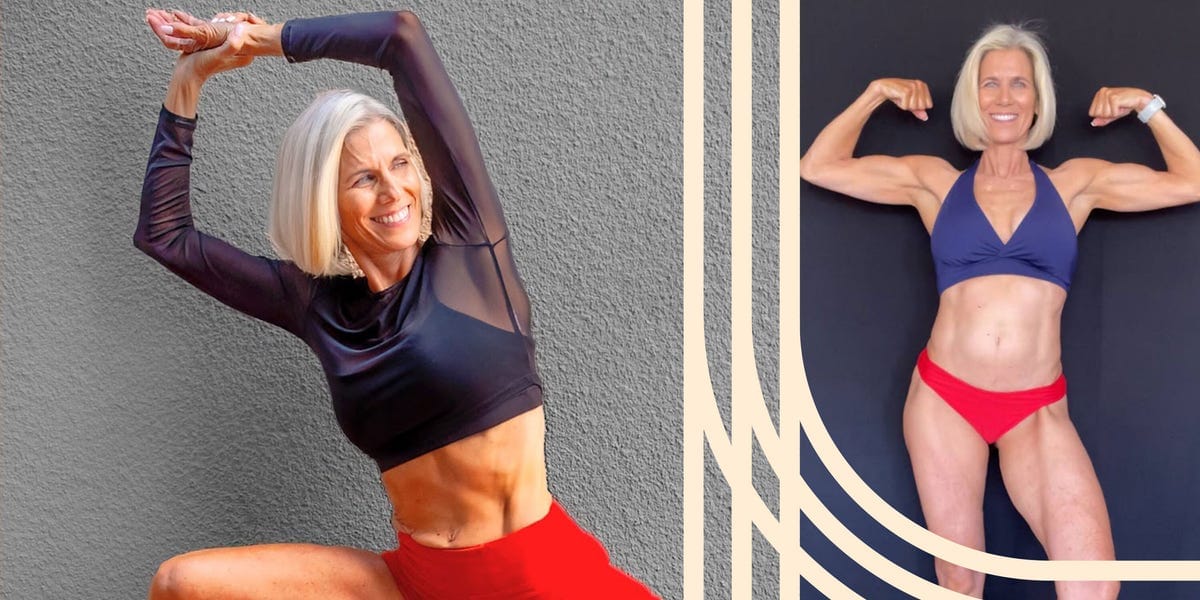
Reported by Women's Health Magazine.
For decades, this woman was a cardio devotee. Running, aerobics, ellipticals—that was her gospel. Strength training seemed optional, something for people obsessed with looking shredded. She was wrong, and she knows it now. At 57, she finally picked up a barbell. At 64, she lifts six days a week and designs her own programming. This isn't a comeback story; it's a reckoning with what happens when you actually commit to getting stronger in your later years.
The shift started small. A trainer at her gym had been needling her for years about learning proper form. One summer, with time to spare, she said yes. Two sessions weekly became four, then six—and cardio nearly vanished from her routine. She learned progressive overload, tracked macros, and discovered that muscle definition was a side effect of consistency. More importantly, she felt powerful. According to Women's Health Magazine, her discovery mirrors what science has long confirmed: strength training in midlife and beyond preserves independence, protects bone density, and keeps you capable of the small miracles you actually care about—playing tag with grandkids, hauling yourself off the floor without ceremony.
Building a Life in Iron
Her current split is methodical: six days rotating through lower body, shoulders, glutes, chest and arms, and back. Five to six compound moves per session, three sets of 10 to 15 reps. Deadlifts, presses, kickbacks, pulldowns—the classics, cycled every six weeks. No magic, no shortcuts. She walks 10,000 to 12,000 steps daily and stretches 30 minutes several times weekly. The strength training itself? That's the anchor.
What made this transformation stick came down to three non-negotiable things. First: expert coaching early on, which taught her proper form and built accountability before she was ready to coach herself. Second: starting absurdly small—two days a week felt survivable, which meant she actually showed up. Third: the mental shift that 57 wasn't too late, that willingness to begin mattered infinitely more than prior experience. Seven years later, the payoff extends far beyond visible muscle. She's built confidence, discovered what her body can actually do, and learned how to age on her own terms. That's the real transformation.
Read the original at Women's Health Magazine.