Jacques Wei Shanghai Spring 2027
Jacques Wei Shanghai Spring 2027 collection, runway looks, beauty, models, and reviews.
Reported by Vogue.
A crumbling 1928 villa — the final Shanghai project from Hungarian-Slovak architect László Hudec — isn't the obvious backdrop for a conversation about the future. But Jacques Wei has never been especially interested in the obvious. For Spring 2027, he turned the long-abandoned neoclassical house into an immersive provocation: part decayed grandeur, part fever-dream boudoir, part exuberant botanical fantasy where, naturally, the garden requires stilettos.
According to Vogue, Wei rooted the collection in the ancient craft traditions of Chaoshan, running them through what he called Sinic Fauvism — an "Oriental forest" where color doesn't so much appear as erupt. Traditional brocades collided with sharp tailoring. Foliage motifs sprawled across surfaces with zero apology. Working alongside artist Tang Haiqing, Wei staged each room of the villa as a different corridor of a woman's interior world, the paintings and palette doing as much narrative work as the clothes themselves.
Glamour Without the Weight
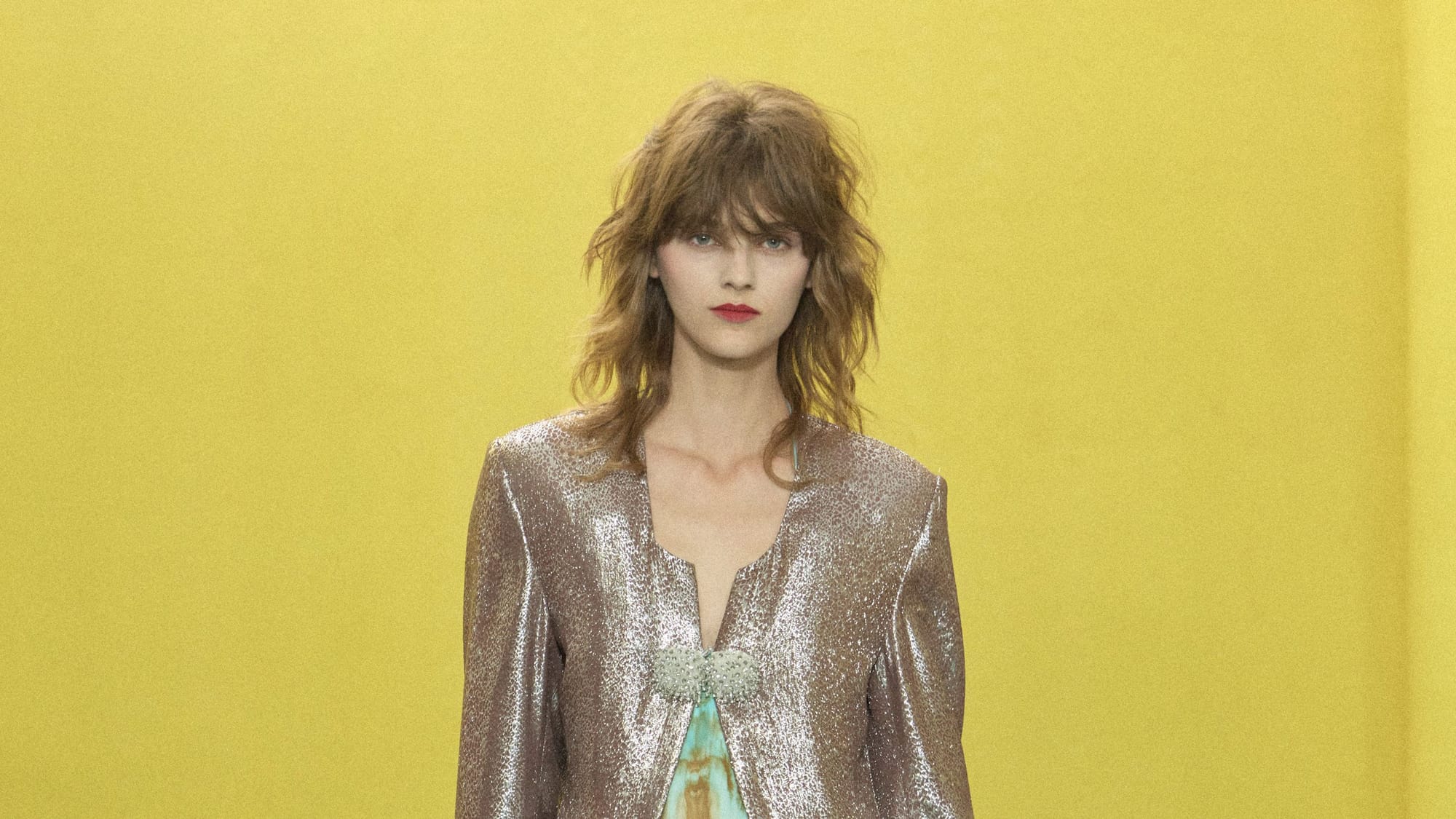
The lineup delivered on the fantasy without tipping into costume. Slip dresses trailed feather fringe in abundance. Jackets arrived with undulating hems and jeweled buttons that felt earned, not decorative for decoration's sake. Vinyl miniskirts got lace edging — a pairing that shouldn't work and absolutely does. Silhouettes stayed sexy and fluid, which is the harder trick: Wei kept his diva from calcifying into self-parody by threading genuine eccentricity through everything. The woman wearing this doesn't perform glamour; she inhabits it.
What's notable is the shift in register. Wei has spent recent seasons triangulating his design identity — probing where his Chinese heritage lands against contemporary references, how much ornamentation is too much, where exactly theatricality becomes noise. This collection reads like an answer arrived at with conviction rather than calculation. The villa's faded beauty didn't constrain him; it gave him permission. Its melancholy sharpened his appetite for color, life, and deliberately beautiful excess.
The fantasy Wei is selling isn't aspirational in the exhausting, transactional way — it's more territorial. His woman walks into a room like she already owns it, which, in a Hudec villa dressed floor to ceiling in Fauvist foliage and fringe, is exactly the energy the moment calls for.
When a designer stops searching for his voice and simply uses it, the clothes stop being clothes and start being an argument — and Wei's is persuasive.
Read the original at Vogue.