JW Anderson Spring 2027 Ready-to-Wear
JW Anderson Spring 2027 Ready-to-Wear collection, runway looks, beauty, models, and reviews.
Reported by Vogue.
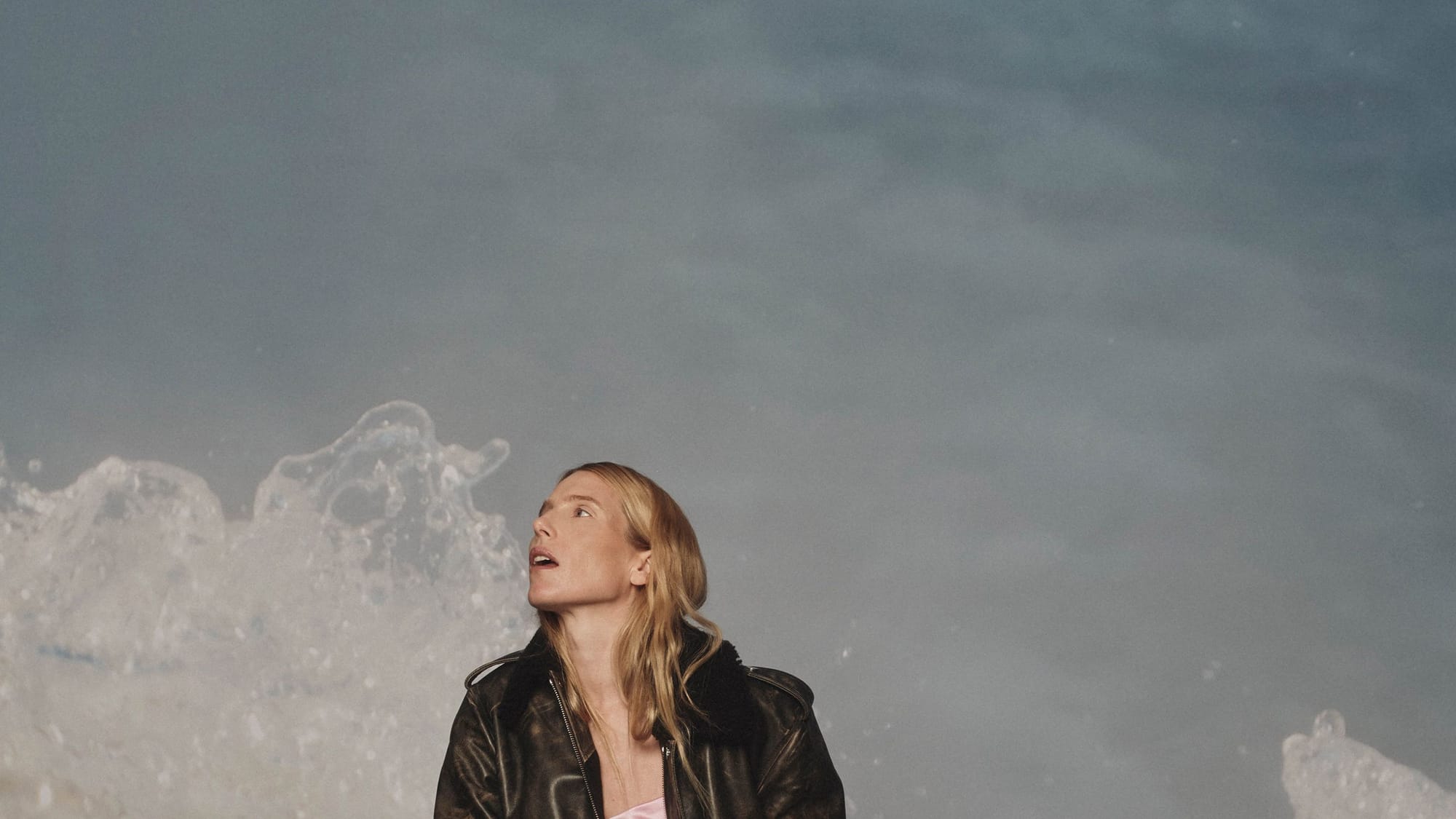
Jonathan Anderson has never been interested in fashion as pure product — and his Spring 2027 JW Anderson collection makes that case with the kind of quiet conviction that doesn't need a runway to land. Shot by Heikki Kaski against a Hella Keck-designed seascape studio — all churning surf and salt-spray drama — the lookbook functioned less like a catalogue and more like a found-object installation. Curation is the operative word here, and Anderson means it seriously: according to Vogue, his press release named it his primary creative tool, invoking the Latin curare — to care for, to attend.
What washed ashore was a deliberately assembled mix of reworked signatures and new fabrications. The fold-over trouser and twist jean both resurface in updated forms, threading continuity through the collection without leaning on nostalgia. Craft served as the structural backbone: Donegal wool knits embroidered with wildflowers and ferns, a house knit referencing the imagery of a traditional Irish cottage, and a squirrel motif pulled from a Sanquhar Fair Isle pattern out of Scotland. A red and blue coat and scarf arrived via collaboration with Johnstons of Elgin. Individually, these are the kinds of references — folk textile, rural making, domestic object — that could easily tip into twee. Here, they don't.
The Cast Is Part of the Collection
Anderson's curatorial instincts extend well past the clothes themselves. The cast reads like a deliberate provocation: collector Ivor Braka brought an end-of-the-pier Iggy Pop energy; Tommy Campe delivered something closer to camp Venus rising from the sea. Ceramicist Akiko Hirai, actor Dree Hemingway, and art critic and historian Dr. James Fox also appeared — a lineup that blurs the line between fashion show and cultural statement without making a fuss about it.
That refusal to aestheticize heritage into something comfortable is what separates this from the dozens of "craft-forward" collections that cycle through each season. Anderson isn't romanticizing the handmade or performing Britishness for an international market. He's pulling from a very specific visual and material archive — and then doing something genuinely unexpected with it.
When fashion's most interesting designers treat their collections like curated arguments rather than product drops, the clothes tend to mean something — and so does wearing them.
Read the original at Vogue.