Keke Palmer Had “Unbearable” PMOS Symptoms—but Still Couldn’t Get a Diagnosis
The star opened up about her health journey at the Women’s Health Lab in New York City.
Reported by Women's Health Magazine.
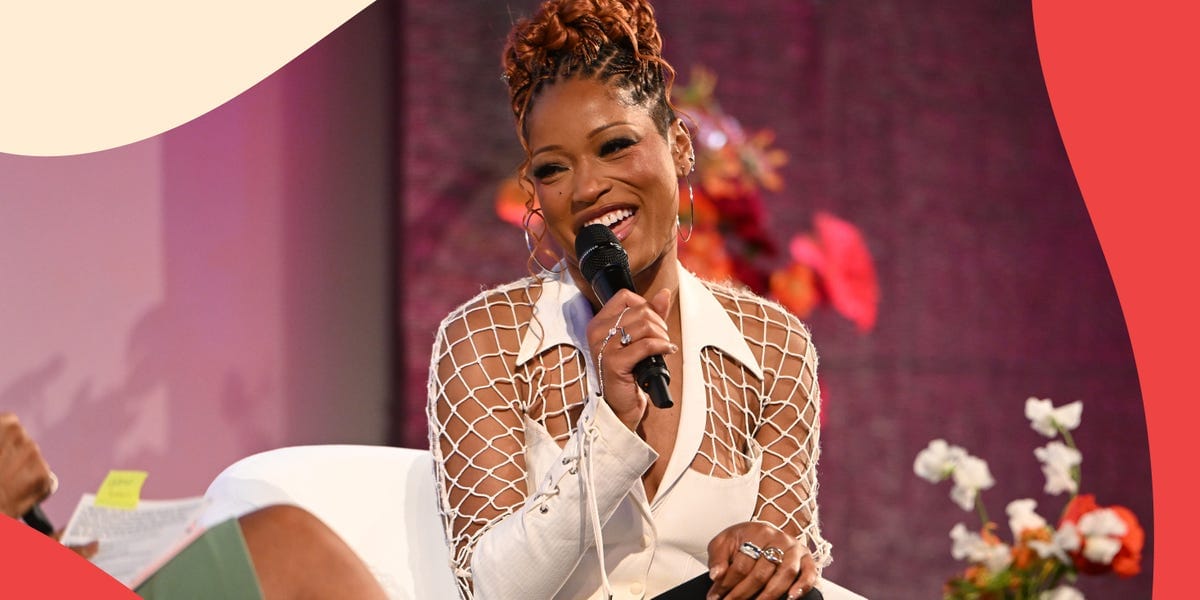
When the medical community officially renamed polycystic ovarian syndrome (PCOS) to polyendocrine metabolic syndrome (PMOS) last week, Keke Palmer had thoughts — and she didn't hold back. Speaking at the 3rd annual Women's Health Lab alongside Gayle King, editor-at-large of Oprah Daily, the actress and television host made clear why the rebrand matters: the old name kept millions of women, herself included, from ever getting answers.
The problem with PCOS as a label, Palmer explained, is that it centers on ovarian cysts — which not everyone with the condition actually has. Without cysts, doctors dismissed her concerns outright, even as she suffered what she described as "crippling" and "unbearable" acne that was both physically painful and emotionally devastating. "It hurt emotionally in a way that you can't describe," she said. She drank the water. She did the things. None of the standard advice touched it. Eventually, she took her health into her own hands, researching hormonal causes of acne, connecting her symptoms to a family history of diabetes and thyroid issues, and walking into her doctor's office with a theory. They told her she was wrong. She told them they weren't listening.
When You Know Your Body Better Than Your Doctor Does
It wasn't until Palmer saw an endocrinologist — who ran comprehensive blood panels — that the picture came into focus. Her testosterone and androgen levels were, in her words, "all out of whack," causing acne severe enough to require two rounds of isotretinoin and excess facial hair she referred to as a "beard." Both are classic PMOS markers. The confirmation she'd been pushing for finally arrived, years late. This diagnostic gap is precisely why the name change happened — the updated terminology acknowledges the endocrine and metabolic systems involved, not just the ovaries, so that patients presenting without cysts aren't automatically sent home without help, according to Women's Health Magazine.
Palmer's management of PMOS is ongoing — there is no cure, and treatment is personalized to each patient's symptom profile, which can include weight fluctuation, irregular periods, and fertility challenges alongside the more visible signs. For her, the path forward combined medication with lifestyle shifts and a deeper attunement to her cycle. But she was deliberate about one thing: not pretending holistic approaches alone were enough. "Sometimes Western medicine is there to help you," she said. "I'm always going to have hormone dysfunction — getting that diagnosis helped me understand, sometimes you need more help, girl, and there's nothing wrong with that."
If your symptoms have been minimized, dismissed, or explained away with a suggestion to hydrate more — Palmer's story is a reminder that advocating loudly and specifically for yourself is not optional, it's survival.
Read the original at Women's Health Magazine.