Lessons from the Vogue Business Global Summit: Chantilly
This year’s European Global Summit was held at the beautiful Château du Chantilly just outside of Paris. The two-day event saw industry leaders discuss the future of luxury, AI, and new growth markets.
Reported by Vogue.
The fashion industry's current identity crisis — AI disruption, GLP-1 culture, a cooling China market, multi-brand retail in freefall — doesn't have a single fix. But it does have people with ideas. According to Vogue, the Vogue Business Global Summit at Château du Chantilly brought together some of the most compelling voices in luxury, beauty, and technology to untangle what's actually happening and where it goes next.
Luxury's Real Competitive Advantage Isn't a Trend Report
New Mytheresa CEO Francis Belin, four months into a role he landed after two decades running Christie's Asia, arrived with no fashion background and apparently no interest in pretending otherwise. His read on the multi-brand luxury e-commerce space — bruised online and in stores — is refreshingly unsentimental: stop chasing adjacencies, stop publishing trend content, and get very, very good at the basics. "People don't want discounts. They want great assortment, great curation. They want access to brands that are difficult to find," he said, adding that flawless logistics paired with genuine client relationships — VIP events, global pop-ups, emotional connection — is the whole strategy. No sports crossovers. No editorial pivots. Just ruthless focus.
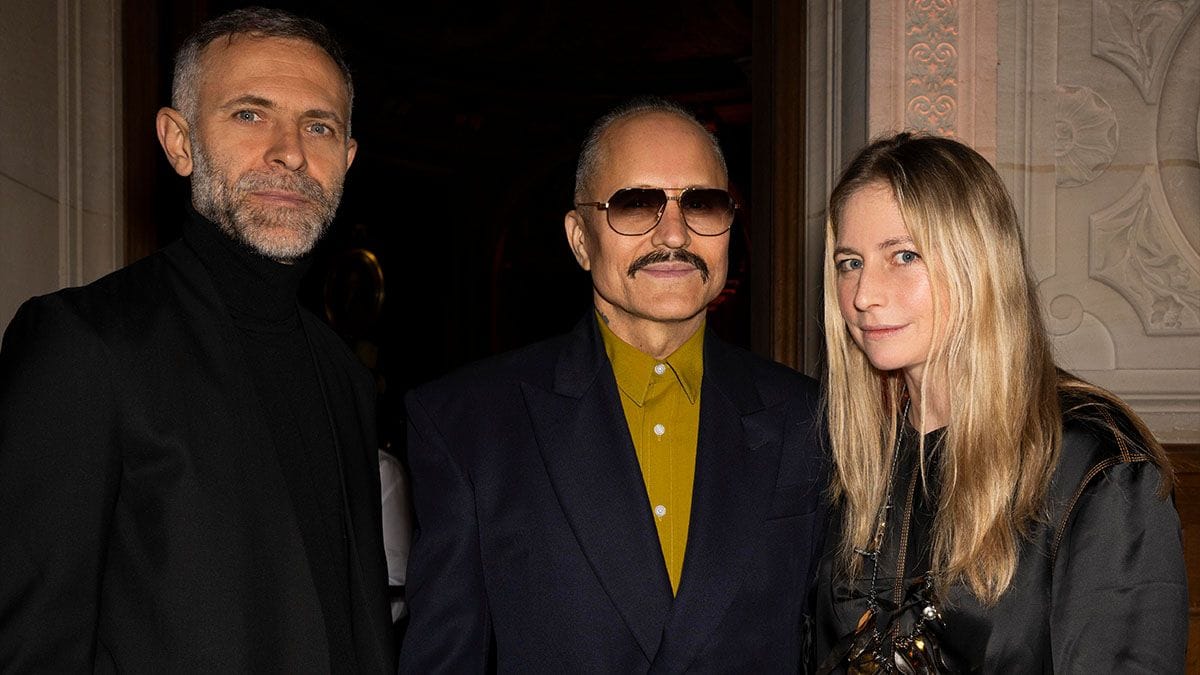
Marni's session offered a different kind of clarity. CEO Stefano Rosso and new creative director Meryll Rogge — the 32-year-old Belgian designer appointed in July 2025, whose debut runway collection landed to critical praise — spoke with Nicole Phelps about the brand's next chapter. Rosso was direct about why OTB, which also houses Glenn Martens at Maison Margiela and Simone Bellotti at Jil Sander, moves fast on talent: "We're never scared of taking chances." As for Rogge, her relationship to Marni predates the job by decades — she spent her first-ever paycheck on a pair of Marni shoes in 2008. That kind of genuine devotion to a house is, as she noted, genuinely rare.
The beauty panel hit differently. Melinda Farina of The Beauty Broker, Inc., alongside executives from Estée Lauder and Sephora, dissected what the "longevity" rebrand actually means in practice — and whether it's just anti-aging with a wellness filter. Estée Lauder's Anne Troussicot pointed to the brand's CelltivityLP technology, designed to train skin cells to function younger, not just appear younger: "It's really about the health span of your skin." Sephora's Agnès Brissiaud framed skin as a "biological marker" of aging — treatment over coverage, science over concealment. But Farina added the necessary correction: clients exhausted by the pursuit of perfection are already pivoting toward simplicity, and the industry would do well to lead them there rather than exploit the anxiety. "We have to be mindful not to prey on the vulnerability of the consumer, but empower the consumer."
On AI, the summit's consensus was pragmatic rather than panicked. The question isn't whether the technology replaces creative work — it's whether brands are paying enough attention to use it well before the window closes.
The clearest throughline across every session: the brands that will survive this stretch of upheaval aren't the ones with the cleverest pivots — they're the ones that know exactly who they are and refuse to dilute it.
Read the original at Vogue.