Meet the Generation of Fashion Insiders Who Were Raised on <em>The Devil Wears Prada</em>
For younger millennials and older Gen Z, the film offered a glimpse of an elusive world they couldn’t wait to join
Reported by Harper's Bazaar.
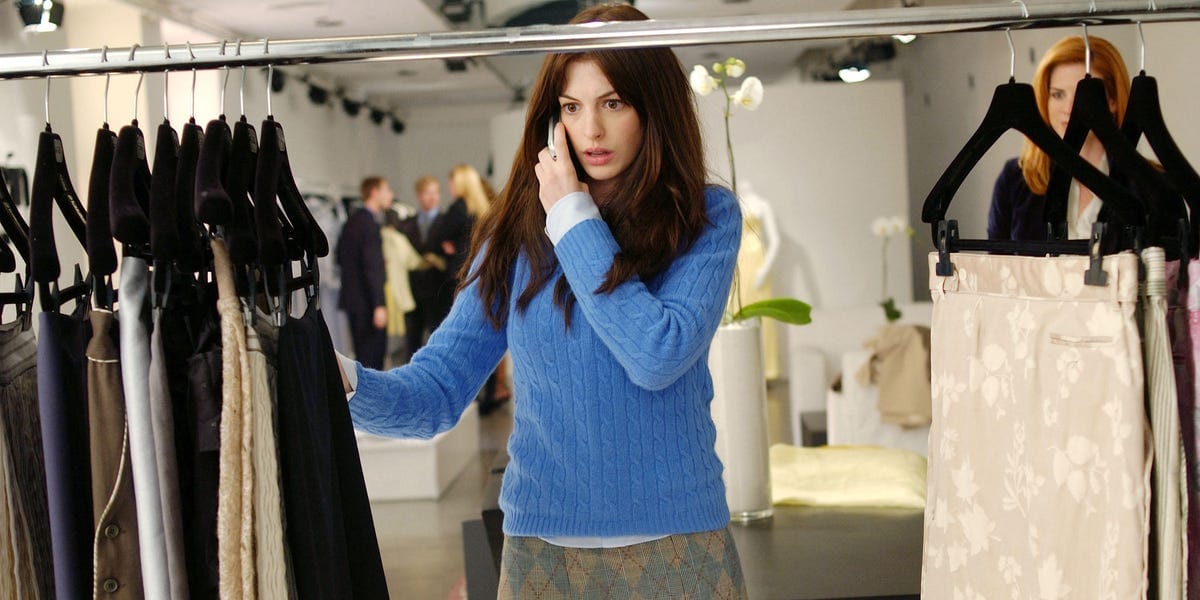
There's a particular type of origin story fashion insiders tell: It always circles back to The Devil Wears Prada. The 2006 film didn't just entertain us—it functioned as a master class in how the industry actually operates, delivered via Patricia Fields' impeccable costumes and Meryl Streep's withering glances. For a generation that came of age without Instagram Stories or TikToks demystifying fashion from the inside, the movie was the closest thing to a behind-the-scenes pass we could get.
What makes the film's grip so potent isn't that it sells fashion as a dream. It's that it sells it as possible—even when painting the industry as fundamentally brutal. Andy Sachs' journey from earnest outsider to runway-ready operative legitimized ambition in a space that, at the time, felt impossibly exclusive. The famous "cerulean" monologue, delivered by Miranda Priestly, did something unexpected: it validated fashion obsession as intellectual rigor, not frivolity. According to Harper's Bazaar, a range of publicists, writers, designers, and editors now working in fashion have traced their career trajectories directly back to this film, in ways both inspiring and cautionary.
The Gateway Drug Effect
For many, the movie operated as permission. A 28-year-old fashion editor recalls lying on her mother's bathroom floor leafing through Vogue as a kid, but only after watching the film did she understand there were actual humans—powerful, glamorous humans—orchestrating the magic. Others were drawn to the sheer energy: the constant motion, the aesthetic precision, the sense that everyone in the building was locked into something larger than themselves. A 30-year-old PR manager growing up in Mexico saw the film as a tangible roadmap, proof that ambition plus relocation could yield a transformed life. Even those who recognized the toxicity—the impossible demands, the casual cruelty—found themselves seduced by the visual perfection and the promise of belonging to an exclusive club.
The reality, unsurprisingly, has been mixed. Some discovered their boss wasn't sadistic enough to match the fantasy. Others encountered the exact institutional dysfunction the film warned against and had to reckon with it as adults. A 32-year-old editor and marketing executive expected toxicity and found it, then resolved to dismantle it from within. What's emerged from this generation is a peculiar kind of sophistication: they entered the industry with their eyes semi-open, armed with both starry-eyed determination and the knowledge that glamour often masks exploitation.
Twenty years later, The Devil Wears Prada remains a cultural artifact that shaped how an entire cohort of fashion professionals thinks about power, ambition, and what it costs to look this good doing it—a blueprint that's both irresistible and impossible to fully escape.
Read the original at Harper's Bazaar.