Milan Fashion Week Condemns Fur. Will the EU Follow?
Milan Fashion Week organizer CNMI is the latest to encourage brands to phase out animal fur, adding heat to calls for an EU-wide ban on the production and sale of fur products. There’s a long road ahead.
Reported by Vogue.
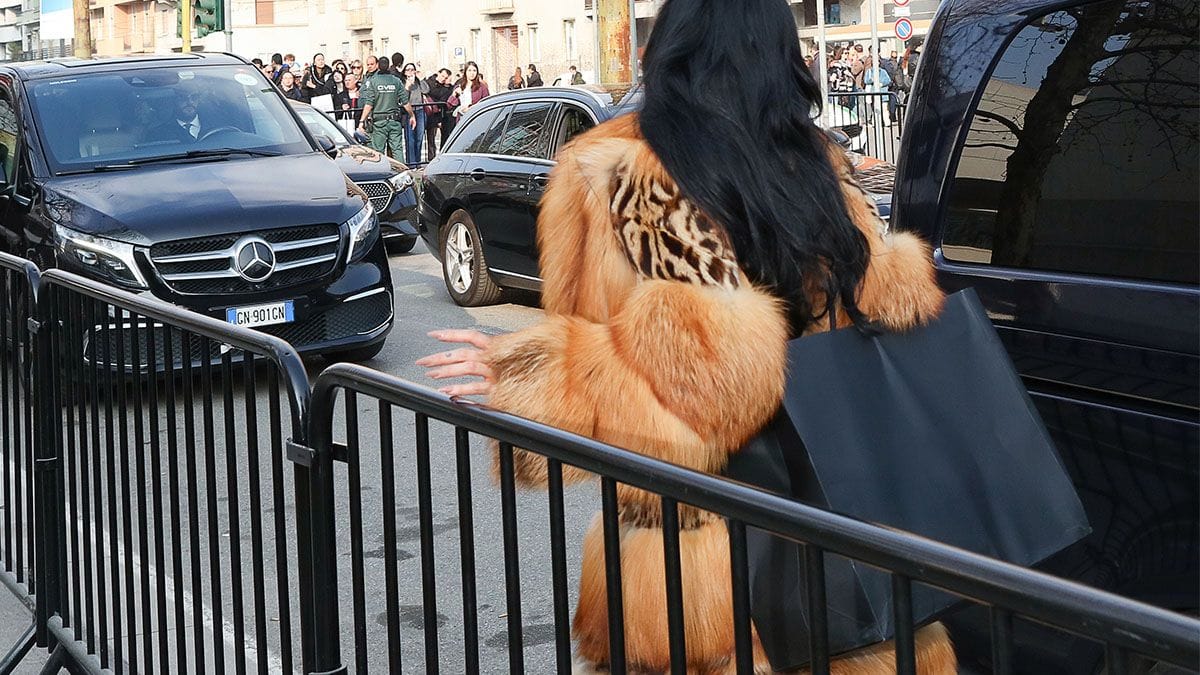
Fashion has been inching away from animal fur for years — ban by ban, brand by brand — but Milan held out. Until now, sort of. Last week, Italy's powerful fashion council Camera Nazionale della Moda Italiana (CNMI) issued voluntary guidance urging brands on the Milan Fashion Week schedule to remove fur from the runway as early as September. It's not a hard ban — Copenhagen, Berlin, London, New York, and several other fashion weeks have gone that route — but it's a meaningful shift from a city that, along with Paris, has long been considered one of fur's last luxury strongholds.
The guidance, developed with input from Collective Fashion Justice (CFJ), Humane World for Animals, and Italian nonprofit Lega Anti Vivisezione (LAV), targets materials from animals either caught in the wild or farmed exclusively for pelts: mink, fox, coyote, rabbit, karakul, ermine, and Finn raccoon. Leather, shearling, wool, and post-consumer or vintage fur repurposed or upcycled are all still in the clear — as are furs obtained through Indigenous subsistence hunting. What CNMI opposes, it simply won't promote. "If a brand decides to put fur on the runway, it will have to deal with the cultural impact of going against the Italian fashion council's request," CFJ founder Emma Håkansson told Vogue. "That is significant." Fendi — one of the few luxury houses still actively working with animal fur — did not respond to requests for comment. Its parent company LVMH declined.
A Dying Industry Looking for a Lifeline
The numbers paint a stark picture, according to Vogue. Policy analyst Griffin Carpenter found that EU fur farms have declined by 73% over the past decade, with pelt volume down 86%, sales value down 92%, and employment down as much as 86–92%. The entire EU fur farming industry produced 6.3 million pelts in 2024, valued at roughly €183 million — comparable in economic weight to sour cherry farming or video rental. Poland, Europe's largest remaining fur producer, announced a phase-out in December, set to complete by 2034. "The writing is on the wall," says Dr. Joanna Swabe, senior director of public affairs at Humane World for Animals Europe. Meanwhile, a European Commission-requested EFSA report found that current cage-based fur farm conditions make it functionally impossible to meet animals' physical or behavioral needs — a finding Swabe calls a "damning indictment."
On the creative side, alternatives have gotten genuinely good. Biofluff's plant-based faux fur Savian appeared on runways at both Collina Strada and Louis Vuitton this past February. "Banning fur doesn't mean limiting creativity," says Biofluff co-founder and CCO Roni Gamzon. "Natural solutions can absolutely compete in terms of luxury, storytelling, and creativity." Add to that bio-based faux fur made from corn waste by China's Ecopel, and upcycled plastic yarn Seaquel, and the old excuse — that nothing replicates the drama of real fur — is running out of runway.
Milan's move adds pressure to an already-building campaign for an EU-wide ban on fur farming and sales. The Fur Free Europe petition crossed 1.5 million signatures in 2023, triggering a formal EU Commission review. The regulatory path is long and nonlinear, but the direction is clear.
When the fashion council of Milan tells brands fur is unwelcome, the industry's last defense isn't creative freedom — it's stubbornness.
Read the original at Vogue.