Millions of Women May Have This Painful Condition—and Many Have No Idea It Even Exists
Painful fat that won
Reported by Women's Health Magazine.
Aisha Durham spent years cycling through doctors who told her she was fat, inflamed, fibromyalgic, or bitten by a spider. The professor of communication at the University of South Florida entered perimenopause in her 40s and began experiencing debilitating swelling — the kind that kept her bedridden for days — plus hard nodules trailing up and down her legs. She hired a dietitian. She did private Pilates. Nothing helped. It took a YouTube rabbit hole, a scholarly presentation by endocrinologist Karen Herbst, MD, and eventually a flight to Arizona to finally get a diagnosis: stage 2 lipedema. "I cried," Durham says. "I felt lighter. It didn't get rid of the condition at all. But it was just so relieving to have a doctor confirm what I was experiencing."
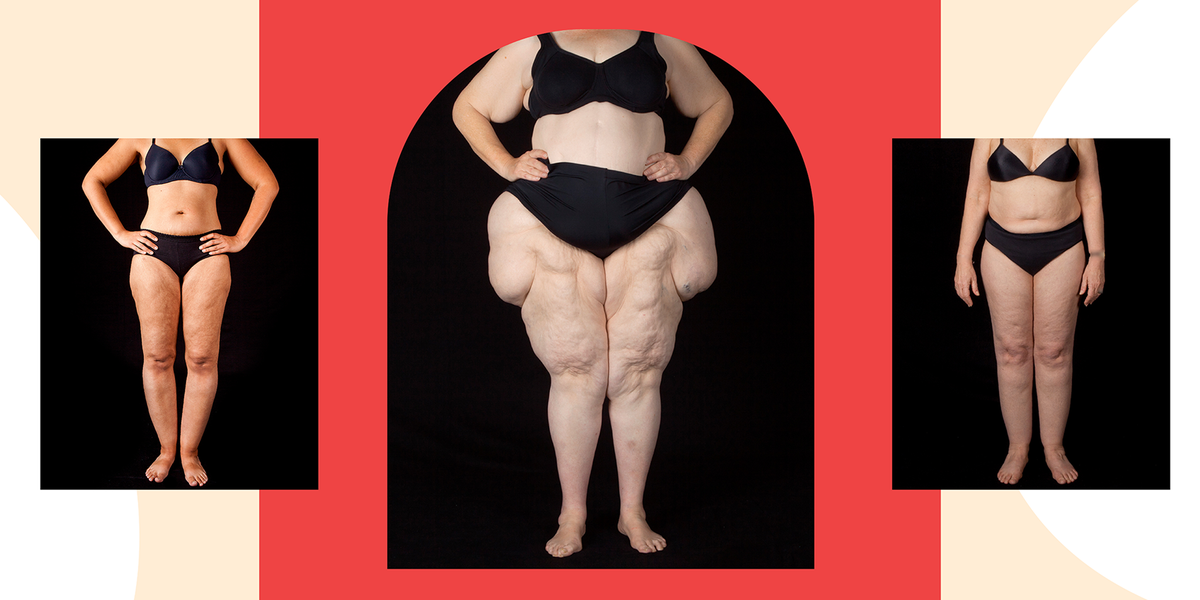
Lipedema is a chronic, incurable condition characterized by a disproportionate and symmetrical accumulation of painful fat — typically in the lower body, sometimes the arms — that affects primarily women. According to Women's Health Magazine, an estimated 5 to 12 percent of women in the U.S. have it, yet the average time to diagnosis is ten years, per the Lipedema Foundation. It's not new: the condition was first described by two Mayo Clinic physicians in 1940, and researchers believe artworks dating back to 3,000 BC depict the hallmark lipedema silhouette — slim torsos, dramatically full hips and thighs. It triggers during hormonal shifts (think puberty, pregnancy, perimenopause), likely has a strong genetic component, and has been tentatively linked to hypermobility, Ehlers-Danlos syndrome, ADHD, and PMOS. But research remains thin, and cause is still unknown.
Why Is It So Hard to Diagnose?
The condition is staged by severity (1 through 4) and typed by location of fat accumulation. Stage 1 presents as soft, largely smooth subcutaneous fat; stage 4 — also called lipolymphedema — occurs when lipedema and the separate condition lymphedema appear together. Some women feel no pain; others are fully disabled. "I have several family members in wheelchairs or using walkers," says Kasi Grosvenor, a 45-year-old project manager who was diagnosed at 40 after watching the disease progress through her father's side of the family. The range of presentations makes recognition harder — but so does a medical system that hasn't historically prioritized it. "Lipedema sits at the intersection of two areas medicine has always been slow to fund and take seriously: chronic disease and conditions that primarily impact women," says Jonathan Kartt, CEO of the Lipedema Foundation.
There is no blood test, no swab, no clean diagnostic shortcut. Diagnosis depends entirely on patient history and physical examination — visual and tactile assessment for irregular fat distribution, nodules, and fibrosis. Medical schools largely haven't taught it, and the gap is sharpest in primary care, the exact place most patients start. The average diagnosis age, per the Lipedema Foundation's registry, is 48. That's a decade or more of being dismissed, misdiagnosed, and told to just lose weight — while the condition quietly progresses.
If your body has never fit a clinical explanation and every doctor has shrugged, lipedema is worth knowing about — because the first step to getting help is knowing what to ask for.
Read the original at Women's Health Magazine.