Momfluencers are Starting to Take Their Kids Off Social Media. Should You Do the Same?
A new book examines the decision-making process behind shielding kids from the digital spotlight.
Reported by Women's Health Magazine.
When Bethanie Garcia started a WordPress blog called The Garcia Diaries at eighteen — pregnant, lonely, and married to a guy working overnight shifts at UPS — she had no blueprint. What she built instead was a decade-long digital record of her family's life, and eventually, a career. Today she has nearly 340,000 Instagram followers, supports her five children without a college degree, and posts daily updates on everything from her outfits to her kids' milestones. By any metric, it worked. And yet: "If I could go back," she says, "I wouldn't have ever shared my children's names or faces."
The moment that crystallized it happened in the toy aisle at Target. Her then three-year-old son was sitting in the cart when a stranger approached and called him by name — his full name, the one she'd been posting since he was born. "I jumped to the front of the cart to stand in between him and the person," Bethanie recalls. They likely meant no harm. But the reality of a stranger knowing her toddler's name from a screen hit differently in person. Now she cycles through the same internal debate every single day: keep sharing because she's proud of her family, or stop because she knows, deep down, she probably should.
The Pivot Some Influencer Moms Are Making
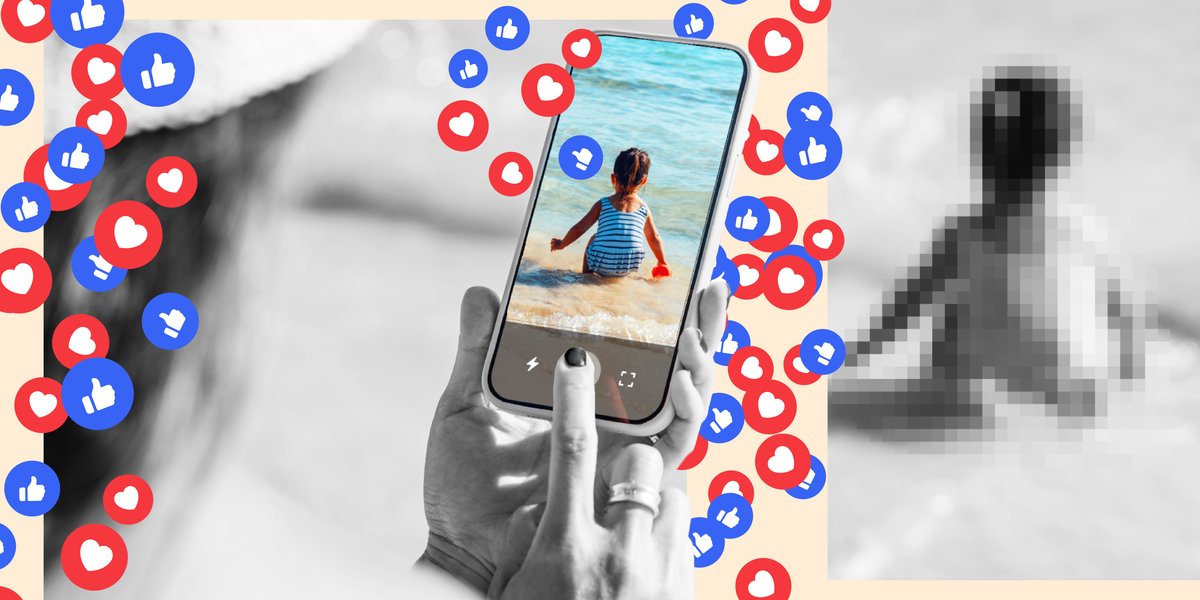
Some have already made the call. Maia Knight, a 28-year-old single mom who built 8.1 million TikTok followers letting the internet fall in love with her twin daughters Violet and Scout, announced in December 2023 that she was done showing the girls' faces. No dramatic manifesto — just a video in her signature messy bun: "I'm making a choice for my daughters to protect them. It's not that complicated, it's not that dramatic." From that point on, the twins appeared only from behind, in profile, or with emojis covering their faces. According to Women's Health Magazine, this approach has a name: Dr. Michael Walrave, a communication studies professor at the University of Antwerp, calls it "mindful sharenting" — a growing practice that lets parents signal their parenting identity online while managing the real risks of full exposure.
Then there's Jillian Kalbaugh, 39, who refreshingly skips the "I never meant to go viral" mythology most parent creators hide behind. When a video of her baby son eating spaghetti exploded into millions of views, she leaned in hard — posting three times a day, engineering food-reaction content, chasing the algorithm. What she didn't see coming was what the strategy cost her: reshooting natural moments until they weren't natural anymore, and sidelining her older son mid-frame because he didn't fit the content plan. "I was unconsciously pushing him aside so I could get the shot," she admits. The ambition was honest. The collateral damage was real.
What these women are collectively working through — in public, ironically — is the same question every parent with a social presence faces at some scale: your child's childhood isn't content to be optimized, and once it's online, it doesn't come back. The feed will always want more; your kid only gets one shot at being a kid who wasn't watched by strangers.
Read the original at Women's Health Magazine.