Preparing the Oula, My Mother and I Found Common Ground
My mother had raised me to be independent. And yet, she was also attentive to the persistent social pressures of the village. She wanted both for me: freedom and conformity.
Reported by Vogue.
There is a Tunisian word that doesn't translate cleanly into English: oula. It refers to the seasonal practice of preserving, fermenting, drying, and transforming food to last through winter — but to reduce it to meal prep would be to miss the point entirely. According to Vogue, the oula is a matriarchal ritual that has defined Tunisian food culture for centuries, born not from romance but from necessity, from a time before refrigeration when sun and salt were the only things standing between a family and hunger. What kept it alive wasn't nostalgia. It was women.
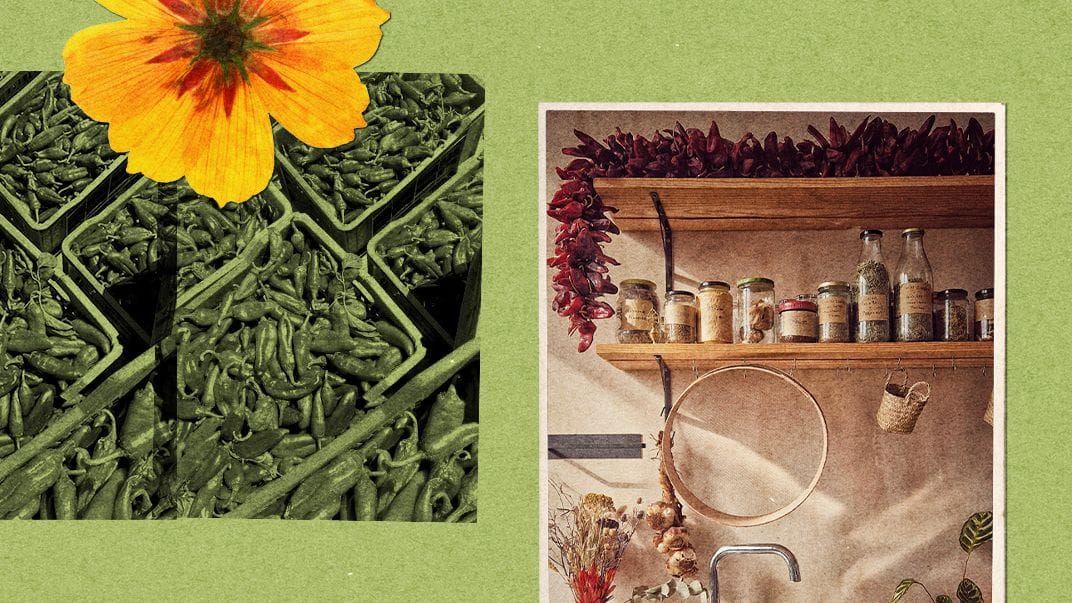
In the Cap Bon peninsula — Tunisia's harissa heartland, stretched between the Mediterranean and fields of tomatoes and peppers — the oula meant an annual convergence: mothers, aunts, cousins, and neighbors arriving at the family houch, the open-air courtyard at the center of traditional homes, before dawn. Crates of tomatoes lined the walls. Baklouti peppers, the indigenous variety essential to harissa, were strung into garlands. The oldest women, their faces marked with Amazigh tattoos, took their positions around metal trays, rolled semolina between their palms, and began the tkesksiss — the from-scratch making of couscous. One French guest later described it as la danse des mains: the dance of the hands. You don't learn it from a recipe. You watch, repeat, and eventually stop thinking about it.
The Argument She Never Won
Growing up between Tunisia and France, the writer resisted almost everything the village expected of girls — the dainty dresses, the domesticity, the implicit preparation for wifehood and motherhood, while boys ran free at the beach. She was skateboarding to Wu-Tang Clan, sneaking out, pushing back. Her mother wanted two contradictory things simultaneously: total independence and total conformity. The friction was constant. Except during the oula. Standing together over a clay oven, mixing and roasting the ingredients for bsissa — a generations-old powder of roasted barley and pulses, made entirely by instinct, never measured, never written down — was the only time they weren't fighting. The gestures stayed even when she was trying to leave them behind.
In France, where assimilation is treated as inevitability, the oula became an act of refusal. Peppers hung from the balcony. Homemade merguez dried in the open air. Caraway seeds toasted on trays by the window. When a sleepover host asked what she ate for breakfast and she answered "bread and olive oil," the confusion in the room only made her more committed to her own kitchen logic. She wasn't performing heritage — she was just eating.
She lives in London now and has converted a cupboard into what she calls an "oula room," stocked with preserved vegetables, spices, and couscous that move through her cooking as living ingredients, not artifacts. She doesn't measure. In Tunisia, they say: Your eyes are your scale. When friends ask about her pantry, she opens the doors and lets them look. The oula, it turns out, was never just about food — it was the one place where a mother and daughter, decades of friction between them, finally understood each other without saying a word.
Some inheritances skip the argument entirely and go straight into the hands.
Read the original at Vogue.