Rachel Antonoff Spring 2026 Ready-to-Wear
Rachel Antonoff Spring 2026 Ready-to-Wear collection, runway looks, beauty, models, and reviews.
Reported by Vogue.
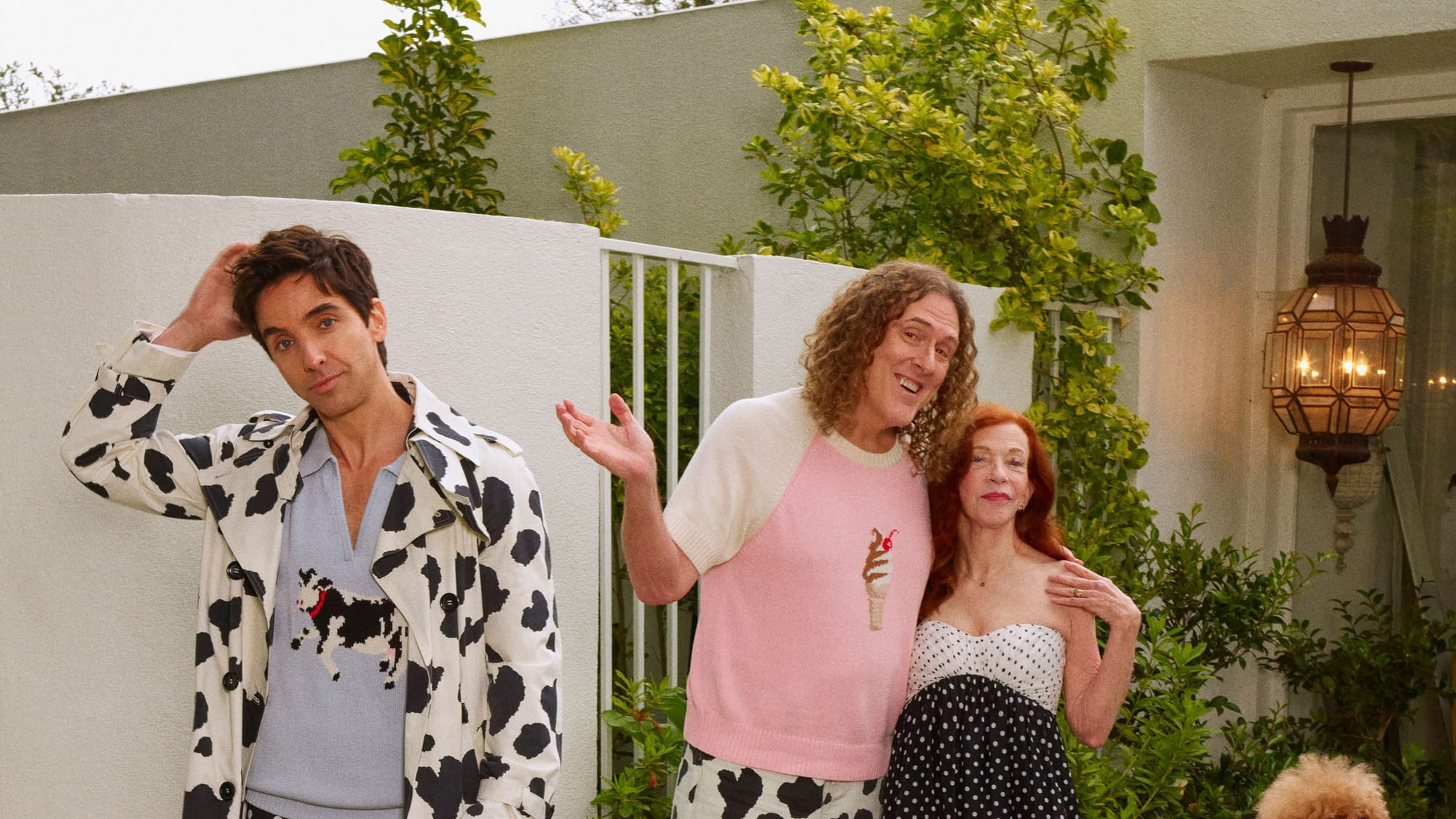
Rachel Antonoff has built a design language out of the particular — the lived-in, the inherited, the slightly absurd — and for Spring 2026, she took it on a road trip. According to Vogue, the collection's campaign sent a cast including Annie Clark (St. Vincent), Patti Harrison, New Yorker writer Susan Orlean, "Weird Al" Yankovic, and Paul W. Downs of Hacks out West, continuing Antonoff's signature tradition of folding real people — sometimes family, sometimes Hollywood proxies, now cultural figures — into her world-building.
Borscht Belt, Baby
The '70s California backdrop is almost a red herring. The soul of this collection is firmly, defiantly Northeastern. Antonoff drew from the Borscht Belt — the Catskills resort corridor that ran from the 1920s through the '70s as a Jewish-American summer institution — to build a print vocabulary dense enough to reward a long subway stare. She even designed an original Catskill toile, complete with seasonal vacationers (some of them making out) and pulled local menus and attraction brochures onto a silk cotton voile shirtdress. Radishes, fruit, cupcakes, and — because why not — a knit piña colada pattern round out a lineup that is maximalist by both instinct and argument. "I always say there's things to discover if you're stuck on the subway and staring at someone's outfit," Antonoff said. "We're always trying to hide the peas and mashed potatoes with a print."
The results are prints that feel archaeological — layered, referential, quietly funny. A paint-by-number sundress rewards the detail-obsessed. Mod terrycloth dresses nod to poolside ease without abandoning the kitschy undercurrent that makes an Antonoff piece immediately recognizable. Nothing here is trying to be effortless. It's trying to be interesting, which is a more ambitious goal and, in this case, a more satisfying one.
There's a genuine philosophy underneath all the cupcakes and collage: Antonoff is designing for curiosity, not aspiration. The Borscht Belt wasn't glamorous in a conventional sense — it was communal, nostalgic, slightly chaotic, and deeply specific to a cultural memory that rarely gets referenced in fashion at all, let alone with this much affection. That Antonoff can make it feel fresh rather than costumey is the real trick. And she's clearly aware of the risk of novelty prints curdling into easy irony: "What it's not," she said pointedly, "is just a charcuterie board again."
When a designer's sharpest creative instinct is to build prints worth getting lost in, the rest of the industry should probably take notes.
Read the original at Vogue.