Royal Academy of Fine Arts Antwerp Fall 2026 Ready-to-Wear
Royal Academy of Fine Arts Antwerp Fall 2026 Ready-to-Wear collection, runway looks, beauty, models, and reviews.
Reported by Vogue.
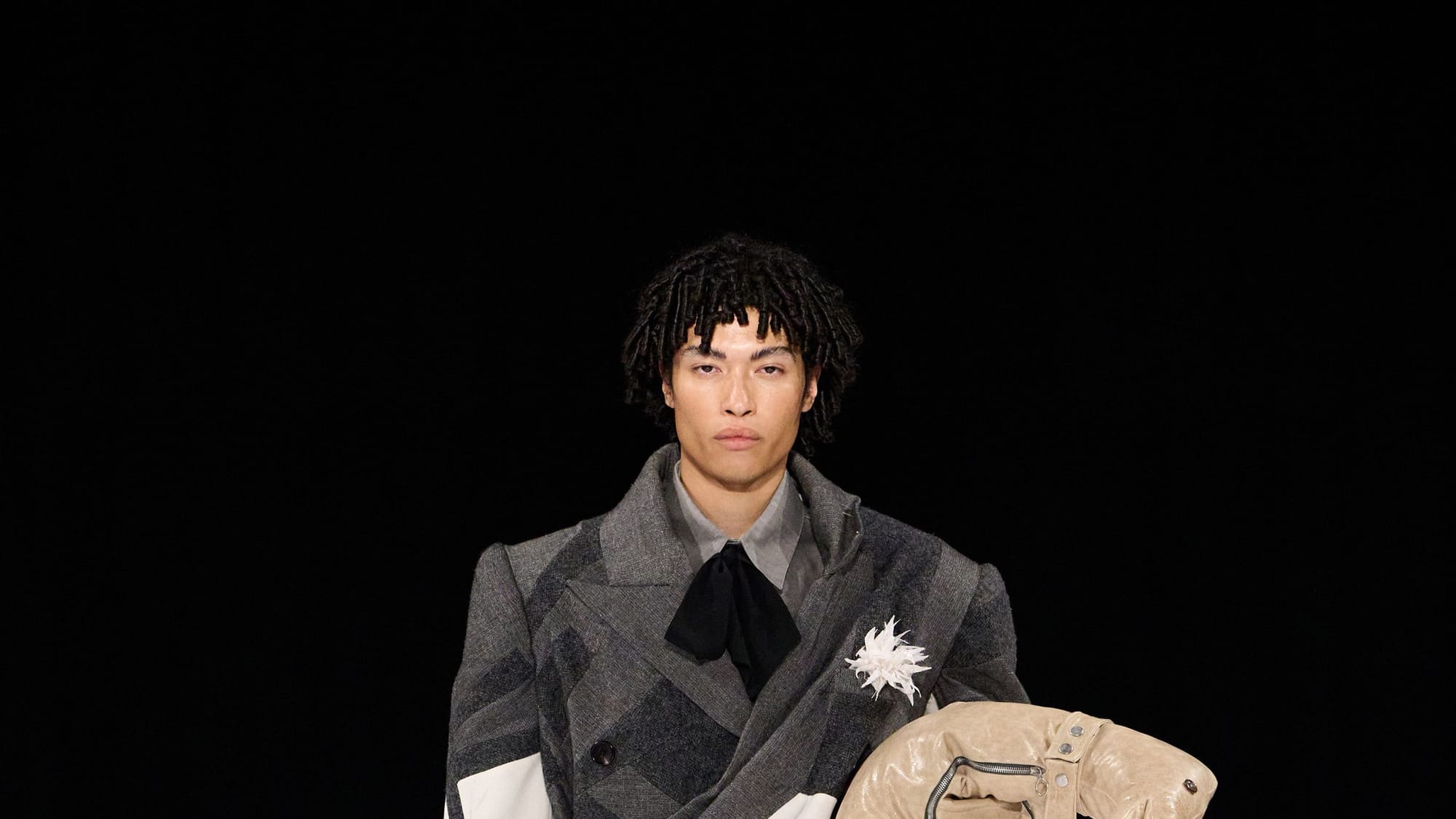
There are fashion schools, and then there is the Royal Academy of Fine Arts Antwerp. Founded in 1663, it is one of the oldest art schools on earth — and arguably the most quietly devastating incubator of creative talent the industry has ever produced. The Antwerp Six. Martin Margiela. Haider Ackermann. Kris Van Assche. An Vandevorst. The list reads less like an alumni directory and more like a mythology. This year's Master's graduates, according to Vogue, proved the lineage remains very much intact.
The collections were unveiled as the city hosted the Antwerp Fashion Festival — four days built around the Antwerp Six exhibition at MoMu Museum, a tribute to Walter Van Beirendonck's 40-year career, talks, and activations citywide. Jury members included designers Olivier Theyskens, Francesco Risso, and Saul Nash, alongside artists Luc Tuymans and Carla Arocha. Theyskens was direct about what separates this institution from the rest: "The Academy has never been swayed by the evolution of the fashion world," he said, citing its refusal to trade research and creative integrity for industry trends. Risso, who worked closely with the Master's students over the past year, pushed further — arguing that an institution of this caliber deserves far more public support than it currently receives.
Sixteen Worlds, Zero Apologies
The collections themselves were as distinct as their makers. Bartosz Borowski forensically dissected 12 Lucian Freud paintings, translating the painter's chaotic studio energy and raw figuration into silhouettes that held disorder and refinement in productive tension. Yvonne Schichtel went further back — to archaeologist Marija Gimbutas's theories of ancient matrilineal societies — building garments of extraordinary delicacy: cascading tulle, powdery blush, faded rose, and muted earth tones applied with watercolor precision. Vincent Körber took a Palermo residency and turned it into a wardrobe, layering Norman, Arab, and Venetian histories with early 20th-century Southern Italian tailoring and the stark photography of Letizia Battaglia — grandeur and decay treated not as opposites, but as collaborators. Carla Lázaro Bonet constructed monumental, expansive silhouettes rooted in matrilineal family history and botanical metaphor, while Lars Martens — sparked by a photograph of Cecil Beaton in a leopard-print bathrobe — built a deliberately extravagant collection as a direct antidote to fashion's current obsession with utility and gloom. Stan Peeters went architectural, referencing Cubist sculptors Marthe Donas and Alexander Archipenko, and collaborating with his father on polished wooden accessories that restructured the body entirely. Feng Zhangchong riffed on a demolished Guangzhou dance hall and the deadpan wit of Cantonese slang; Jeron Grünewald pulled from German Expressionist cinema and the cold dread of Nosferatu.
What unified all of it, per Theyskens, was an almost defiant individuality — "introspection, research, and a striking confidence in their own voices." Risso described the collections he found most memorable as those rooted in near-obsessive research, the kind that transforms sustained focus into something "surprisingly light, generous and deeply human." In a cultural moment defined by acceleration and distraction, that reads as radical.
Antwerp keeps producing designers who don't dress the zeitgeist — they interrogate it, and that distinction is everything.
Read the original at Vogue.