Should Brands Really Be Popping Off in the Comments?
The spiraling drama between Alex Cooper and Alix Earle has underscored a new opportunity: brands getting stuck into online discourse. Does it pay dividends or divide followers?
Reported by Vogue.
The comments section used to be where brands went to drop a heart emoji and leave. Now it's where they're actually trying to live. According to Vogue, the shift happening across Instagram and TikTok isn't just about engagement metrics — it's a fundamental rethink of what brand presence even means in 2025.
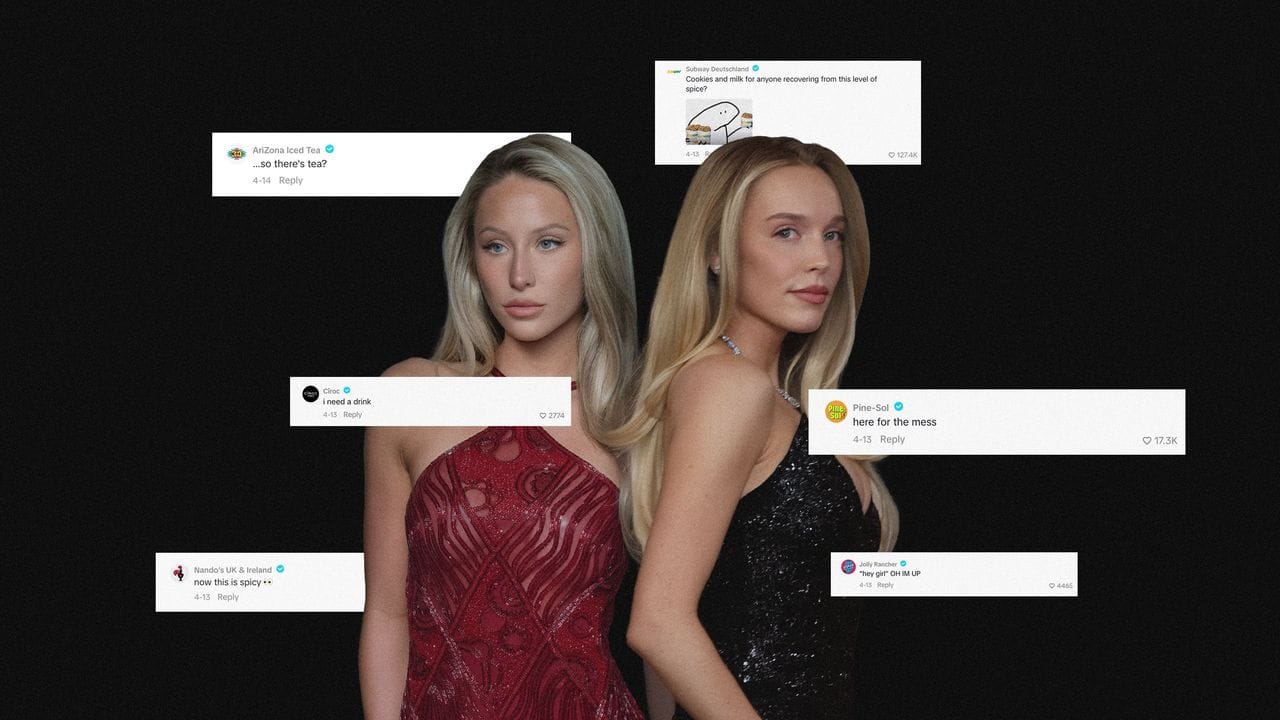
The catalyst this spring was the Alex Cooper versus Alix Earle fallout, which pulled in not just millions of viewers but corporate brand accounts hungry for a slice of the cultural moment. Subway Germany commented on Cooper's original video and walked away with 127,000 likes. Ocean Spray, Wingstop, and others followed. Audiences clocked it immediately. The moment crystallized something social strategists had been watching quietly for months: the comments section has become prime real estate, and brands are paying attention. Organic Instagram reach has collapsed — from 10–15% in 2020 to just 2–3% today — making the comments one of the last genuinely free spaces to get in front of non-followers. Meanwhile, over 52% of Gen Z consumers now use comments to research brands, versus only 37% who visit brand profiles directly, per Archrival data cited by Vogue. On TikTok, comments on luxury brand videos jumped 113% year-on-year in 2024.
Knowing When to Talk
Fashion and beauty brands are approaching this differently depending on where they sit in the market. Community-forward labels like Damson Madder and Peachy Den, along with social-fluid players like Gap, are engaging directly with their audiences in comment threads. Beauty brands like Milk Makeup and The Ordinary have made the comments section an extension of their brand voice entirely. "We comment frequently, fuel the banter, and try to be as funny as possible," says Amy Bi, VP of brand at Deciem. Social consultant Alexa Kesta, formerly of The Face, frames it plainly: brands aren't broadcasting to audiences anymore — they're joining them. "The comments section has become as important as the content itself." Gemma Lacey, consultant and contributing editor at Puss Puss Magazine, who has managed social for both Adidas and Stella McCartney, puts it this way: brands are finally using social media socially.
Luxury is a different equation. Mystique is a luxury brand's most valuable asset, and repeatedly showing up in gossip threads erodes the distance that makes desire possible. Kesta notes that jumping into "gossipy discourse" can feel jarring for houses whose entire equity is built on a certain cool remove. The other obstacle is structural — fashion's editorial reflex means content goes through layers of approval that make real-time conversation nearly impossible. "The comments section requires you to be a person," says Christina Le, head of marketing at Slate and former brand-side strategist. Some houses have solved it by letting the creative director's personal account do the talking — Marc Jacobs and Jacquemus both operate this way to visible effect.
The bottom line: if your brand still treats the comments section as an afterthought, you're leaving one of the only remaining free channels in social media completely on the table.
Read the original at Vogue.