Stine Goya Resort 2027
Stine Goya Resort 2027 collection, runway looks, beauty, models, and reviews.
Reported by Vogue.
There's a fine line between romantic and redundant, and Stine Goya's Resort 2027 collection walks it with surprising confidence. The Copenhagen designer built her latest offering around the rose — not as wallpaper, not as a nostalgic cliché, but as a subject worthy of close, almost obsessive study. "This collection is about the rose, but not the rose as a decoration," Goya explained. The goal, she said, was to stare at something familiar long enough that it becomes entirely new. According to Vogue, the result is a tightly edited range that feels like a designer fully back in command of her own aesthetic language.
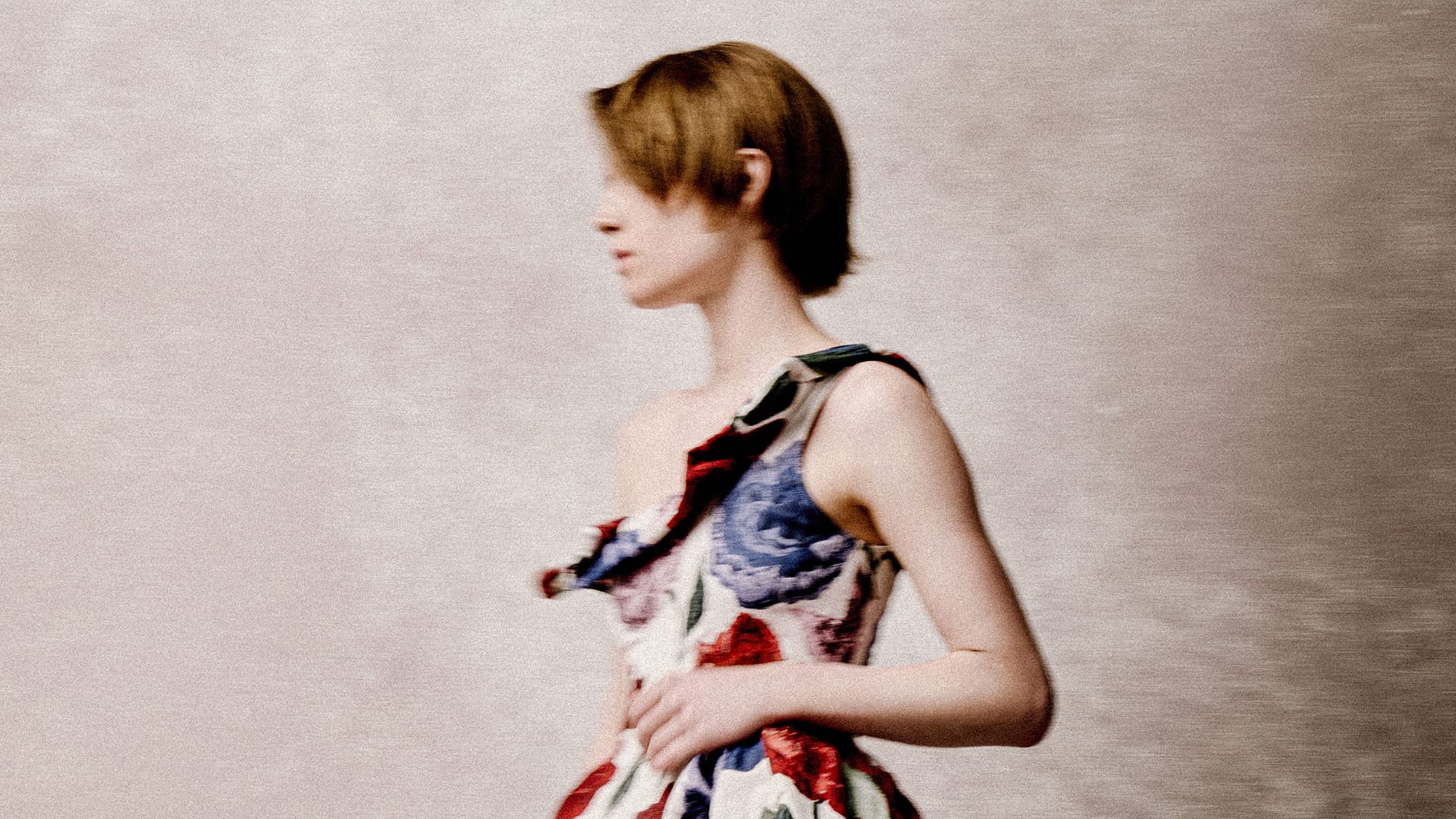
The proprietary patterns and girl-meets-boy energy that define the Goya brand are all present — feminized bombers (one lined in a rich plaid), jewel-toned checks, and washed denim with floral embroidery tucked onto a back pocket like a small, deliberate secret. A rose-red scoop-neck dress with bust pleats gets customizable fit via delicate bow ties. A peplum top — one of the label's signature pieces — was reworked asymmetrically in a rose-strewn jacquard, worn off one shoulder and paired with cigarette pants in the same print. The proportions feel intentional, not accidental.
Where the Collection Gets Interesting
The eveningwear lands with more personality than the daywear. A party dress in a falling-flowers print with a vaguely '50s silhouette reads sweet without being saccharine. Better still: a heavy black satin T-shirt dress bearing a single over-beaded rose — maximalist restraint, executed well. But the most compelling piece in the collection doesn't announce itself loudly. On a tailored black suit jacket, Goya manipulated the lapel fabric into a sculptural 3D rose. No hardware, no embellishment — just cloth twisted into something tactile and alive. Where her tailoring once leaned on metallic details that could feel cold, this approach is warmer, more human, more made.
It's a small shift with real implications. Fashion loves to talk about "the hand" — the evidence of craft, of human touch in garments increasingly threatened by automation and algorithm. Here, Goya makes that argument without stating it, which is the only way it works. The rose isn't a theme. It's a method: look closer, stay longer, find the thing beneath the obvious thing.
When a designer stops trying to reinvent herself and starts perfecting what she already knows, the clothes stop being a statement and start being something you actually want to wear.
Read the original at Vogue.