<strong>‘At 54, I Tried the Build & Burn Strength Training Kettlebell Program—Here’s My Honest Review’</strong>
“Mastering exercises with a new-to-me piece of equipment was more empowering than I expected.”
Reported by Women's Health Magazine.
Here's what happens when you hit your 50s and decide your own strength matters: you start lifting. After a year of working with a trainer on functional resistance training, one woman decided to tackle something entirely unfamiliar—a four-week kettlebell program she'd never attempted before. The result? A surprisingly humbling and empowering deep dive into why this ungainly piece of equipment might be exactly what midlife fitness needs.
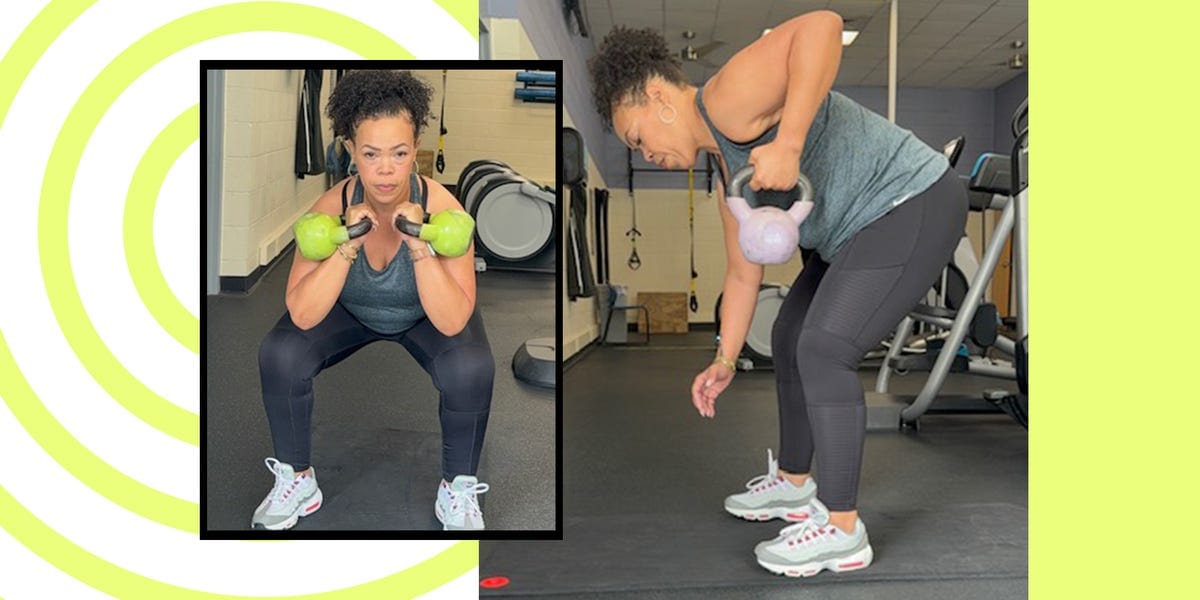
According to Women's Health Magazine, the Build & Burn kettlebell program was designed by certified trainer Sarah Warshowsky and structured around four weekly sessions (30-45 minutes each) blending strength, power, and conditioning work. The setup sounds straightforward: full-body targeting, low reps (5-10 per side), and progressive weight loading. But here's what the participant discovered immediately—kettlebells aren't dumbbells. That offset weight distribution? It transforms every single movement. Where dumbbells sit balanced in your hands, kettlebells demand constant core stabilization just to stay upright. Moves like hand-to-hand swings and single-arm cleans stopped feeling like exercises and started feeling like core interrogations. Her obliques and trunk were firing in ways barbell work never triggered.
The Awkward Middle Is Where Growth Lives
Week one was slow. Workouts that theoretically run 45 minutes stretched closer to an hour. She watched YouTube videos, consulted form guides, and felt genuinely off-balance with exercises like quarter get-ups and goblet squats. But here's the thing nobody tells you about learning new movement patterns: that discomfort is data. By week two, the awkwardness evaporated. By week four, she'd progressed from 10-15 lb kettlebells to 20-25 lbs depending on the exercise, moved through sequences with visible stability, and—most unexpectedly—found herself genuinely present during workouts. No phone scrolling between sets, no autopilot. The demand for form precision created what trainers call mind-muscle connection. Her body felt more efficient. More intentional.
What started as a challenge became a genuine shift in how she approached fitness. The kettlebell program didn't just build strength; it restored the novelty that keeps training from becoming rote. At 54, after years of prioritizing everyone else's needs, pushing hard at something difficult—and actually mastering it—reminded her that her own physical resilience matters. The takeaway isn't about kettlebells specifically; it's that uncomfortable growth, when done with proper form and patience, is where confidence actually lives.
Read the original at Women's Health Magazine.