<strong>Can a High-Intensity Workout Really Help You Stop a Panic Attack?</strong>
Sometimes, you should fight fire with fire.
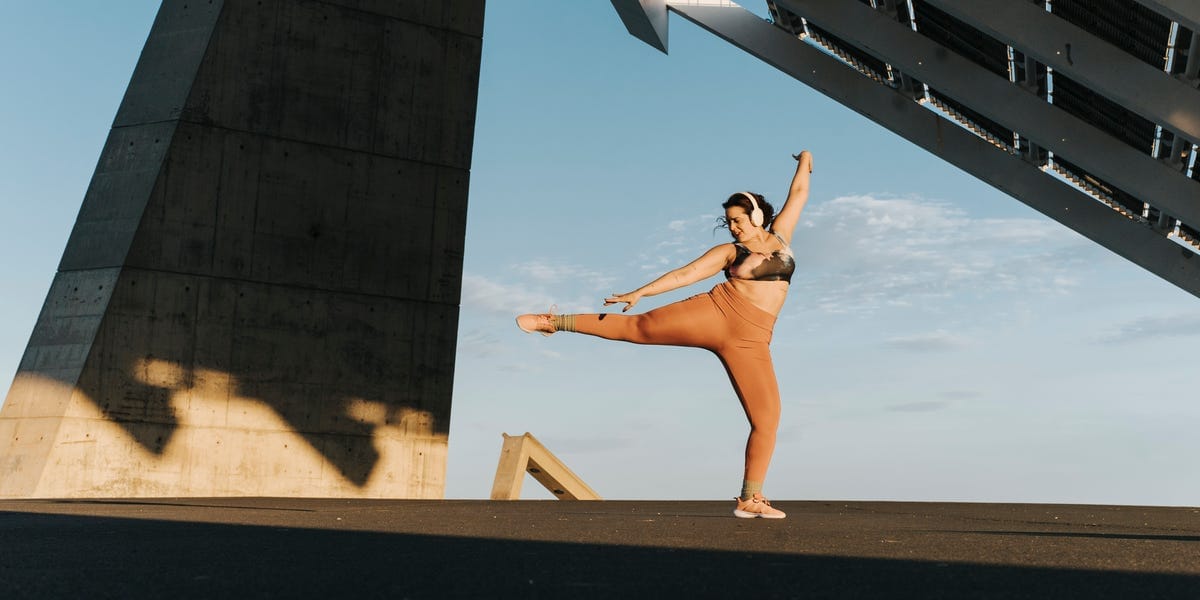
Reported by Women's Health Magazine.
Most panic attack advice sounds the same: breathe slowly, ground yourself, maybe try lavender. So it's genuinely interesting that a woman doing Billy Blanks Tae Bo in her pajamas at midnight has become one of the more compelling mental health conversations on TikTok right now. Audri Pettirossi, who posts under the name "Dri," has spent weeks documenting her nightly high-intensity workouts as a way to manage OCD and panic attacks — and her comment section is full of people reporting that it's working for them, too.
The science behind it is less chaotic than it sounds, according to Women's Health Magazine. Clinical psychologist Aleksandra Rayska, PhD, who specializes in somatic and dance therapy, explains that panic attacks flood your system with adrenaline and cortisol — the same stress hormones that spike during intense exercise. The difference is that a workout-induced cortisol surge is temporary; levels drop back to baseline (sometimes below it) once you stop moving. Meanwhile, exercise immediately triggers serotonin and dopamine, giving your brain a neurochemical counterargument to the fear spiral. As Rayska puts it: "It sometimes works to match fire with fire, and speed up in order to slow down."
The Case for Working With the Adrenaline, Not Against It
When panic is already running the show, asking your brain to slow down and think clearly can feel genuinely impossible. High-intensity movement offers a different option: let your body burn through the adrenaline instead of fighting it. There's also the regulation angle — familiar, repetitive movement can feel grounding when your thoughts are anything but. After significant exertion, your nervous system naturally shifts into recovery mode, which is essentially the come-down your body was looking for in the first place. A 2026 study in Frontiers in Psychiatry backed this up, finding that participants with panic disorders who did high-intensity interval training — sprints, jogging, movement — showed greater long-term symptom improvement than those who practiced relaxation techniques alone, with benefits lasting five months post-study across 72 participants.
None of this is a replacement for therapy. Rayska is clear that fitness is a coping tool, not a treatment — if panic is a recurring problem, working with a licensed therapist to address the root cause matters. But as a support mechanism, it's worth taking seriously. And it doesn't have to be Tae Bo specifically; yoga, dance, a Peloton ride — whatever movement feels familiar and even fun to you is the point. Rayska notes that playfulness itself is regulatory, signaling to your nervous system that you're safe. Following along with a digital instructor also removes the cognitive load of figuring out what to do next, which is the last thing you need mid-panic. Music adds another layer: matching movement to a beat can function almost like rhythmic breathwork, and the predictability of a good song may be enough to pull you toward something closer to flow.
The next time panic shows up uninvited, the most counterintuitive move might also be the most effective one — put something loud and fun on, and let your body lead.
Read the original at Women's Health Magazine.