Take a Walk Through Queen Elizabeth II’s Most Rare and Revered Fashion Pieces
In our latest installment of “Objects of Affection,” Vogue’s global editor at large, Hamish Bowles, and surveyor of the King’s works of arts, Caroline de Guitaut, take us to Buckingham Palace to preview a new exhibition.
Reported by Vogue.
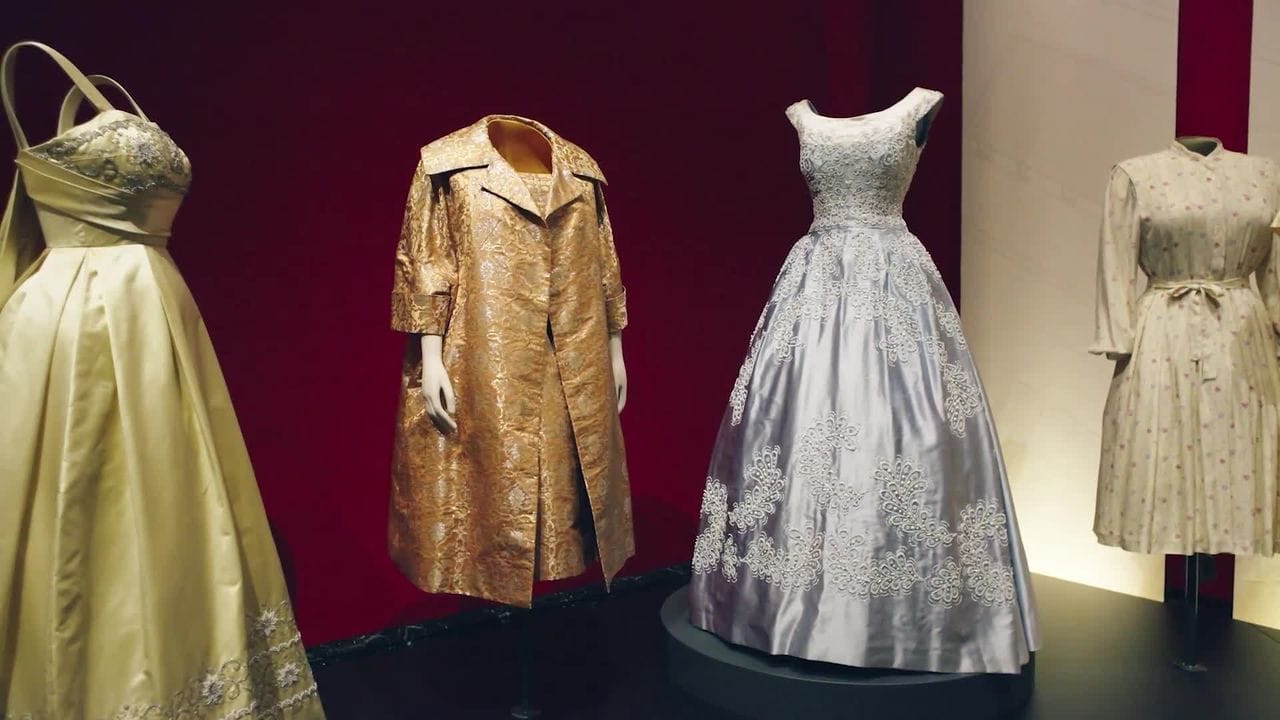
Queen Elizabeth II didn't just wear clothes—she engineered them. A new exhibition at Buckingham Palace, Queen Elizabeth II: Her Life in Style, makes this abundantly clear, walking visitors through decades of meticulously conceived garments that functioned as diplomatic tools, historical markers, and deeply personal statements. According to Vogue, the show reveals something crucial: the late monarch was far more than a passive wearer of haute couture. She was an active architect of her own image, collaborating obsessively with her designers to ensure every detail—every motif, every color, every silhouette—told a story.
The exhibition's centerpiece is a collection of dresses by Norman Hartnell, Elizabeth's most trusted collaborator, alongside archival sketches, correspondence, and production notes that document the painstaking process behind each piece. One standout is the Wattle Dress, a shimmering yellow silk tulle gown created for her 1954 royal tour of Australia. The dress blooms with white and yellow wattle blossom motifs—a deliberate nod to her host country and a hallmark of Elizabeth's philosophy: always honor the nation you're visiting through what you wear. This wasn't decoration. It was diplomacy wrapped in silk.
Fashion as Silent Communication
What becomes apparent walking through the galleries is how strategically Elizabeth used her wardrobe to speak without speaking. From the Liberty London florals she wore as a child alongside Princess Margaret to the coronation gown that captivated post-war Britain, every garment was calibrated to convey something—stability, respect, joy, solemnity. The clothes did the labor of official duty. They signaled continuity when the nation needed it most.
The exhibition doesn't celebrate Elizabeth as a fashion victim or even a fashion icon in the contemporary sense. Instead, it presents her as someone who understood that what a monarch wears is never merely aesthetic. It's institutional. It's about showing up—literally—for people who needed to see their queen reflected in silk and ceremony. In an age of performative dressing, that distinction feels almost radical.
Read the original at Vogue.