The Met Gala Boycott Is Necessary — Even If You’re Not Participating
Why Are People Boycotting The Met Gala? Here’s Everything You Need To Know.
Reported by Refinery29 Fashion.
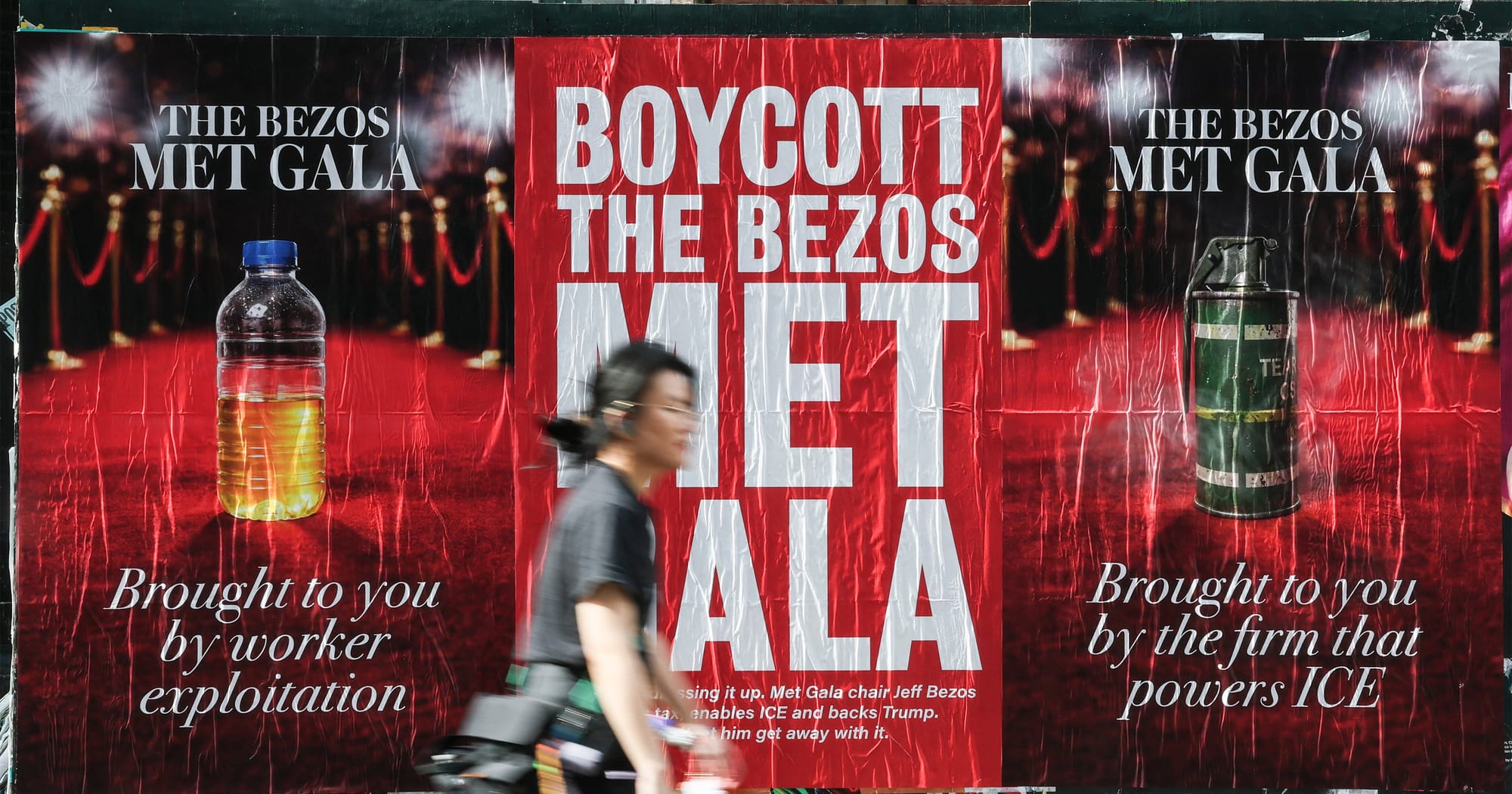
The first Monday in May arrived the way it always does — in a cloud of hairspray, a blur of couture, and a wave of controversy loud enough to compete with the flashbulbs. This year's Met Gala carried more baggage than usual, and not the designer kind. Amazon founder Jeff Bezos and his wife Lauren Sánchez were named honorary co-chairs and lead sponsors of the Metropolitan Museum of Art's Costume Institute fundraiser, with Bezos reportedly contributing $10 million to the event — and the backlash started in February and hasn't let up since, according to Refinery29 Fashion.
The criticisms aren't abstract. Bezos's detractors point to sweeping layoffs and editorial interference at The Washington Post, Amazon's $40 million documentary deal spotlighting Melania Trump, the company's donations to Trump's inauguration fund, and — most viscerally — Amazon warehouse workers reportedly forced to skip bathroom breaks and urinate in bottles. A guerrilla activist group called Everyone Hates Elon (yes, that Elon) has been leading boycott calls by covering New York subway cars and bus stops in protest posters and, on the Friday before the Gala, placing 300 bottles of fake urine inside the Museum itself. Crude? Sure. Effective? Absolutely — everyone's still talking about it.
Who Shows Up, and Who Doesn't, Is Political Too
New York City Mayor Zohran Mamdani skipped the Gala entirely, citing his focus on making the most expensive city in the country actually livable. He used the occasion to spotlight six local garment workers in a portrait series by photographer Kara McCurdy — including former Amazon delivery employees. Separately, a coalition including the Service Employees International Union and the Amazon Labor Union staged a Ball Without Billionaires, casting Amazon, Uber, and Starbucks workers as the night's models. "The fashion industry is made possible by the thousands of workers behind the scenes — seamstresses, tailors, retail workers, delivery drivers — whose immense talent and dedication deserves to be celebrated," Mamdani told i-D. Meanwhile, actress and activist Cynthia Nixon called the Gala "exactly the kind of reputation laundering and cultural rocket fuel" Bezos needs, per The New York Times — and she's not entirely wrong. When a $100,000-a-table event becomes the vehicle through which a billionaire buys cultural legitimacy, the discomfort is earned.
None of this means the Met Gala is without value. It funds an institution that genuinely needs the money, employs hundreds of working artists and fashion professionals, and remains one of the most-watched cultural platforms on the planet — which is exactly why the protests matter. Clothes have always been political. Fashion has always reflected who holds power and who doesn't. A red carpet with that level of global attention could do more than showcase spectacle; it could force a real conversation about whose labor makes the spectacle possible, and who profits from it.
The real question the moment keeps circling is one worth sitting with: when billionaire money underwrites culture, it doesn't just fund it — it shapes it, softens it, and eventually owns the narrative around it. The pressure building outside the Museum's iconic steps won't cancel the Gala, but it might eventually force institutions to reckon with who they're willing to align with — and what that alignment actually costs the rest of us.
Read the original at Refinery29 Fashion.