The Met Gala Theme Over the Years: A Look Back at Many First Mondays in May
Here’s a look back at every Met Gala theme since 1995, from “Haute Couture” to the 2026 theme, “Costume Art.”
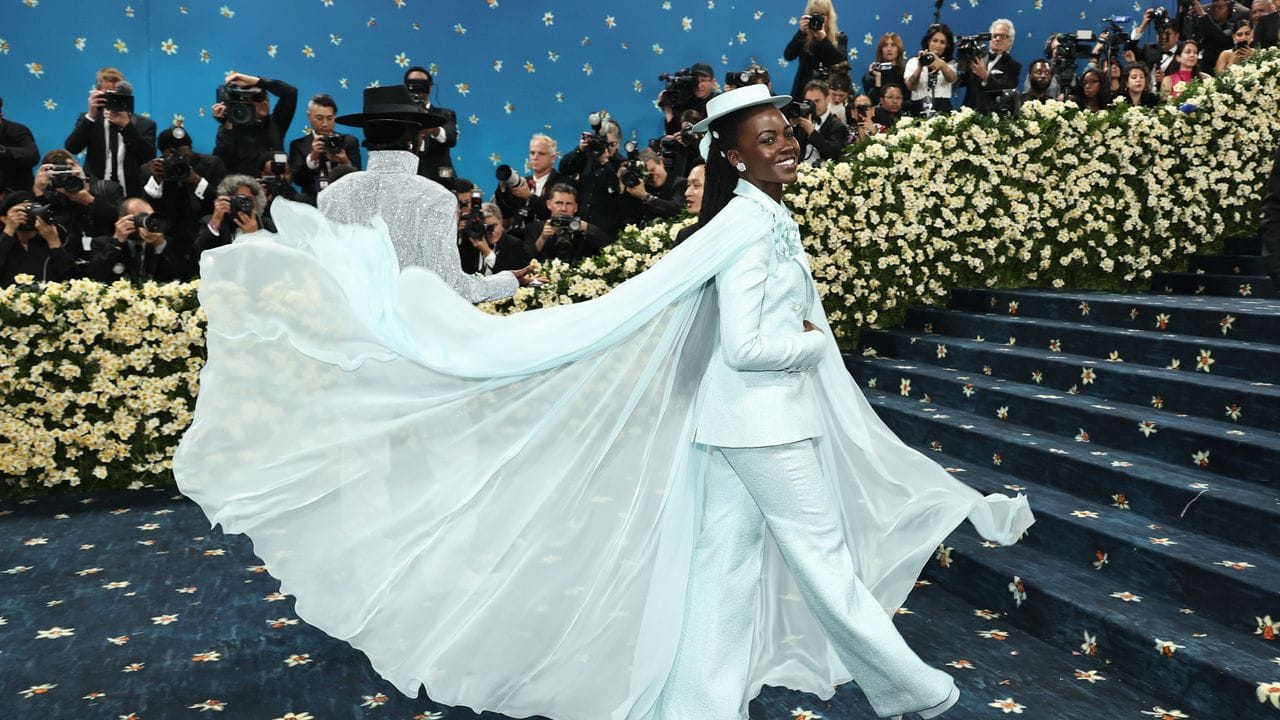
Reported by Vogue.
Every first Monday in May, the Met Gala doesn't just throw a party — it makes a cultural argument. The theme, always tied to the Costume Institute's spring exhibition at the Metropolitan Museum of Art, sets the conceptual stakes and the dress code. Thirty-plus years in, the range is staggering: Catholic mysticism, American identity, the philosophy of camp, a single Japanese designer's avant-garde objects. According to Vogue, the tradition has been shaped under Anna Wintour's chairmanship since 1995, and each iteration reveals something specific about what fashion thinks it is at any given moment.
Some themes hit differently in hindsight. The 2019 "Camp: Notes on Fashion" leaned on Susan Sontag's 1964 essay to argue that excess and irony are legitimate aesthetic positions — and delivered looks from Schiaparelli, Moschino, and Thom Browne to prove it. The 2018 "Heavenly Bodies" theme brought actual Vatican artifacts to Fifth Avenue, most of which had never left Rome, and produced the single most iconic Met image in recent memory: Rihanna dressed as the pope. The 2021 and 2022 twin exhibitions dissected American fashion from two angles — first its living, diverse present through emerging designers, then its complicated historical record, surfacing makers who had been, in curator Andrew Bolton's words, "forgotten, overlooked, or relegated to the footnotes of fashion history."
What the Theme Actually Does
Bolton, the Costume Institute's Wendy Yu Curator in Charge, is the intellectual engine behind most of these exhibitions, and his curatorial instincts are rarely straightforward. The 2023 Karl Lagerfeld retrospective — 150 pieces spanning six decades across Chloé, Fendi, Chanel, and his own label — was explicitly not about Lagerfeld the myth. "We didn't want to emphasize Karl the man, who has long been the subject of breathless mythologizing," Bolton told the press, directing focus instead to the visual and conceptual lines architect Tadao Ando organized the show around. The 2025 "Superfine: Tailoring Black Style," co-organized with Monica Miller, professor and chair of Africana Studies at Barnard and Columbia, used Bolton's own acknowledgment — that André Leon Talley's 2022 death was "the catalyst for the show" — to center Black dandyism as a serious, prize-winning intellectual tradition, not an aesthetic footnote.
The 2026 edition raises the bar for ambition. Co-chaired by Beyoncé, Nicole Kidman, Venus Williams, and Anna Wintour, "Costume Art" pairs garments with art objects drawn from across the museum's curatorial departments — a genuinely cross-disciplinary move. The gala also inaugurates the new Condé M. Nast Galleries, a nearly 12,000-square-foot permanent home for the Costume Institute on the museum's first floor. The dress code — "Fashion is Art" — is either the most obvious statement the Gala has ever made, or the one it's been building toward for thirty years.
The Met Gala works because it insists that what you wear to a party can carry the weight of an argument — and occasionally, it's right.
Read the original at Vogue.


