The Mysterious Martin Margiela is Selling His Archive
Wigs, graffiti
Reported by Harper's Bazaar.
Fashion has always had its myths, but few are as deliberately constructed — or as genuinely strange — as Martin Margiela. The Belgian designer spent two decades reshaping what clothes could mean, then disappeared almost entirely from public life. Now, pieces from his personal archive are going up for sale, and according to Harper's Bazaar, each one comes with something rarer than the object itself: Margiela's own words explaining it.
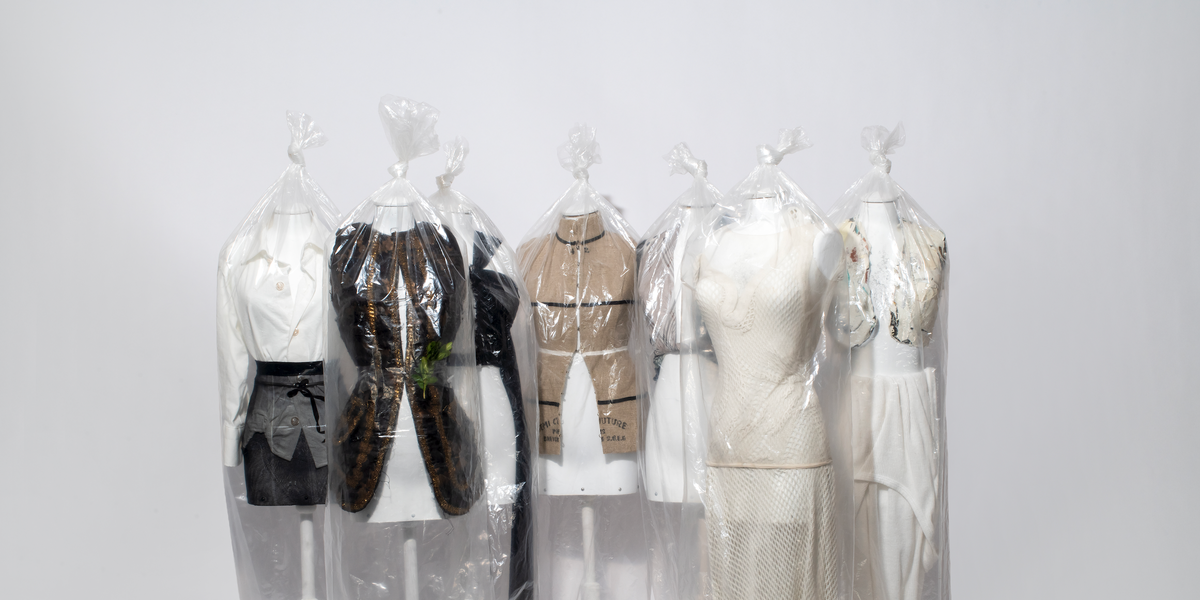
The items span the full arc of his obsessions. There's the white poplin Vareuse shirt from 1988 — a sailor's top he reworked with a plunging neckline that became, quietly, one of his most enduring silhouettes. There are the Tabi boots, those split-toe leather heels inspired by Japanese street workers that nobody liked when he first showed them in 1988, yet which he continued presenting season after season until the rest of the world caught up. One pair in the archive was graffitied by gallery visitors at a Galliera museum show; Margiela calls the result spontaneous and loves it. There are also veiled runway headpieces, oversized fringed diadems from his Fall 2000 show, and Hermès knitwear he designed between 1998 and 2004 — cashmere and silk in shapes so stripped-back he developed an internal studio language for them, including le porté par deux (two identical pieces worn together) and le triple set.
The Archive as Self-Portrait
What makes this sale genuinely unusual isn't the objects — it's the context. Margiela has offered first-person notes for each piece, which function less like catalog copy and more like confessions. He writes about painting his entire studio white in the late '80s, down to the telephone (on which he'd scrawled his own number because he could never remember it). He writes about a 1987 portfolio stolen on a train, later recovered by police, and his shock at how closely his rushed replacement matched the original. He writes about Barbie dolls he dressed as a child, recreated during COVID lockdown because the originals went missing at a 1989 exhibition and the loss, he admits, never fully left him.
The throughline across all of it is a mind that treated fashion as a form of controlled abstraction — faces hidden, bodies covered, attention forced back to the garment itself. The veil, the fringe, the oversized silhouette: each was a deliberate removal of distraction. Even his studio aesthetic was an exercise in erasure, everything painted white so nothing competed with the work.
What this archive makes clear is that Margiela's silence was never indifference — it was the whole point, and now the objects are finally allowed to speak.
Read the original at Harper's Bazaar.