The Mysterious Martin Margiela is Selling His Archive
Wigs, graffiti
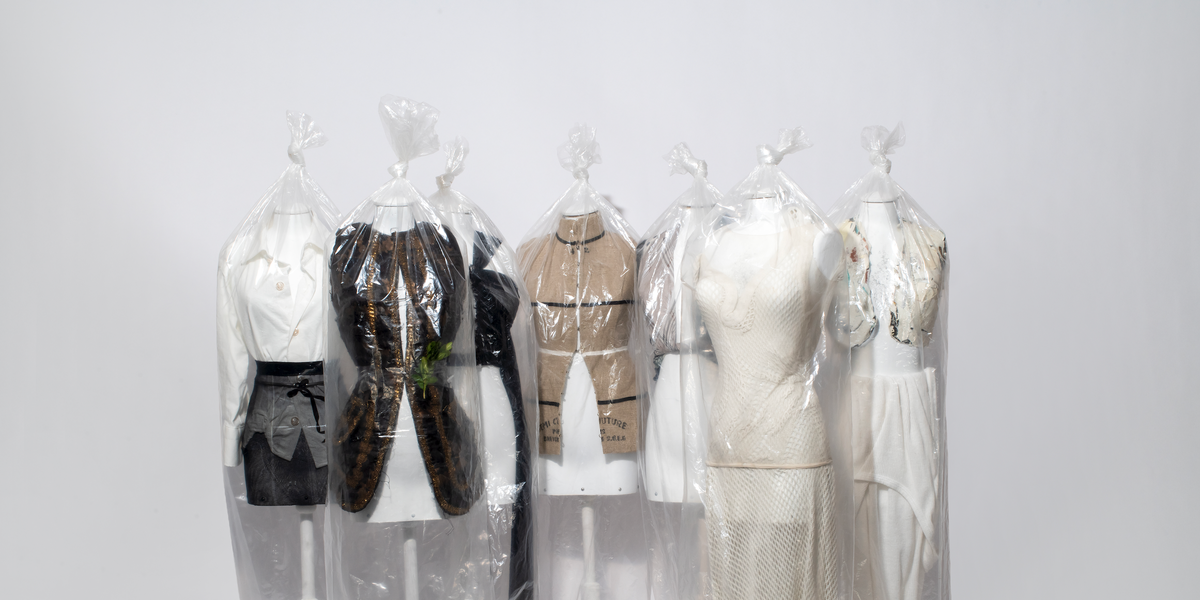
Reported by Harper's Bazaar.
There are designers who court mythology, and then there is Martin Margiela — a man who spent decades refusing to be photographed, give interviews, or take a bow at his own shows, letting the clothes absorb every bit of attention the industry wanted to redirect toward him. Now, for the first time, the work and the private objects are coming out of the shadows. According to Harper's Bazaar, Margiela is selling his personal archive, and the pieces — accompanied by handwritten notes from the designer himself — offer something rare: direct access to the mind behind fashion's most deliberate enigma.
The archive reads like a master class in intention. The iconic white Vareuse shirt, first cut in 1988 from simple poplin with a deep plunging neckline and zero fastenings, became a house signature worn as a tunic, tucked into trousers, or layered over knitwear — and it kept reappearing because it worked. The Tabi boot, equally foundational, came from a memory of Japanese street workers in split-toe soft boots; Margiela translated the silhouette into leather on heavy cylindrical heels in 1988. Nobody liked them. He showed them anyway, season after season, until the industry came around. They are still in production nearly 40 years later.
The Objects That Made the House
What makes this archive genuinely moving is the evidence of a creative system built entirely on obsession and consistency. The Hermès years — 1998 to 2004 — produced knitwear governed by what his studio called "le porté par deux" (two identical pieces worn together) and "le triple set" (three pieces instead of a twin-set): sober, undetailed, cut in cashmere and silk. His definition of luxury was quality, comfort, and timelessness — not logo placement. And then there are the Barbies. Margiela dressed them as a child and recreated miniature versions of his Fall 1989 collection for an exhibition that year; when the originals disappeared, he spent lockdown in 2020 remaking them from the original patterns, still unable to let the loss go.
Perhaps the most revealing piece is a phone — painted white, like every surface in his early studio, right down to the walls and floors. He had rejected the concrete-and-black-furniture aesthetic that Kawakubo and Yohji had already claimed, chosen the opposite, and committed to it completely. Because he could never remember his own number, he wrote it directly on the handset. It is the most human detail in a body of work that often felt otherworldly, and it is also, somehow, perfectly Margiela.
An archive is usually a record of what someone made; this one is a record of how someone thought — and that distinction is exactly why it matters.
Read the original at Harper's Bazaar.