The Mysterious Martin Margiela is Selling His Archive
Wigs, graffiti
Reported by Harper's Bazaar.
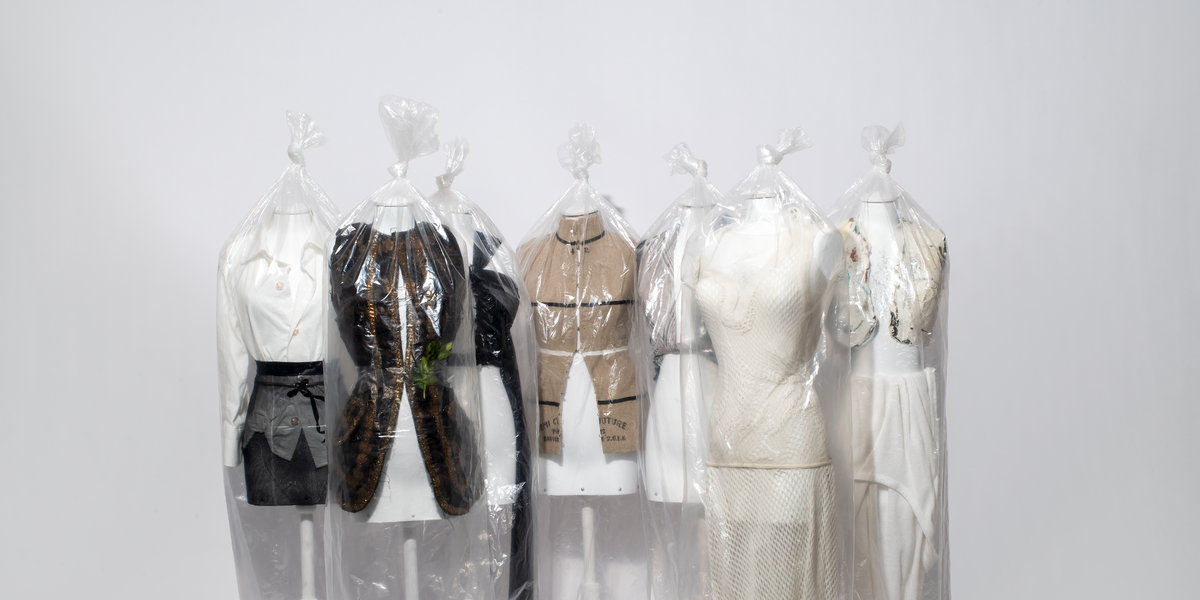
Martin Margiela — the designer who never showed his face, never gave interviews, and built one of fashion's most radical houses on the principle that clothes should speak for themselves — is finally letting the archive talk. According to Harper's Bazaar, the reclusive Belgian is selling a curated collection of personal objects, garments, and design artifacts, each accompanied by handwritten notes in his own words. It is, in effect, the first time Margiela has spoken publicly in years, and he chose to do it through things.
The pieces span his entire mythology. The iconic white Vareuse shirt — a sailor's top he reinvented with a deep plunge neckline, worn tucked, untucked, over knits, under nothing — is here, and so is his Hermès knitwear from 1998–2004, where he developed an internal studio language around layering: le porté par deux (two identical pieces worn together), le triple set (three pieces, not two). His definition of luxury at Hermès, he writes, was simply "quality, comfort, and timelessness." No hardware. No fuss. Just cashmere and silk doing what they were born to do.
The Objects That Made the Philosophy
Then there are the details that explain everything about how Margiela saw the world. He painted his studio entirely white — walls, floors, furniture, televisions, even the telephones — because he refused to follow the grey-concrete-and-black-furniture aesthetic that Kawakubo and Yamamoto had already claimed. One of those white phones is in the sale, his own number written directly on it because he could never remember it. His graffiti-covered Tabi boots, born from a 1988 memory of Japanese street workers in split-toe boots and dismissed by virtually everyone at the time, are here too — now closing in on 40 years of continuous production. The pair in the archive was left out at a Galliera museum exhibition, and visitors wrote on them without being asked. He loved it.
There are also the Barbie dolls he dressed as a child, then recreated during COVID lockdown after the original exhibition pieces vanished decades ago (he writes he "never could cope with that loss"), and a first design dossier from 1987 — stolen on a train, painstakingly recreated from memory, then recovered by police. He compared the two versions and found them nearly identical. And the runway veils, designed to erase the model's face entirely so nothing would distract from the clothes: pencil correction marks still visible, still a study.
What makes this archive extraordinary isn't rarity — it's the voice behind it, direct and unguarded in a way that decades of deliberate silence made impossible to imagine. Margiela didn't build a brand on mystery for its own sake; he built it so the work could exist without the noise of personality — and even now, selling the objects, that instinct holds.
The most radical thing Margiela has ever done might be this: finally speaking, and making it worth the wait.
Read the original at Harper's Bazaar.