The Search for the Perfect Potato
One writer with a lifelong reverence for potatoes commits herself to a quest: finding the variety of her dreams.
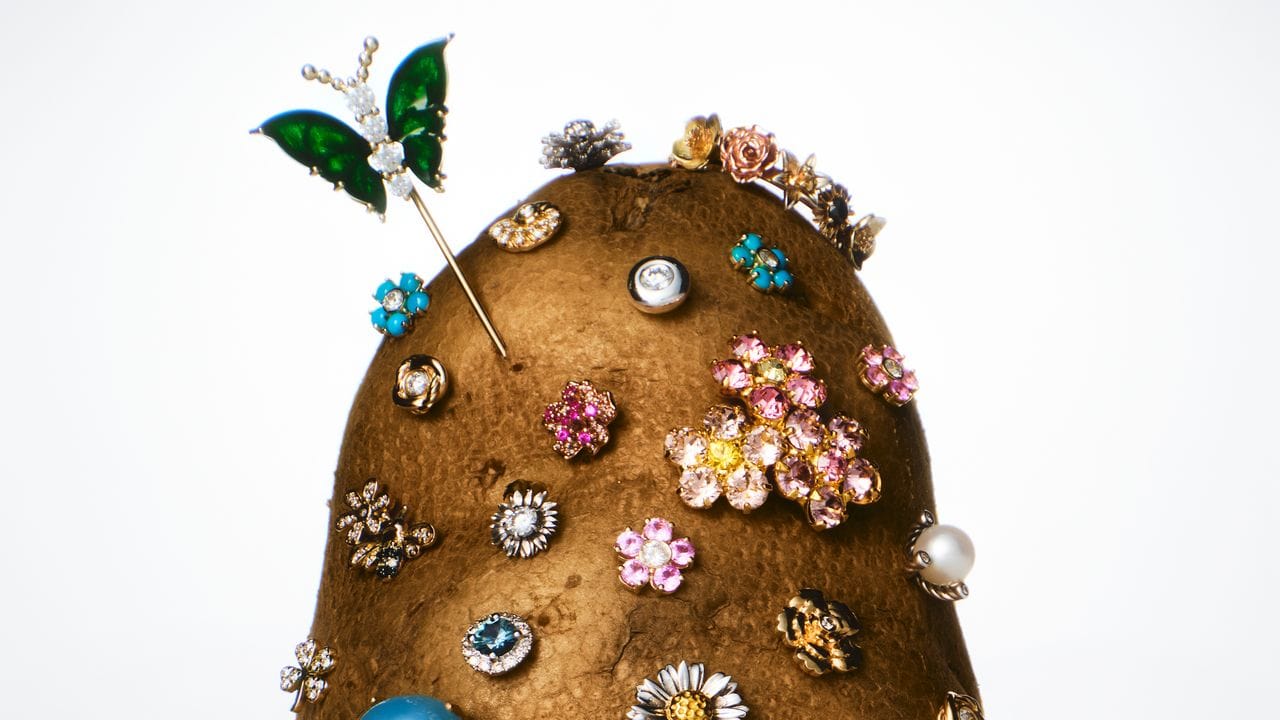
Reported by Vogue.
There are potatoes, and then there are potatoes — the kind that make you question everything you thought you knew about the vegetable sitting in your pantry. According to Vogue, the humble spud has a history far richer than its reputation suggests: first domesticated in South America and name-dropped in a 1552 text describing Andean Peru as "roots similar to earthen truffles," the potato didn't reach Europe until later that century, and North America roughly fifty years after that. Of the seven cultivated species that exist, over 4,000 varieties grow worldwide — most in the Peruvian and Bolivian Altiplano — ranging from walnut to melon size and spanning every color imaginable.
The potato's culinary prestige has clearly arrived in New York. At downtown restaurant Ernesto's, chef Ryan Bartlow layers Spanish ham over house-fried chips that could legitimately challenge a french fry's authority. At Binx in the West Village, chef Rowen McDermott's Thousand Layer Potato — a burnished tian of mandolined potato and clarified butter — is the kind of dish that makes technique feel like love. Both are exceptional. Both are also, ultimately, treating potato as a vehicle rather than a destination.
The Real Thing
Which is why the more interesting story is happening elsewhere. On the Spanish island of Tenerife — closer to Morocco than Madrid — the Centro de Conservación de la Biodiversidad Agrícola de Tenerife stores 110 ancient potato varieties in basement cold rooms kept at around 41 degrees, some genetically related to specimens pulled from the Americas over 400 centuries ago. Domingo Ríos Mesa, who oversees the collection, explains the island's unlikely status as a potato archive: when Spain first transported potatoes from the Americas, Canary Islands ports were mandatory stops, and ships regularly offloaded cargo. Tenerife's mountainous microclimates — capable of sustaining crops above 1,200 meters elevation — did the rest. About 15 ancient varieties are still grown on the island today.
The varieties Ríos Mesa curates are visually extraordinary: potatoes the mahogany of a grand piano, others streaked with pale yellow like distant planets, one the precise color of Persian mulberries. But the crown jewel is the Negra Yema de Huevo — Black Egg Yolk — a black-skinned potato with flesh the color of a duck egg yolk. Cooked arrugadas, the traditional Canarian wrinkled style, its papery skin gives way to something waxy, cakey, profoundly sweet — closer to roasted chestnut than anything you've pulled from a supermarket bin. Ríos Mesa notes that heritage varieties don't consistently outperform commercially grown potatoes nutritionally, but their quality? Universally superior.
A back-of-house curiosity or a Union Square farmers market haul with eight varieties — including Upstate Abundance, a variety developed by Stone Barns' Dan Barber and Cornell plant geneticist Walter De Jong — can get you somewhere interesting, but the real lesson here is that the most transformative version of a thing you've loved your whole life might be waiting in a place you never thought to look.
Read the original at Vogue.