The Trendiest Hairstyle From the Year You Graduated School
From ’80s crimps to Cher hair, these are the 60+ styles that defined decades
Reported by Harper's Bazaar.
Graduation photos are a time capsule — and nothing dates them faster than the hair. From curtain bangs to cornrows to Dynasty-era volume that defied gravity, each decade produced a signature look that women across the country rushed to replicate. According to Harper's Bazaar, the trendiest hairstyle from your graduation year says more about cultural momentum than personal taste.
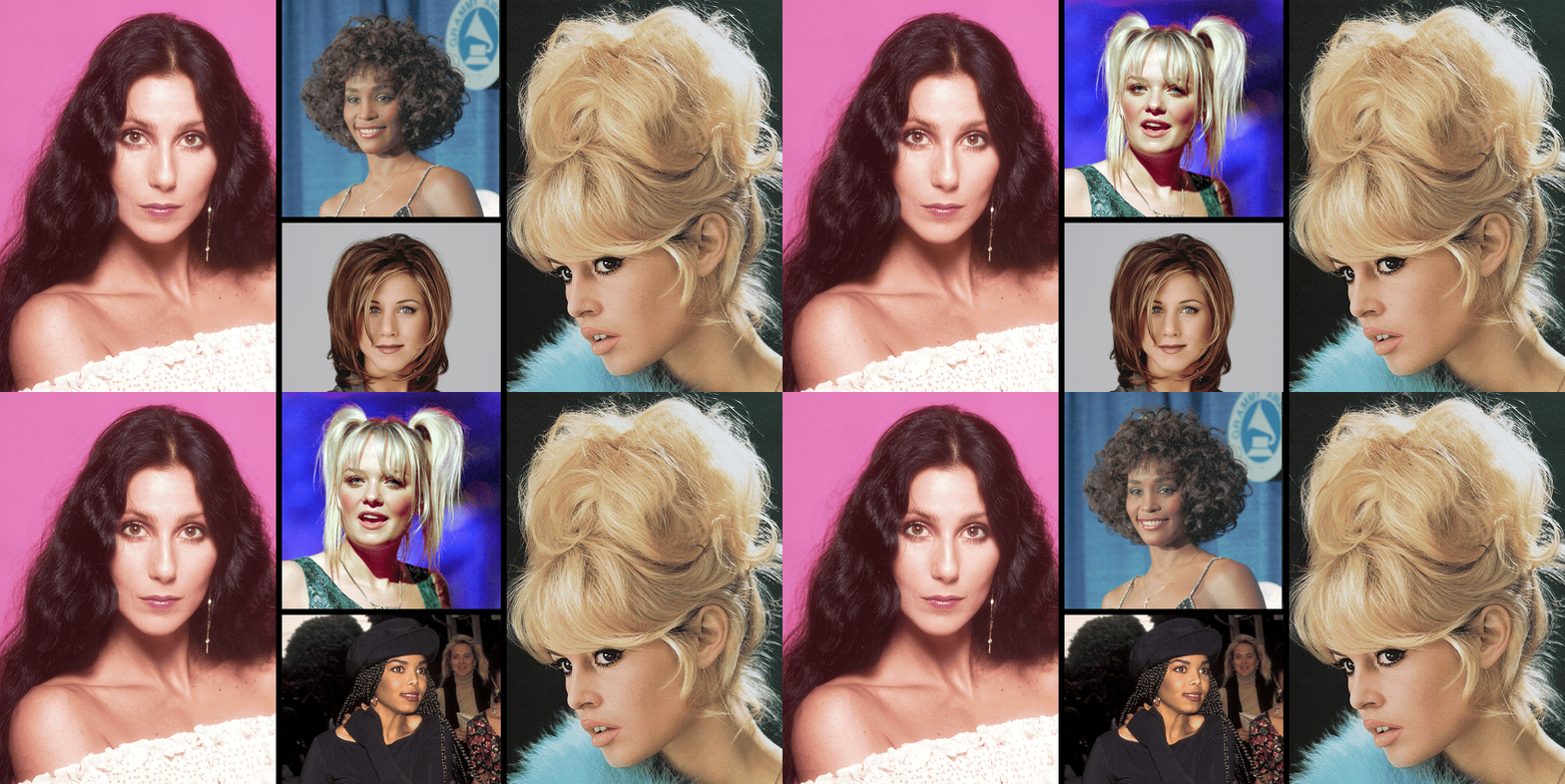
The 1960s were a masterclass in contrast. Brigitte Bardot made curtain bangs and voluminous waves the defining look of 1965, while Twiggy's deep-side-parted bob turned a single model into a blueprint for an entire generation. By the end of the decade, Elizabeth Taylor was wearing bejeweled updos with hanging braids — a look that straddled the buttoned-up '60s and the free-spirited '70s with remarkable elegance. The cultural pivot of the era came in 1973, when Cicely Tyson wore cornrows for her role in Sounder — a decision that sparked national conversation and became a landmark moment in the history of natural hair.
The Decade That Made Hair an Attitude
If the '60s were about refinement, the 1970s were about ownership. Cher's ultra-long, silk-smooth hair became an archetype. Farrah Fawcett's layered blowout remains arguably the most imitated style in American history. Donna Summer's curly bangs had disco devotees lining up at salons, and Debbie Harry's platinum blonde — fully arrived by 1978 — quietly laid the groundwork for the bleached-out aesthetic that would define the following decade. Meanwhile, Joan Jett's black shag proved that hair could be a manifesto.
The 1980s turned the volume up — literally. Princess Diana's shaggy bob sent millions of women to their stylists in 1981. Christie Brinkley made teased bangs feel aspirational. Grace Jones's architectural flattop became the unofficial logo of the New Wave movement. And Dynasty gave the world shoulder pads and hair so large it practically needed its own zip code. These weren't just trends — they were costumes for a particular kind of ambition.
The hairstyle you graduated with wasn't just fashion — it was the cultural temperature of the moment, worn on your head for everyone to read.
Read the original at Harper's Bazaar.