These Iconic Resortwear Labels Have Defined Summer Style for Decades—And You Can Still Shop Them
It’s fashion for la dolce vita.
Reported by Vogue.
Summer fashion has a short memory — every May, the internet convinces you that this is the year of the crochet coverup, the Italian-stripe tote, the barely-there sandal. But according to Vogue, the visual language we keep returning to was largely written decades ago, by a small group of labels that understood resort dressing as a lifestyle, not a trend cycle.
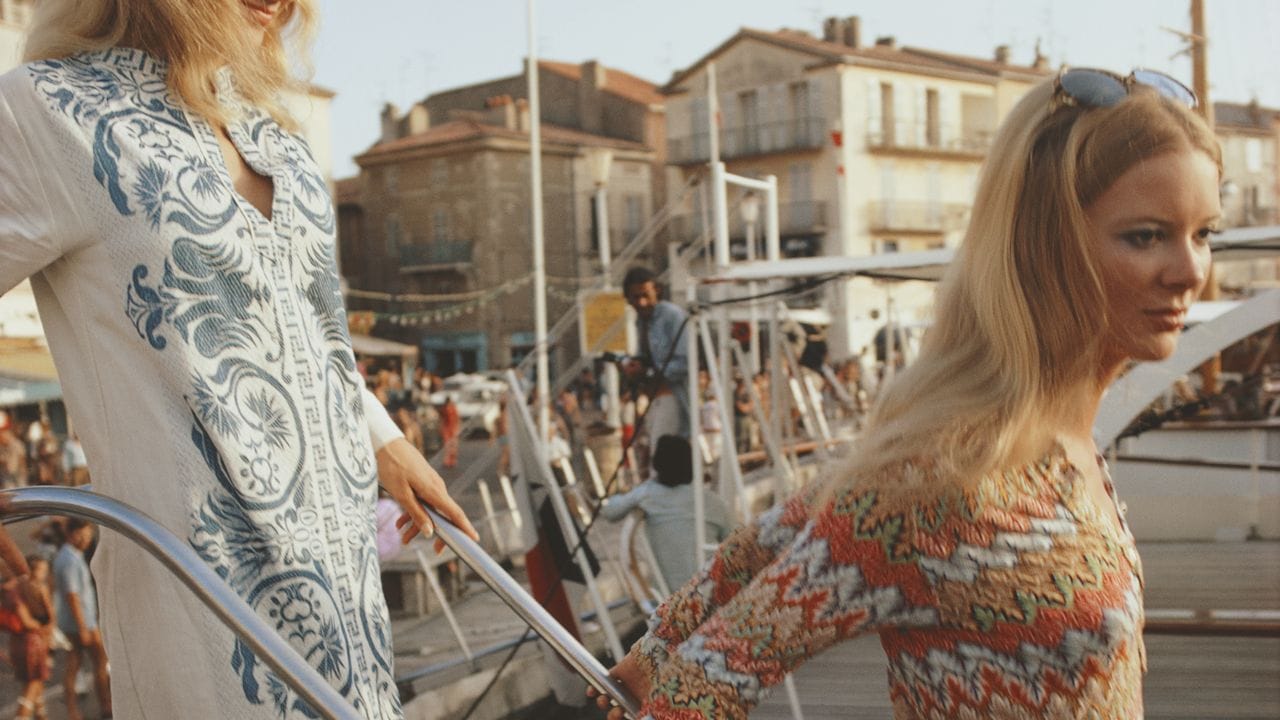
The Italian contingent alone built an entire aesthetic universe. Missoni, founded by Ottavio and Rosita Missoni in 1953, engineered its signature multicolored chevron knits by adapting specialized looms to weave more than 200 colors into a single textile — an innovation that turned a technical process into an unmistakable visual identity. Pucci, born on the beaches of Capri in 1951, did something similar with kaleidoscopic print, dressing Sophia Loren, Jackie Kennedy, and Marilyn Monroe before the brand was two decades old. Now under its first female artistic director, Camille Micheli, those archival prints are landing on silhouettes built for the Instagram era — full circle on the same Capri shores. Etro, rooted in Gimmo Etro's 1968 textile company, brought a bohemian wanderer energy to the category that has aged beautifully: once the paisley prints arrived in 1981, the brand's effortlessly eclectic identity was locked in.
The Ones Who Changed the Rules
Paris gave us Eres, and honestly, that's enough. When founder Irène Leroux launched in 1968, she scrapped the structured, boned swimwear of the era entirely in favor of second-skin cuts with clean lines and serious fabrication. Fashion editors have been loyal ever since — quiet luxury before that phrase existed. Then there's Dolce & Gabbana, the Sicilian antidote to minimalism. Founded in Milan in 1985, Domenico Dolce and Stefano Gabbana built their empire on a bombshell vision: vintage pin-up silhouettes, fruit-and-floral Sicilian prints, string bikinis engineered to make you feel like a whole moment on a terrace somewhere.
And then there is Rudi Gernreich — the name you may not know but whose fingerprints are on everything. The dancer-turned-designer spent his career liberating the body from shame, most famously with the 1964 Monokini, a topless swimsuit that detonated a cultural scandal. He also introduced the thong to market and consistently dissolved the lines between gendered dressing, with work photographed by Helmut Newton and worn by Sharon Tate and Jerry Hall. Gernreich died in 1985, but the label was revived in 2018. A note of irony: as fashion historian Laird Borrelli-Persson observed, more than fifty years later, his most iconic design remains unpostable on Instagram due to its nipple-ban violations — which tells you everything about how little has actually changed.
The most enduring resortwear isn't chasing summer; it's defining it, season after season, from the same foundational obsessions with print, body, and pleasure.
Read the original at Vogue.